26 Bookshelf Ideas That Make Any Room Feel Polished
A bookshelf can be the quiet hero of a room. The right one holds your favorite stories, hides clutter and makes a plain wall look finished. If you have been hunting for bookshelf ideas that fit your real home, this list was built for you.
Inside, you will find 26 ways to style and place shelves, from slim hallway ledges to full floor to ceiling walls. Every idea comes with simple steps, smart measurements and the small details that make a shelf look polished. Some work in rentals with no drilling. Others suit bigger projects when you feel ready.
I’ve noticed that most shelves look messy for one reason: there is no plan for spacing and height. These ideas fix that. Scroll slowly, save your favorites and pick one to try this weekend.
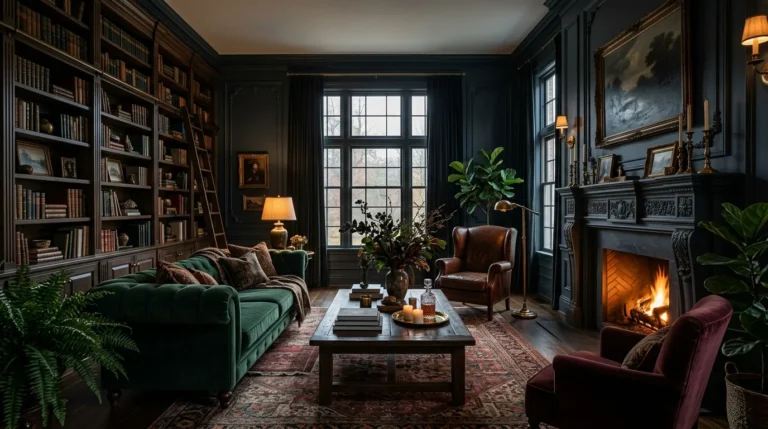
Floor to Ceiling Shelves

A bare wall stops being boring the moment books climb all the way to the ceiling. Tall shelving draws the eye upward and makes a room feel taller than it is. These bookshelf ideas work especially well in living rooms with high ceilings and very little floor space.
The secret is mixing book heights with a few framed prints and baskets. Leave one shelf in every four partly empty so the wall can breathe. Paint the back panel a deeper shade than the walls to add instant depth behind the books.
Cozy Reading Nook Shelves
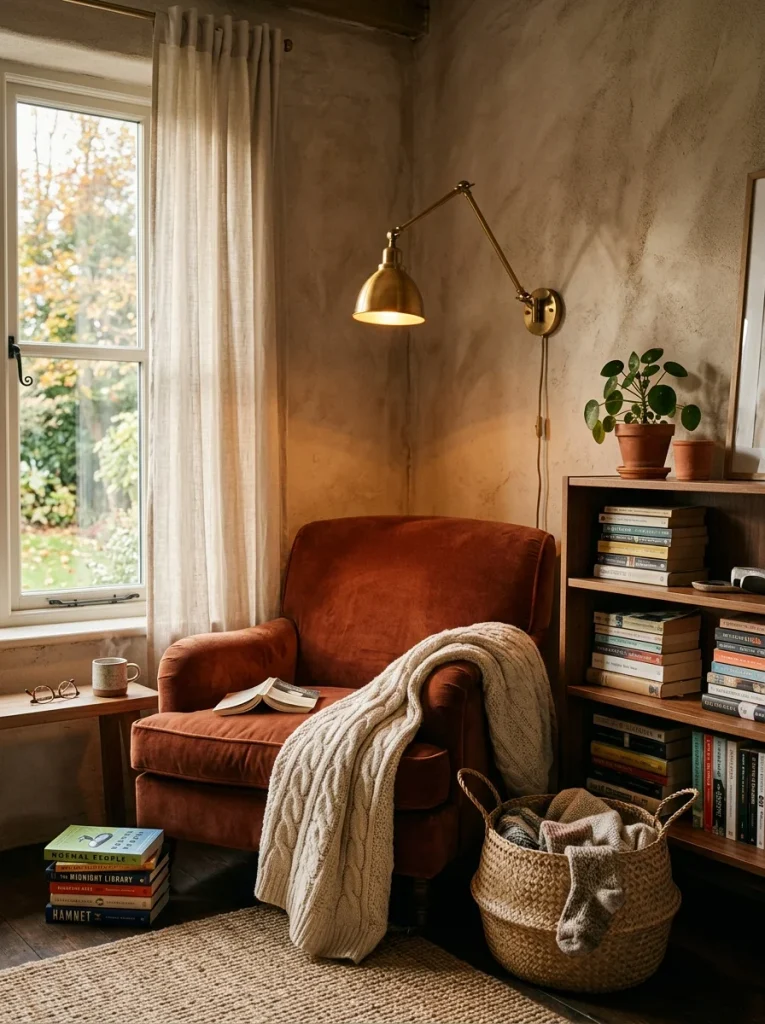
- A deep armchair beside a short bookcase is all an empty corner needs to become the favorite spot in the house.
- Choose shelves about 40 inches tall so you can reach every spine without leaving your seat.
- Mount a swing arm lamp on the wall. It saves table space and gives focused light for reading.
- Keep a basket on the bottom shelf for throw blankets.
- Place a small side table within arm’s reach for tea or glasses.
I’ve noticed that people actually read more once the setup feels inviting. A nook with good light, a soft textile and a few favorite titles within reach beats a full library across the room. Start with one chair and one shelf, then build outward as the habit grows.
Ladder Style Shelves
Quick Tip:
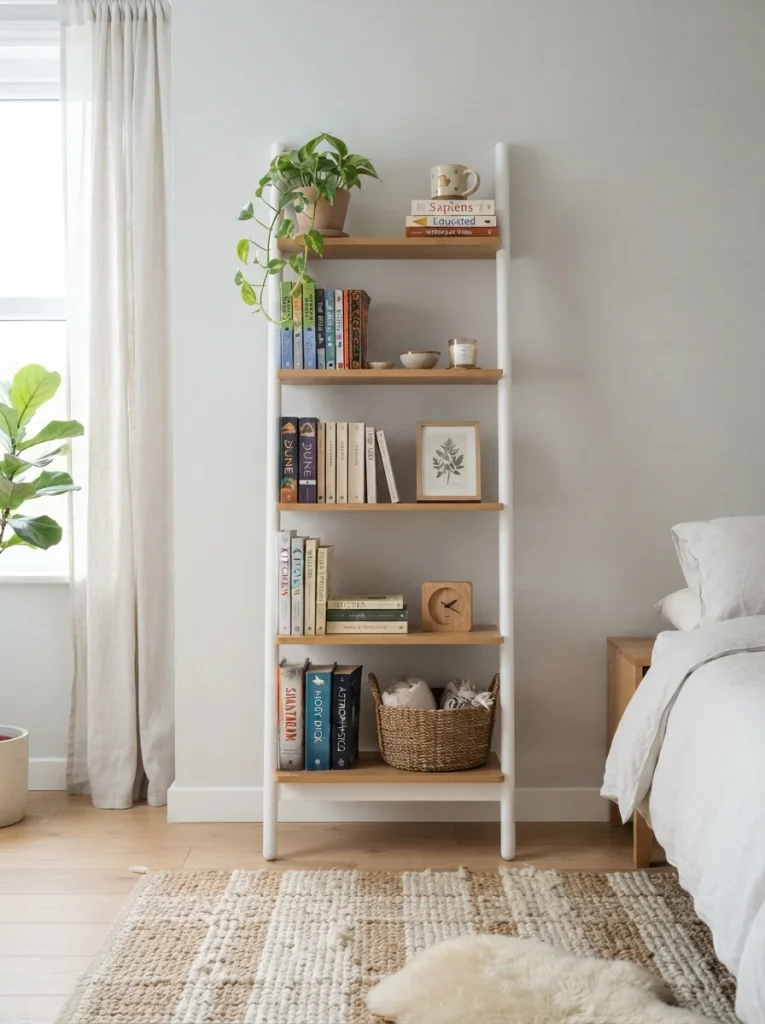
Leaning shelves tip more easily than they look, so safety comes first. Anchor the top rail to a wall stud with a small bracket. Keep heavy hardcovers on the lowest two shelves and save the top for lightweight decor.
Slim ladder shelves fit tight spots that a standard bookcase never could, like a narrow bedroom wall or a gap beside the sofa. The open frame keeps the room airy. It suits rentals too, since it needs no drilling beyond one small anchor and moves easily.
Built In Window Seat
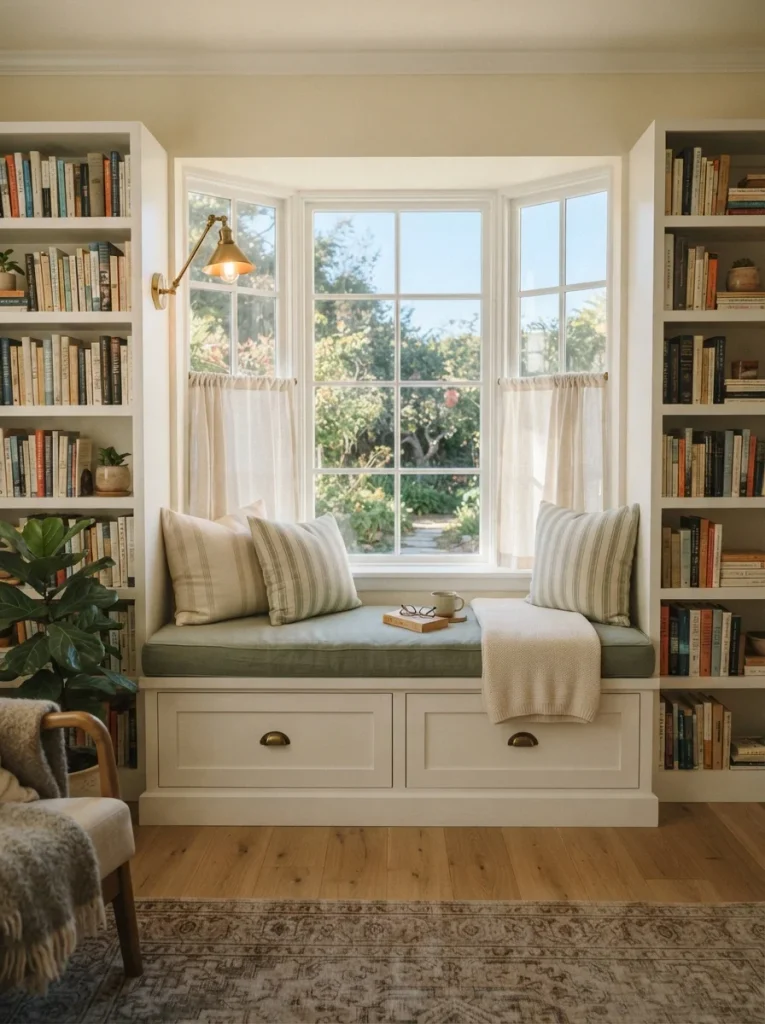
Before: A bay window with nothing under it wastes the best light in the room. Books pile up on the floor and the sill collects dust.
After: A cushioned bench now fills the space, with shelves on both sides within easy reach. The drawers underneath hide blankets and extra books.
I’ve seen this work well in rooms where floor space is tight. The bench seats two people, stores a lot and gives books a permanent home. Build the seat about 18 inches high so it feels like a real chair. Hinged lids beat drawers if budget is tight.
Floating Wall Shelves

- Mark the wall with a pencil line, then confirm it is level before you drill.
- Locate the studs with a stud finder, since books are heavier than they look.
- Drill pilot holes and fix the hidden brackets with the screws from the kit.
- Slide each plank over the brackets and press until it sits snug.
- Stack books in short piles of five or six and leave room for a small plant.
Floating shelves look light, but they carry real weight. Books are heavier than most people expect, so check the bracket rating before you buy. Three shelves spaced 10 inches apart read tidier than five crowded ones in most rooms. Stagger the lengths for a relaxed, modern look.
Corner Shelf Display
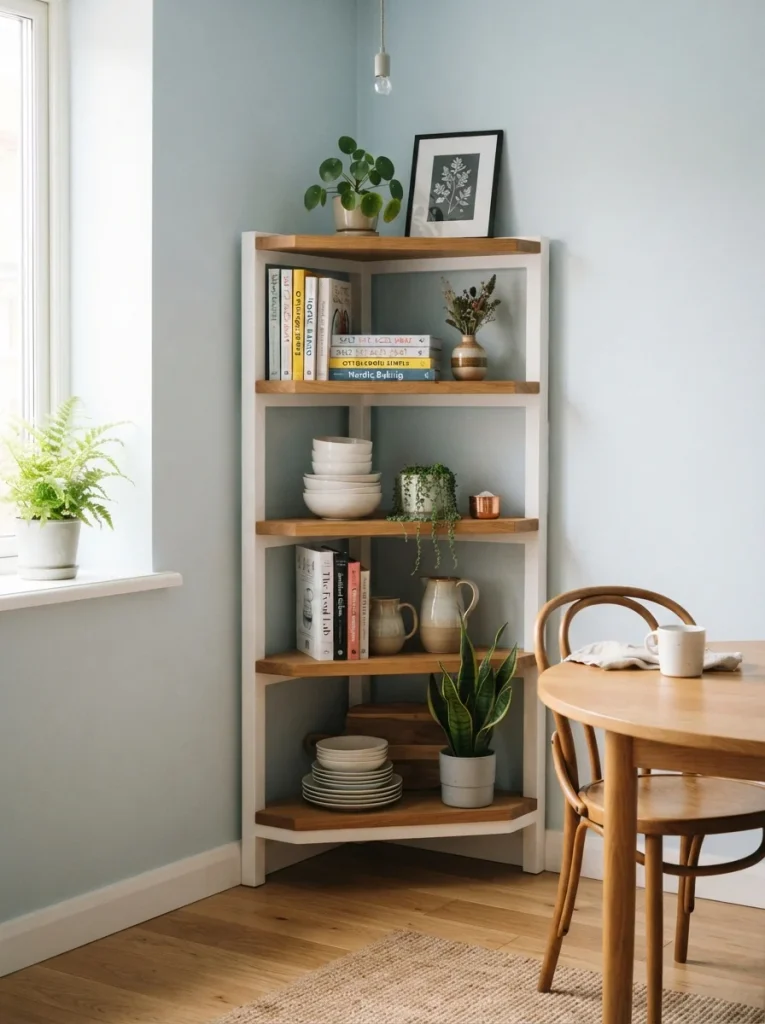
| Flat Wall Shelf | Corner Shelf | |
|---|---|---|
| Space used | Open wall | Dead corner |
| Display depth | Wide and shallow | Deep and layered |
| Best for | Long runs of books | Favorites and small decor |
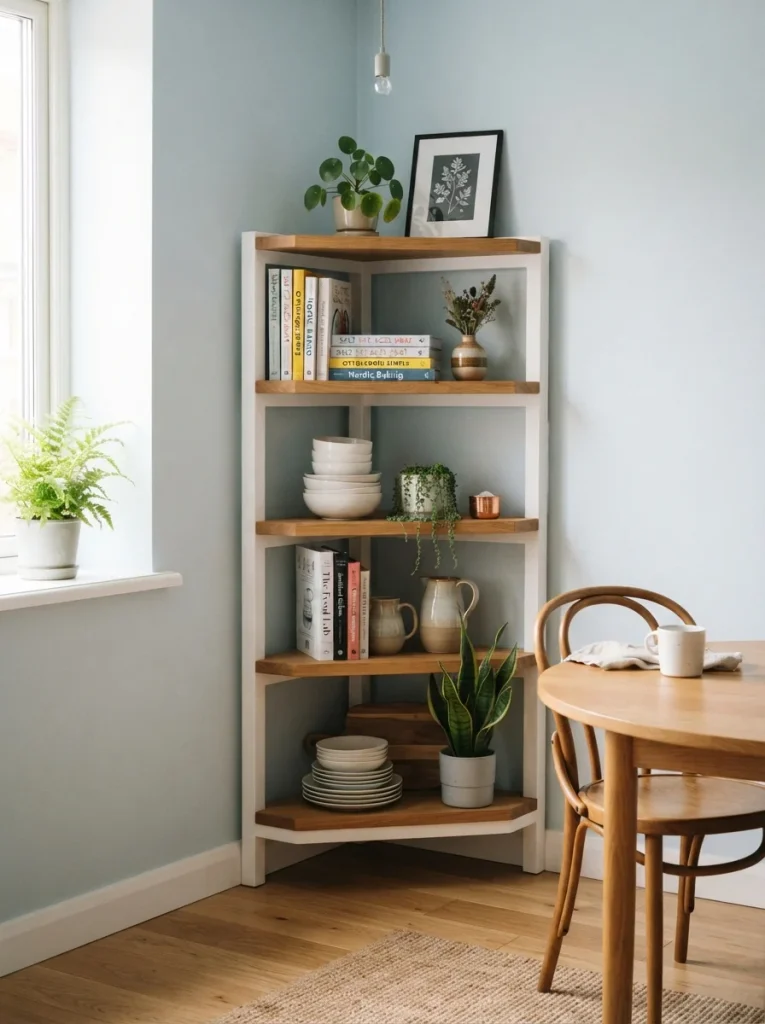
Corners are the most ignored spots in a room. Filling one adds storage without eating into walking space. Start with the tallest items at the back and place small objects at the front. Odd numbers of decor pieces per shelf look the most natural to the eye.
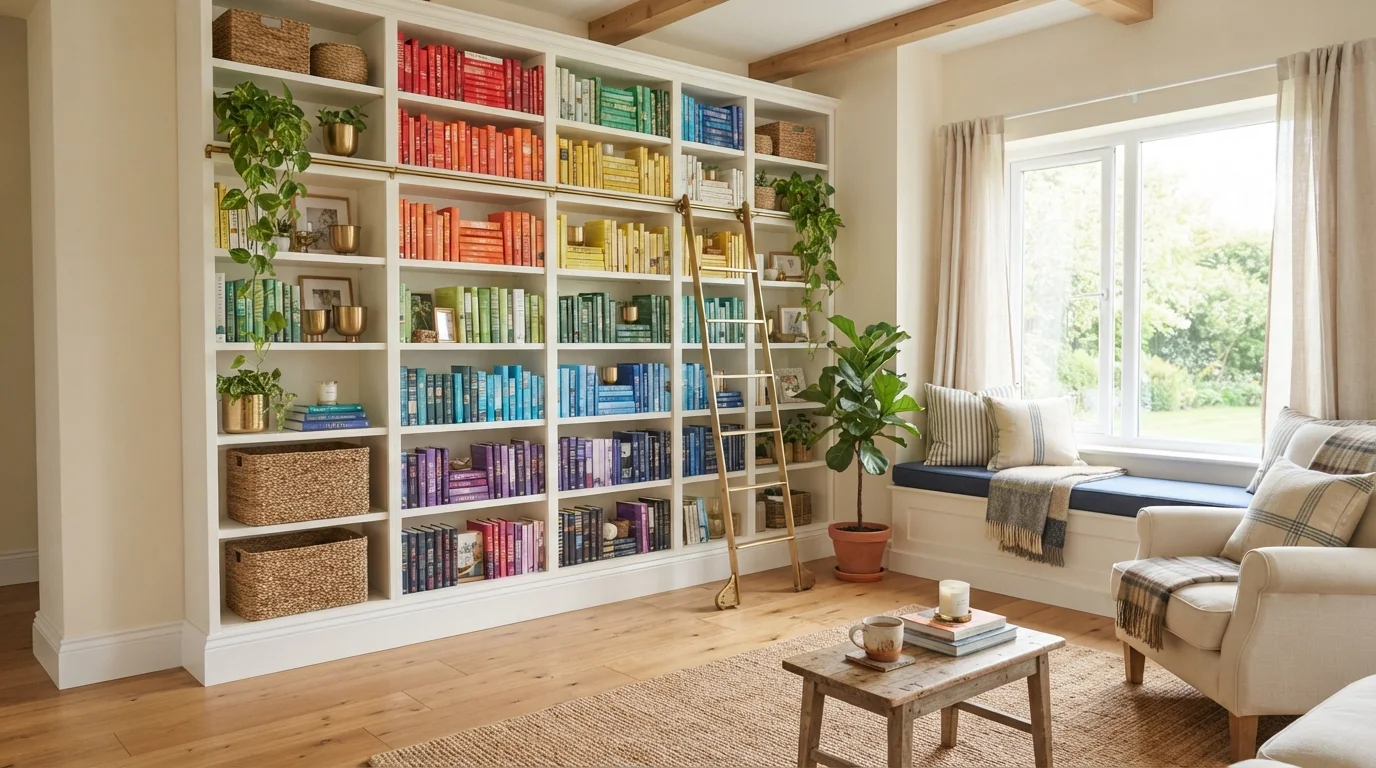
Color Coded Book Wall
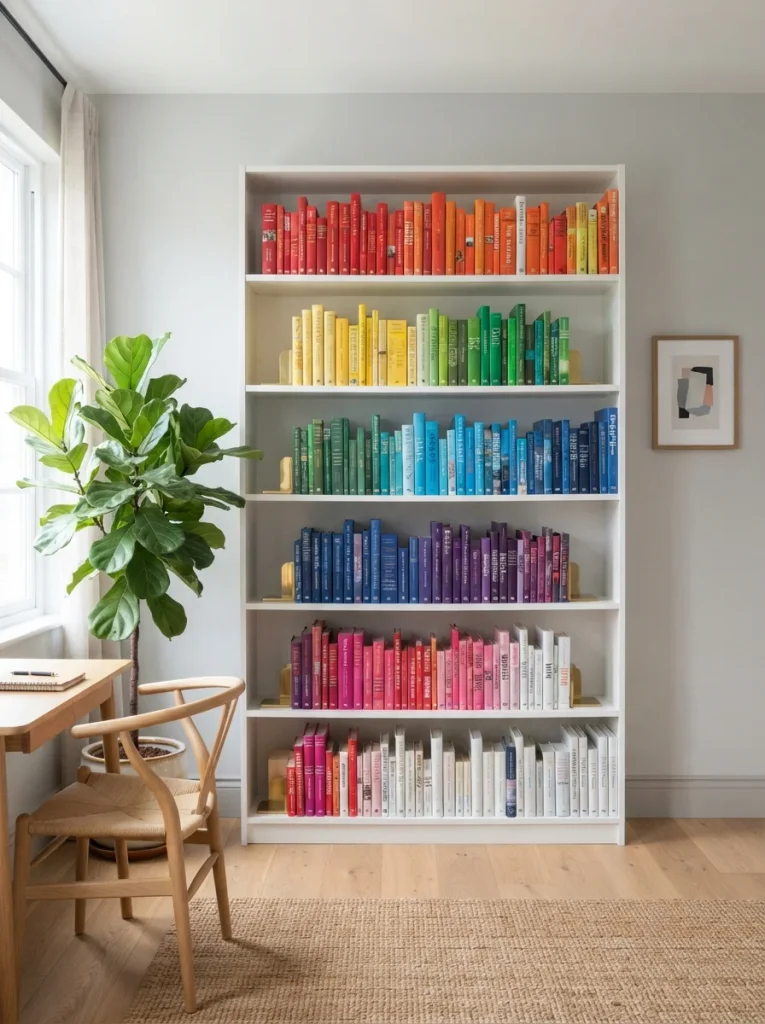
Do:
- Sort books by spine color, then by height inside each color.
- Start with warm tones on the top shelf and move toward cool tones below.
- Use bookends so each color group stays upright.
- Keep white and neutral spines together as one calm section.
Don’t:
- Don’t mix every color on a single shelf.
- Don’t bury the titles you reach for every week.
- Don’t force the rule if your collection is mostly one color.
- Don’t skip dusting, since bright covers show wear fast.
A rainbow wall reads like art from across the room. The catch is finding a book later. Owners solve this by keeping a small shelf of reference titles sorted the usual way. Color order works best for display collections, not for the books you grab every week.
Over the Door Shelving
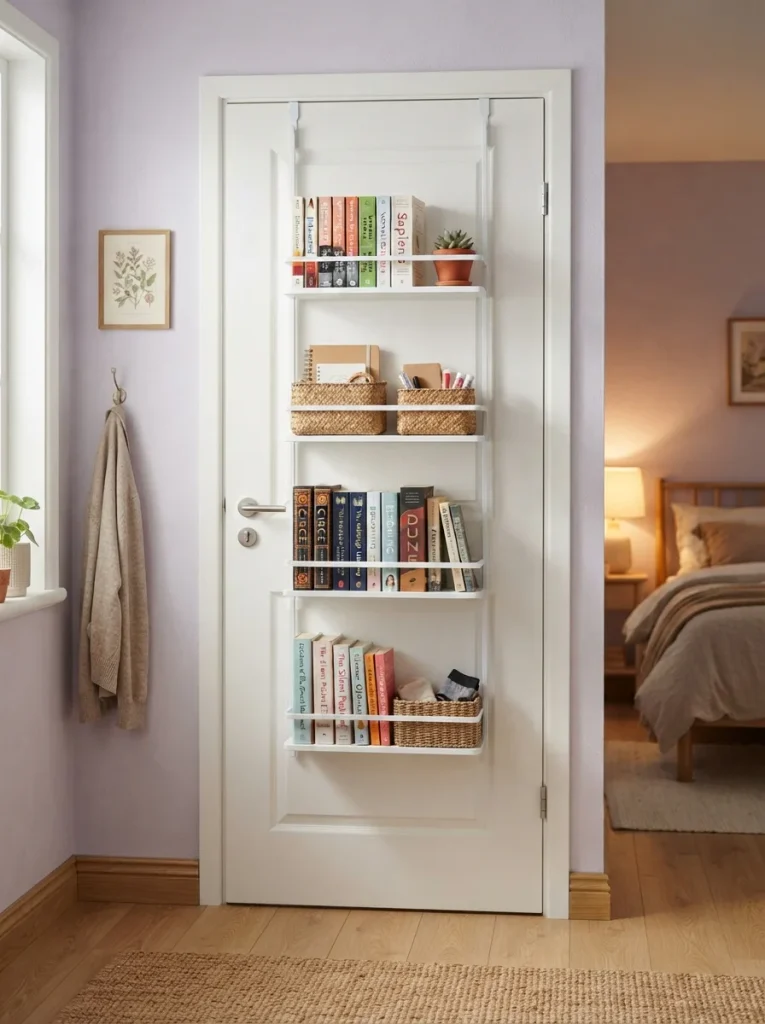
Cost: Low | Time: 10 minutes | Skill Level: Beginner
Best For: Dorms, rentals and small bedrooms
Works In: Bedrooms, closets and kids’ rooms
Result: Four extra shelves with no drilling
The back of a door is wasted space in almost every home. A slim rack turns it into storage for paperbacks and bedtime reads. Check the door thickness before buying, because hooks that are too tight scratch the paint. Add felt strips to stop the door from banging.
Stair Step Shelves
Shelves that step down a wall guide the eye like a staircase. Start tall at one end and drop each board about 8 inches. The shape suits sloped ceilings, awkward corners and the space beside a real staircase, where a flat bookcase would never fit.
Put the biggest books on the lowest steps, where the weight is safest and keep the top boards for light pieces. Kids can reach the low levels on their own, which makes tidy up easier. Leave the last step bare for a plant or a favorite photo.
Cube Storage Grid
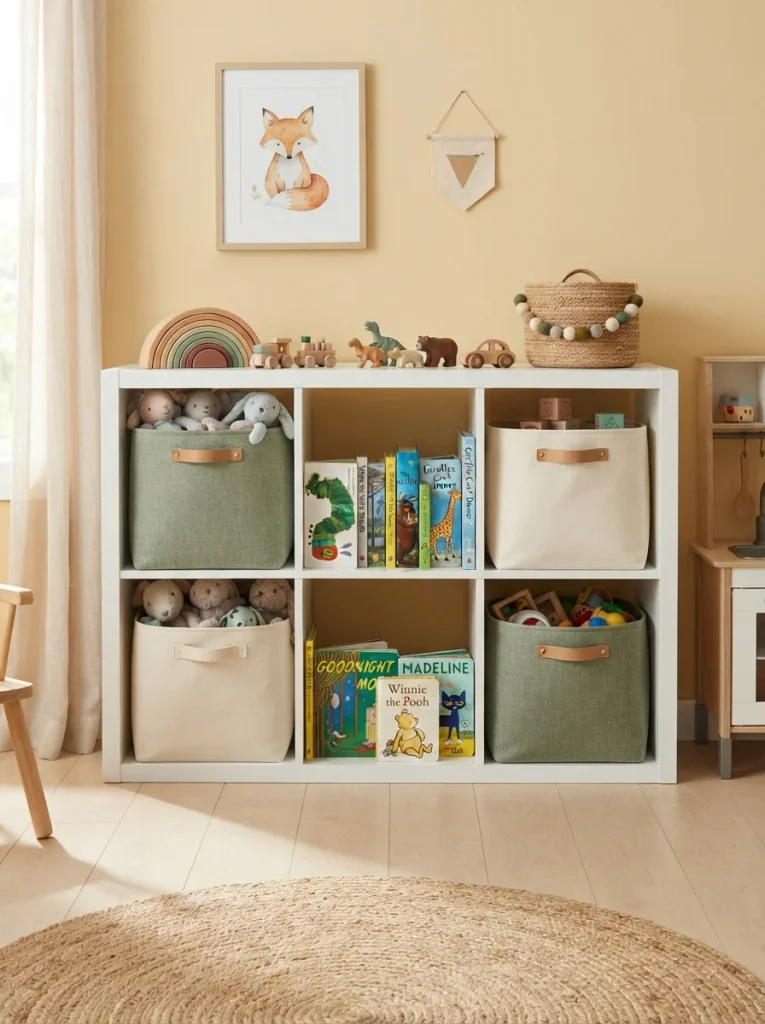
- Stack books on their sides in some cubes and upright in others to break up the grid.
- Fill two or three cubes with fabric bins to hide small items and cords.
- Put a plant or a framed photo on top so the unit feels like furniture.
- Anchor the unit to the wall with a safety strap, especially in homes with kids.
Among all the bookshelf ideas for renters, a cube grid is one of the cheapest and most flexible. Buy a 4, 6, or 9 cube set and rearrange it as your needs change. I’ve watched a single unit move from a dorm to a first apartment to a nursery.
Behind the Sofa Shelf
Quick Tip:
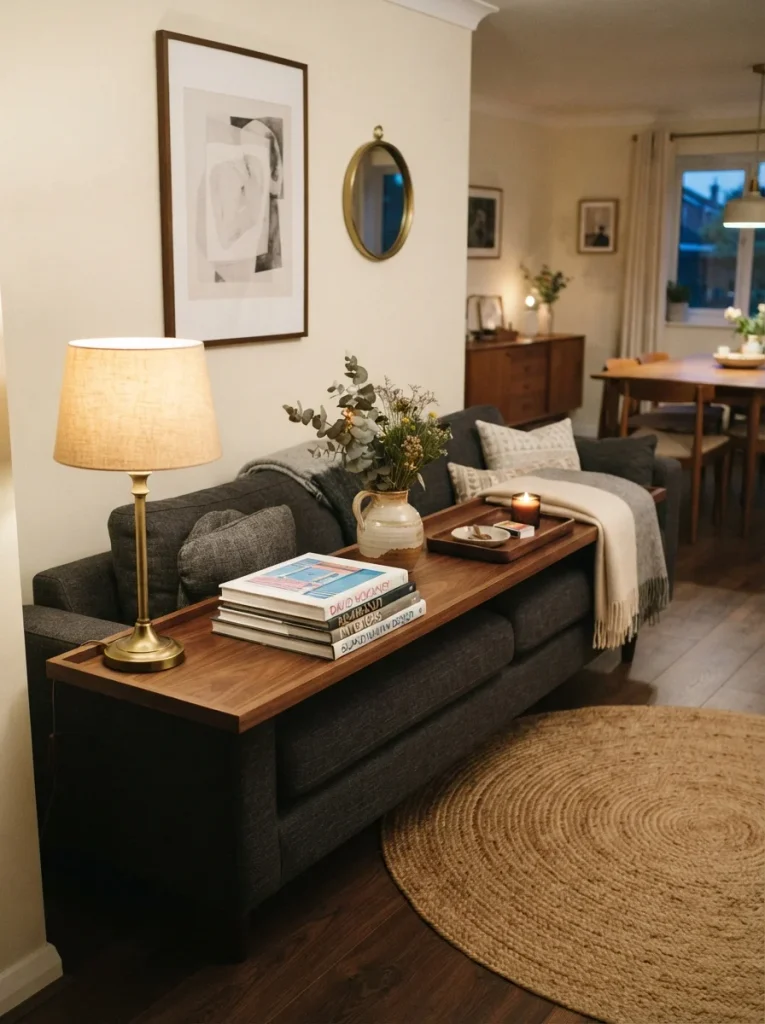
Measure the sofa height first. The shelf should sit about 2 inches lower than the sofa back so it looks built in, not stuck on. Leave a gap of 6 inches so nobody bumps it.
An open floor plan can feel like one giant room with no edges. A slim shelf behind the sofa draws a soft line between the seating area and the rest of the space. It also gives you a spot for a lamp, a drink and the books you are reading right now.
Fireplace Alcove Shelves
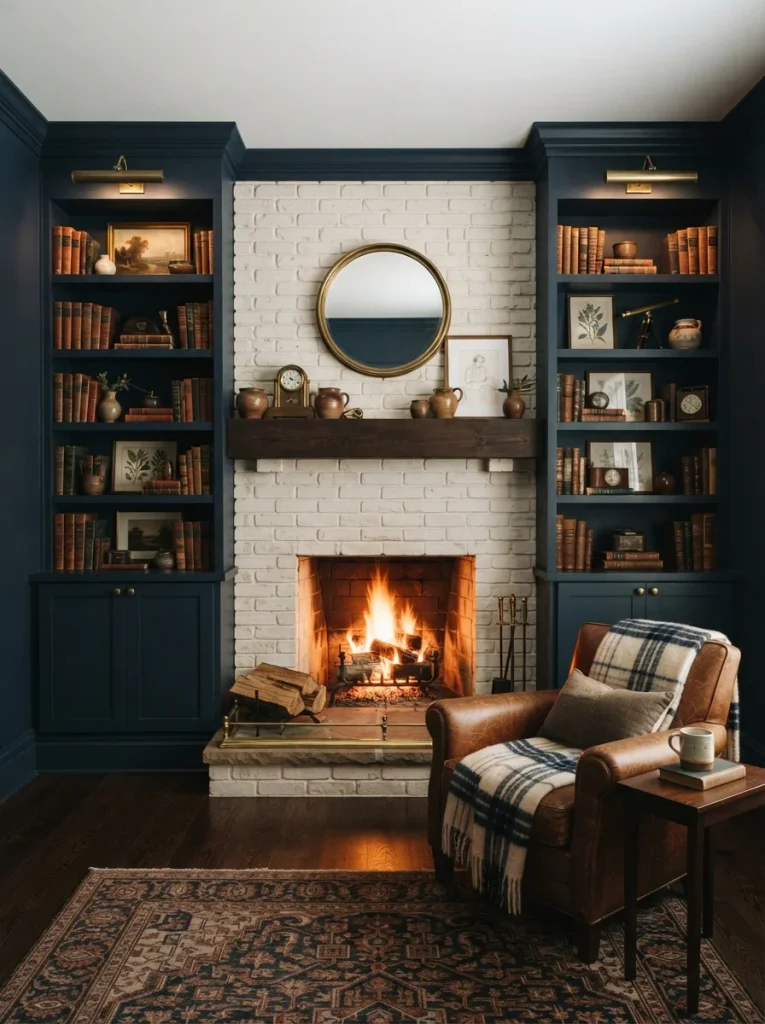
Before: The recesses beside a chimney sit empty and dark. Most people push a lamp or a plant in there and call it done.
After: Shelves fitted edge to edge turn each recess into a feature wall. Painted in a deep color with a small light above, the books glow.
Alcoves are rarely square, so measure at the top, middle and bottom before cutting a single board. In my experience, a scribed edge hides the gaps better than caulk alone. Finish with a picture light above the books and the whole corner looks properly designed from the doorway.
Narrow Hallway Shelves
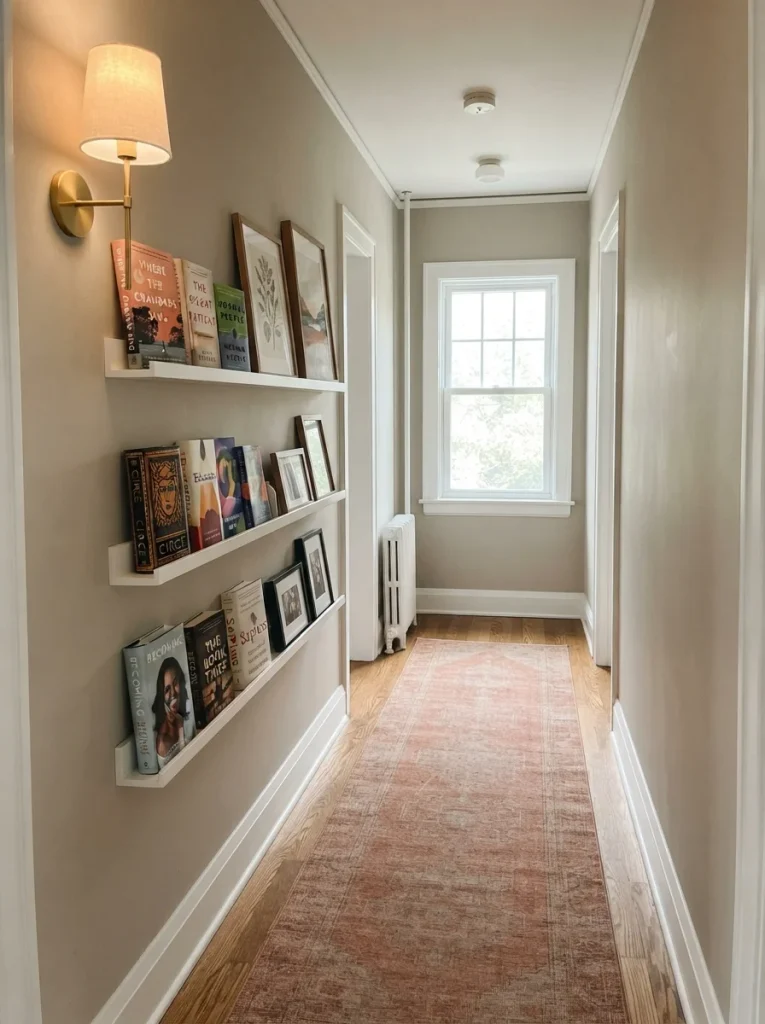
- Pick ledges no deeper than 4 inches so nobody brushes against them while walking by.
- Hang the lowest ledge at about 48 inches from the floor, then space the others 12 inches apart above it.
- Face the book covers outward so the colors double as art.
- Lean small framed prints between the books to fill any gaps.
Hallways rarely get a second look, which makes them the easiest place to surprise guests. A plain corridor starts feeling like a tiny gallery with just three ledges. Rotate the covers each season to keep the display fresh without buying anything new or moving a single shelf.
Under Window Bookcase
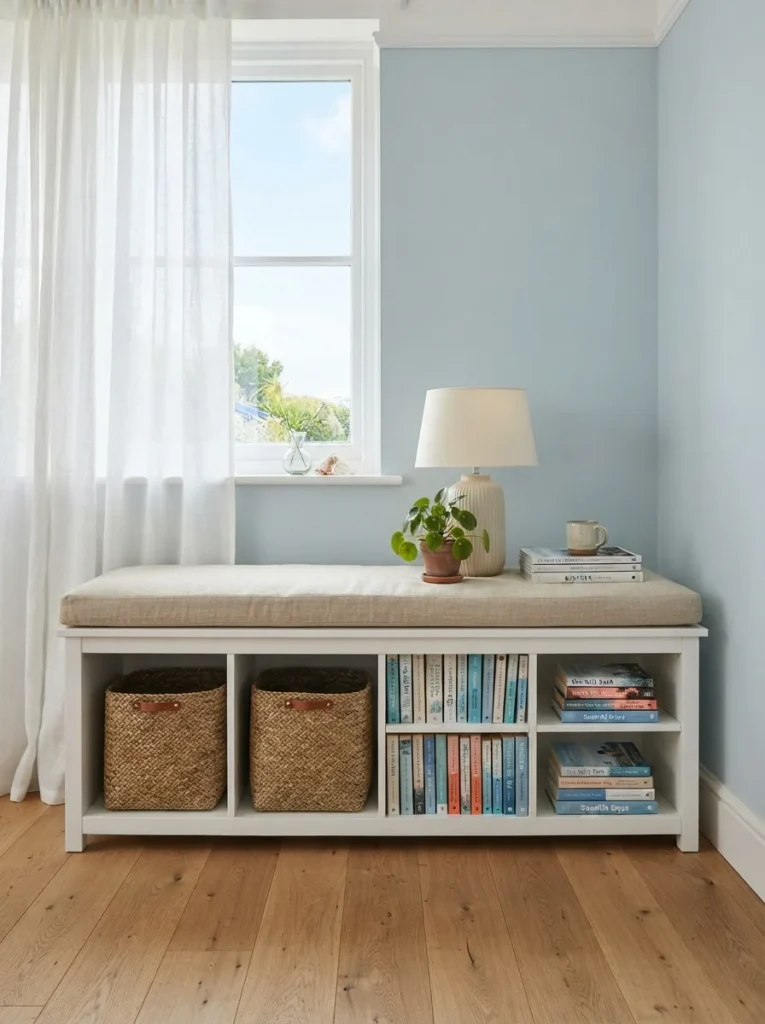
| Bare Window Wall | Under Window Bookcase | |
|---|---|---|
| Storage | None | Two to three shelves |
| Seating | None | Extra bench with a cushion on top |
| Light | Open | Still open if under 30 inches tall |
Space under a window almost always goes unused. A bookcase that stays below the sill keeps the view clear and the daylight flowing. Choose one that is 28 to 32 inches tall so curtains still hang freely. The top doubles as a reading perch with one flat cushion.
Industrial Pipe Shelves
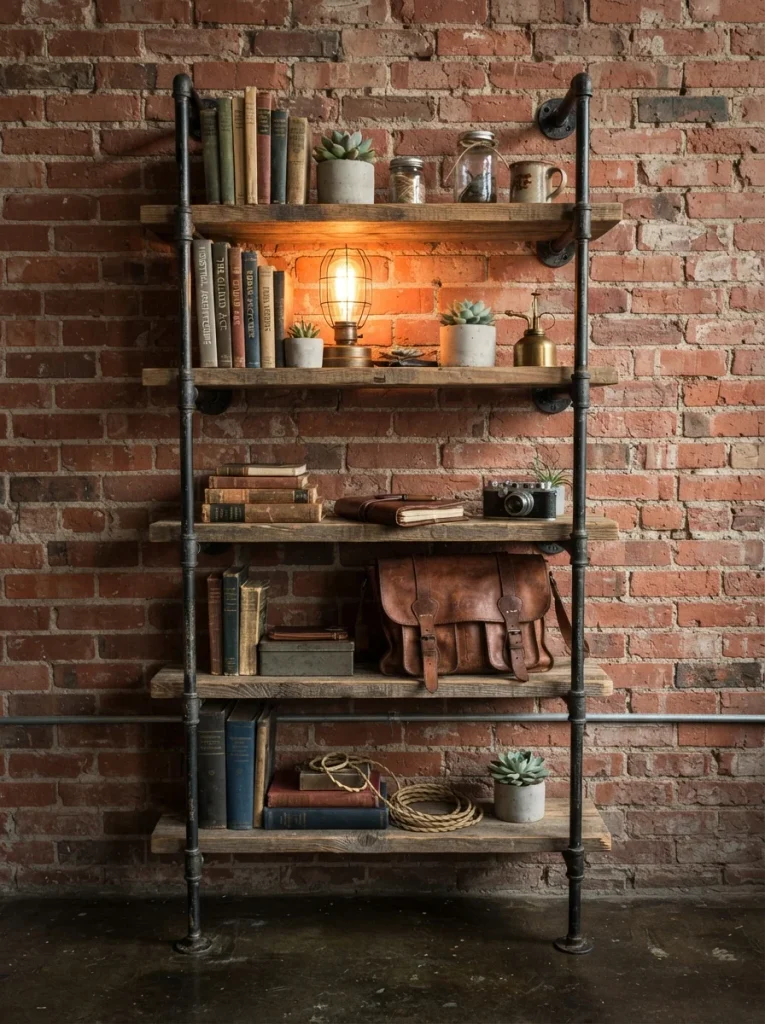
Do:
- Use boards at least 1.5 inches thick so they do not bow under books.
- Screw the flanges into studs, not just drywall.
- Wash the black pipes with soapy water to remove the oily factory coating.
- Seal the wood with a matte finish.
Don’t:
- Don’t leave long spans without a middle support.
- Don’t skip the level, since pipes make crooked shelves obvious.
- Don’t pair heavy pipes with thin, flimsy boards.
- Don’t leave bare pipes in humid rooms where they can rust.
Industrial shelves bring a sturdy, workshop feel to a living room or home office. The mix of metal and wood hides fingerprints and wear better than painted shelves. Soften the look with a few plants and warm lamp light so the corner feels welcoming instead of cold.
Rattan Door Cabinet
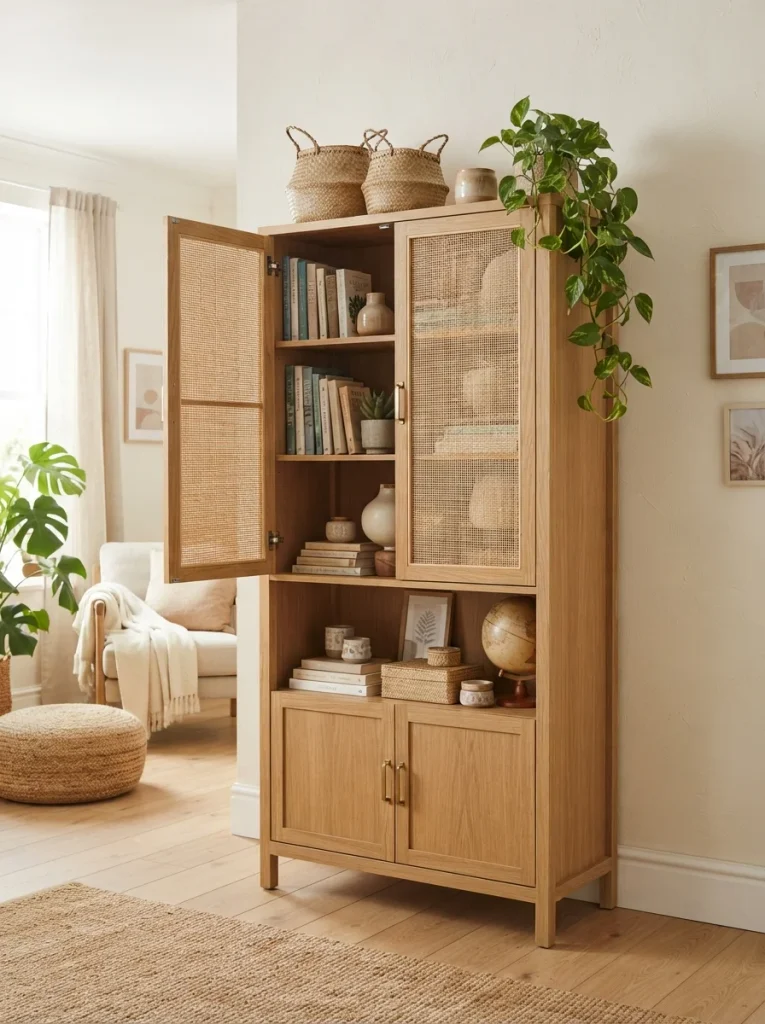
Cost: Medium | Time: One afternoon to assemble | Skill Level: Beginner
Best For: Hiding messy shelves
Works In: Living rooms, bedrooms and entryways
Result: A calm, textured look with books still close
Rattan lets air and a little light pass through while hiding visual clutter. That is why the style works for people who love books but not the busy look of open shelving. Mismatched spines vanish behind the weave. Keep a few favorites on the middle shelf for quick grabs.
Headboard Wall Shelves

A shelf above the bed works as a headboard, a nightstand and a bookcase in one. Hang it about 15 inches above the pillows and run it the full width of the bed. Small rooms gain the most, since you skip two nightstands.
Keep the load light, because it sits right over your head. Use paperbacks, a small lamp and a plant and leave heavy hardcovers for a lower shelf across the room. Anchor into studs with rated brackets and test the shelf by pressing down hard before you stack anything.
Kitchen Cookbook Ledge
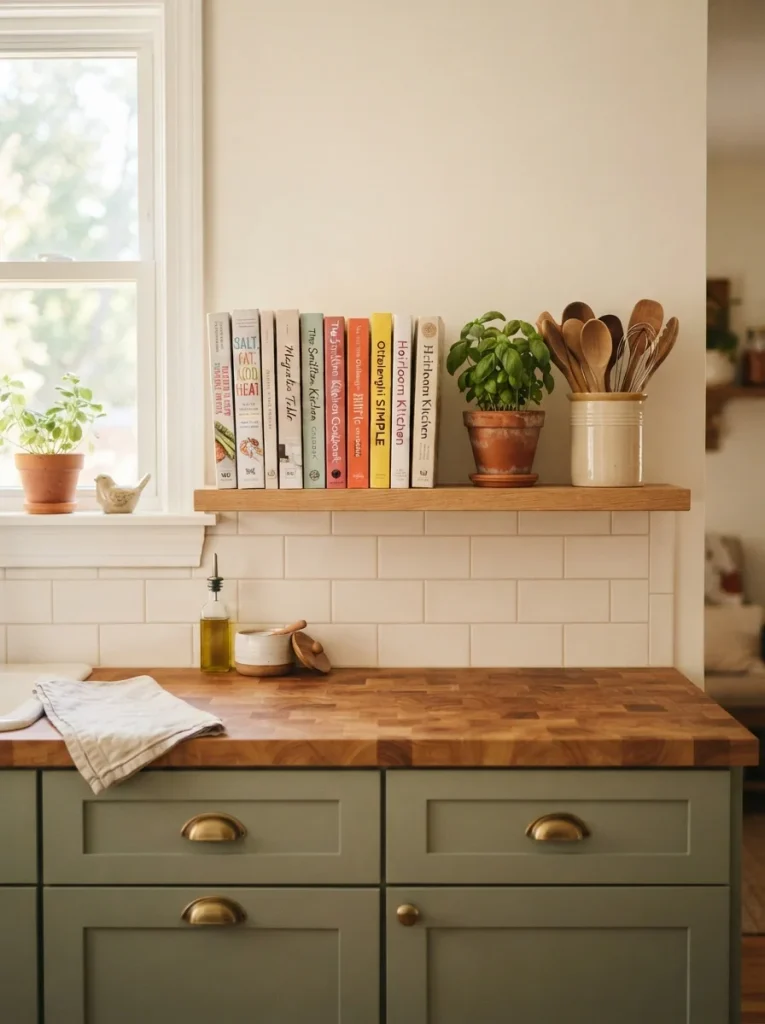
- Mount the ledge at least 18 inches above the counter so steam and splashes stay away from the pages.
- Choose a ledge with a small front lip to keep books from sliding.
- Store only the five or six cookbooks you actually use each week.
- Add a small stand so the open recipe stays flat while you cook.
- Wipe the ledge weekly, because kitchen grease collects fast.
A cookbook that lives in a cabinet rarely gets opened. Keeping favorites at eye level makes weeknight cooking faster and a little more fun. Keep them away from the stove, though. Heat and grease warp pages quickly and I learned that the hard way after ruining a favorite.
Home Office Shelf Wall
Quick Tip:
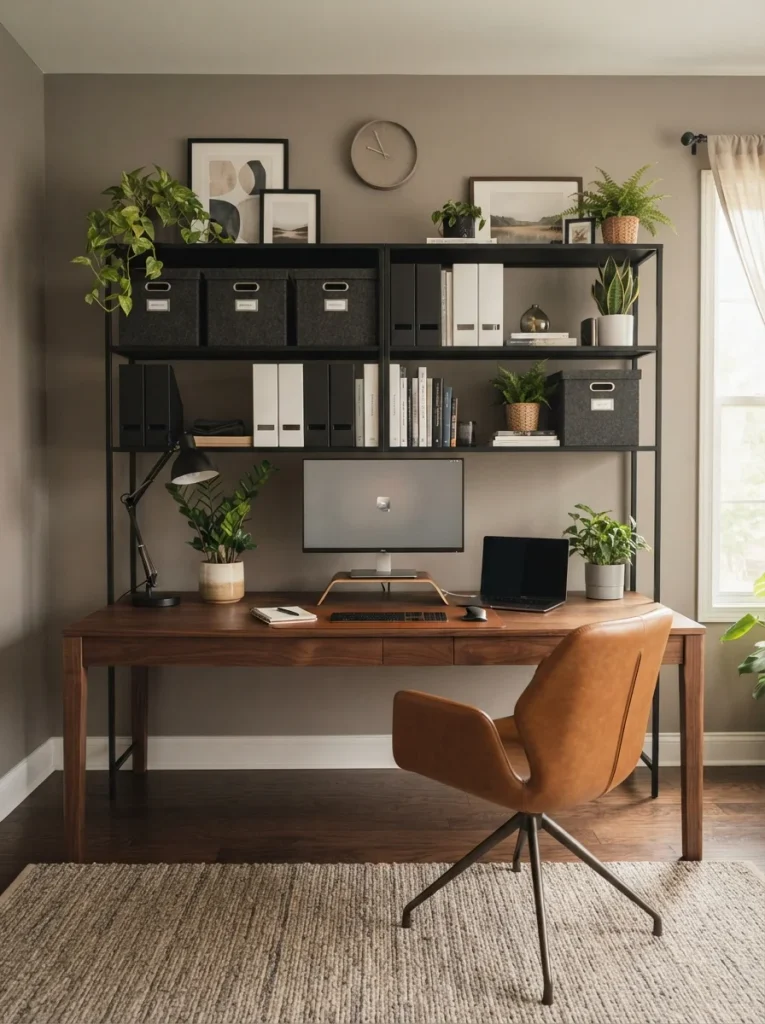
Keep the eye-level rows for what you touch daily. Put reference books and binders on the middle shelves and store archive boxes up high. Check what shows on video calls, since the shelf behind you becomes your background.
A tidy shelf wall behind the desk keeps work within reach and shows a calm backdrop on camera. Mix closed boxes with open books so the wall looks organized without feeling stiff. A few plants and one personal object soften the whole setup and make long workdays feel friendlier.
Kids Picture Book Ledges

Before: Picture books jammed into a deep bin show nothing but their spines. Kids dump the whole bin to find one story and the floor ends up buried.
After: Front-facing ledges show every cover at a glance. Little hands pick a favorite alone and put it back with no help.
Covers sell books to kids the same way they sell to adults. Keep ledges about 24 to 30 inches off the floor for toddlers and fix them firmly to studs. Children pick up more books once the covers face out. Rotate six or seven titles every few weeks.
Room Divider Shelving
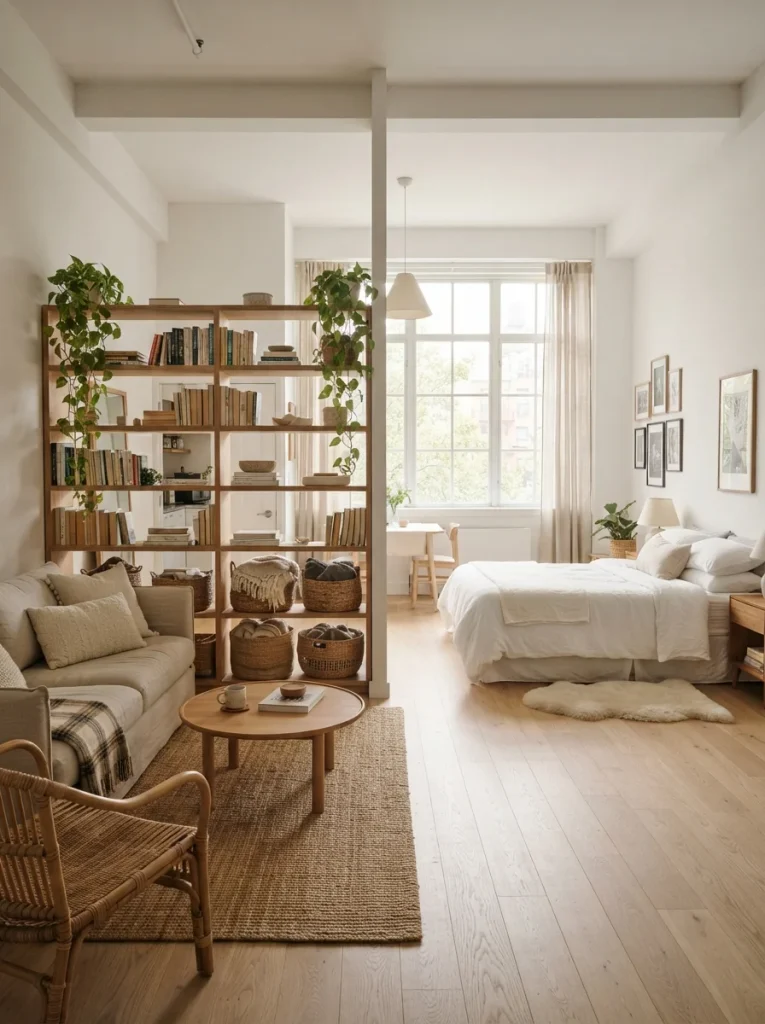
- Choose a bookcase with an open back so light and sightlines pass through.
- Set it at the edge of the rug or bed zone, leaving at least 30 inches for walking.
- Secure it with anti-tip hardware, since freestanding dividers wobble.
- Keep books on the living side and soft items like baskets and plants on the sleeping side.
Studio living asks one space to do many jobs. A divider gives each job its own corner without building a wall. Keep the middle shelves low so the room still feels connected. A few trailing plants soften the edge and add privacy where you need it most.
Arched Built In Shelves
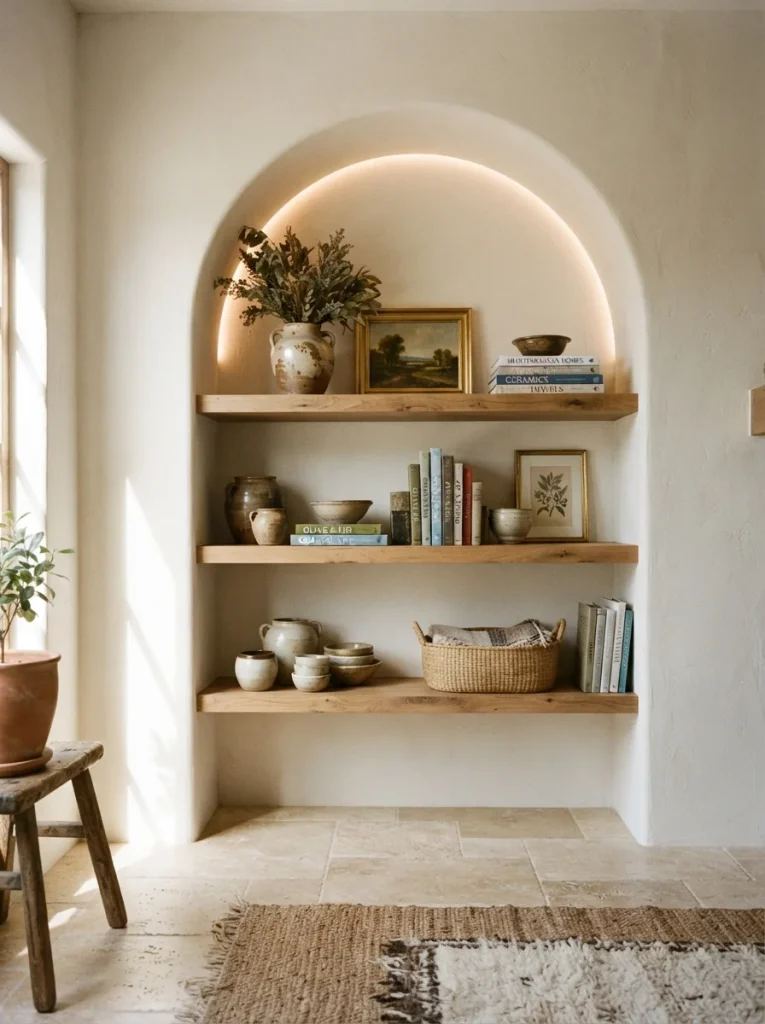
| Square Shelves | Arched Shelves | |
|---|---|---|
| Look | Practical and plain | Soft and architectural |
| Top shelf | Flat, easy for tall items | Curved, best for small pieces |
| Build difficulty | Easy | Moderate, needs bendable board |
Curves are rare in most homes, so an arch instantly stands out. The top of the arch is the hardest spot to style, so save it for one tall vase or a few small objects. Paint the inside a shade darker than the wall to emphasize the shape.
Vintage Library Ladder
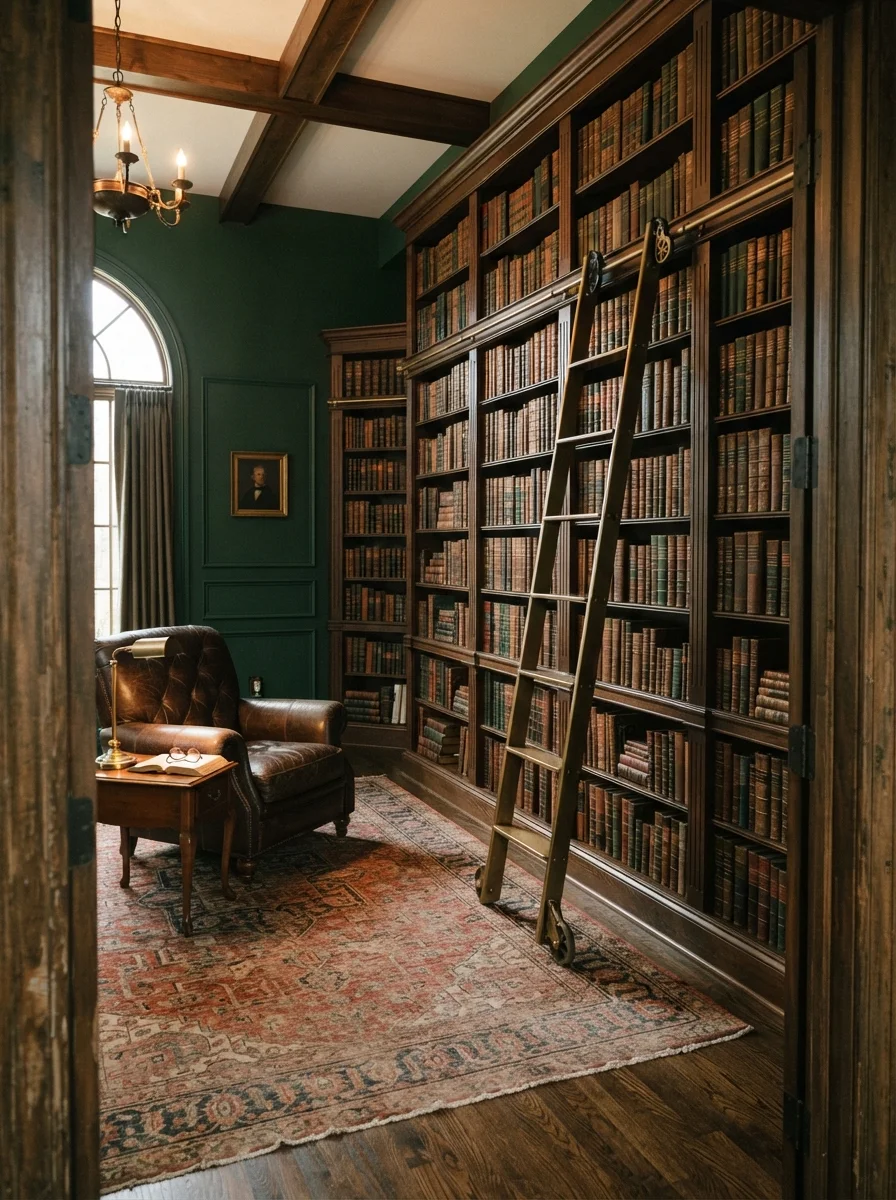
Do:
- Install the rail level, since a crooked track makes the ladder drift.
- Choose a ladder with non-slip steps and rubber stoppers.
- Reserve it for rooms with ceilings at least 9 feet high.
- Lock the wheels whenever someone climbs.
Don’t:
- Don’t climb with a stack of books in your arms.
- Don’t skip wall studs when fixing the top rail.
- Don’t leave the ladder in a walkway where it can be bumped.
- Don’t let kids play on it.
A rolling ladder is more about charm than reach and that is fine. It signals a real library even in a small room. Pick a ladder with brass fittings and a warm wood tone and the whole wall will feel like an old study that has been loved for years.
Over Toilet Shelf
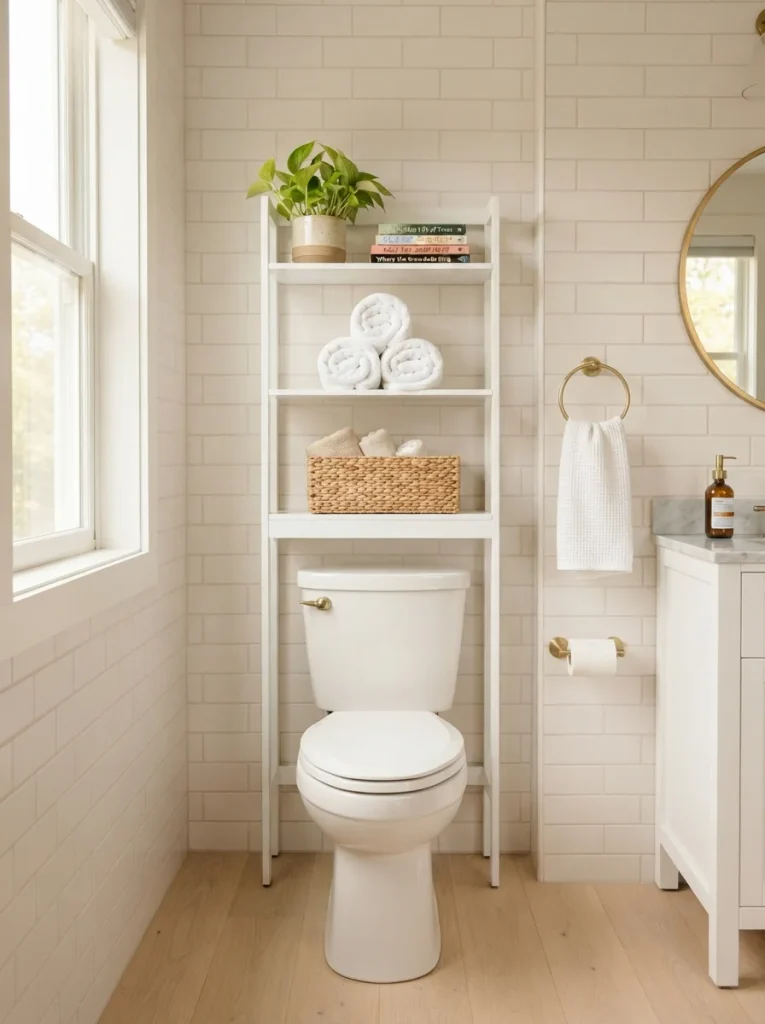
Cost: Low | Time: 30 minutes | Skill Level: Beginner
Best For: Small bathrooms with no storage
Works In: Bathrooms, powder rooms and laundry rooms
Result: Extra space for towels, a few books and a plant
Bathroom reading is real and a small shelf makes it tidy. Use moisture resistant wood or metal, because steam warps cheap boards fast. Keep books on the top level, away from splashes and store towels below. Rotate books that start to curl in humid air.
Glass Door Display Cabinet
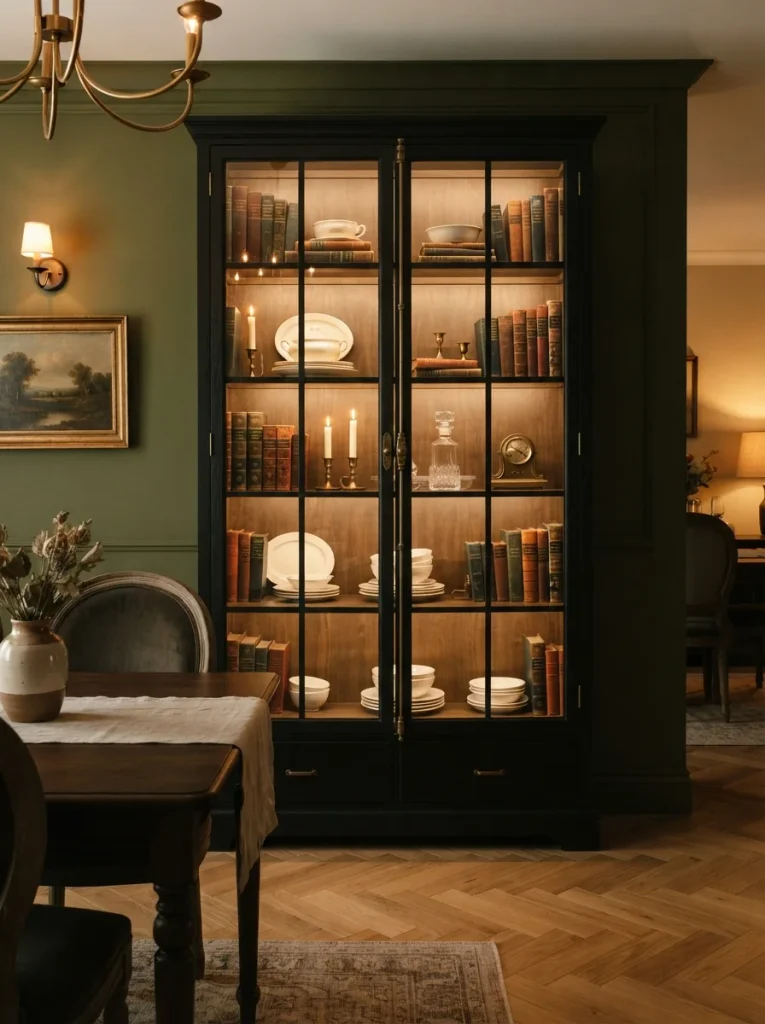
Glass doors keep dust out and let the best books stay on show. They also give a collection a museum feel, which makes even a modest shelf look intentional. Light is the secret, so tuck a small LED strip inside and watch the spines glow after dark.
Group by theme, not by size, so each shelf tells a clear story. Pair a few books with one object, like a candlestick or a bowl. Skip packing every inch, since glass shows clutter more than open shelving does. Wipe the doors with a microfiber cloth to avoid streaks.
Curved Wall Shelves

- Pick shelves with a gentle S curve, since sharp bends waste usable space.
- Fix each shelf with brackets at both ends and the middle for steady support.
- Place books in short stacks along the flat parts and plants at the curves.
- Paint the shelves the same color as the wall for a soft, sculptural look, or choose a contrast shade for more drama.
Curved shelves bend the rules of the usual straight line. They break up boxy rooms and turn a few books into a small art display. Among the playful bookshelf ideas here, this one suits people who want personality without a big renovation. Start with one curve and see how the wall responds.
Conclusion
Good shelves do more than store books. They add warmth, order and a little personality to the spaces you use every day. Whether you start with a single ledge in the hallway or a full wall of built-ins, these bookshelf ideas show how small changes can shift the whole feel of a room. I’ve seen a simple shelf turn a forgotten corner into the favorite spot in the house. Save this post to your Pinterest board so you can find it later, pick one idea to try this week and share it with a friend who needs a fresh start.