
28 Studio Apartment Ideas for a Brilliant, Airy Space
Studio Apartment Ideas can help a small home feel brighter, calmer and much easier to live in. A limited floor plan does not mean you have to sacrifice comfort, styl or personality.
The right layout, furniture, storage, lighting and decorative details can make every corner work harder while keeping the space open and welcoming. This collection brings together practical ideas for creating clear zones, reducing clutter, adding useful storage and making a studio feel more spacious without losing its cozy character.
I’ve noticed that small changes often make the biggest difference in compact homes. Moving one piece of furniture, using an empty wall or choosing a lighter finish can completely change how a room feels. As you explore these ideas, you’ll find simple inspiration you can adapt to your own space, budget and daily routine.
Open Furniture
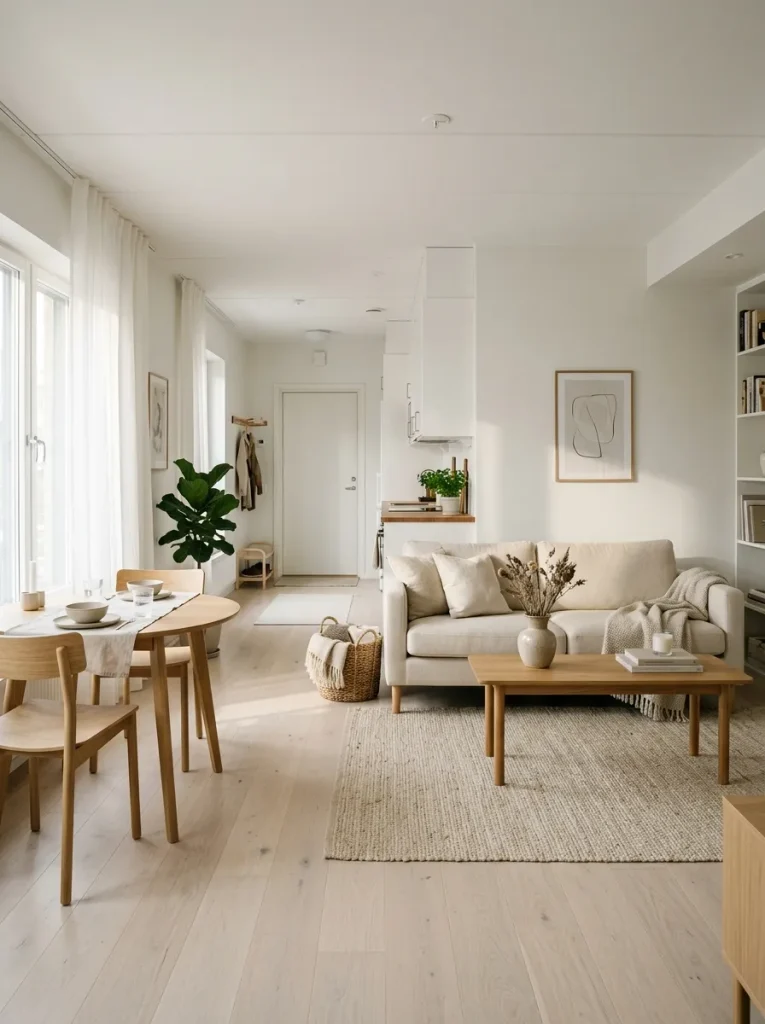
A smart furniture layout can make a studio feel much larger without removing the pieces you need. Keep the sofa, be and dining area arranged in clear zones while leaving a visible path between them. Avoid pushing every item against the walls if that creates an awkward empty center.
Start with the largest furniture pieces and map out walking space before adding smaller items. A sofa can separate the living area from the sleeping zone, while a small table can define dining space. I’ve noticed that leaving even one clear central path makes compact apartments feel easier to navigate.
Lightweight Furniture

- Choose sofas with raised legs so more flooring remains visible underneath.
- Look for dining chairs with slim frames instead of bulky upholstered designs.
- Select nesting or folding tables when you need flexible surfaces.
- Keep side tables narrow enough to move when the layout changes.
- Favor furniture with simple silhouettes and lighter finishes.
Lightweight furniture keeps a studio from feeling visually packed. Pieces that can be moved, folde or tucked away also make it easier to change the room for different activities. Natural wood, ratta and light upholstery add warmth without creating the heavy appearance that oversized furniture often brings.
Mirror Near Windows
Quick Tip:
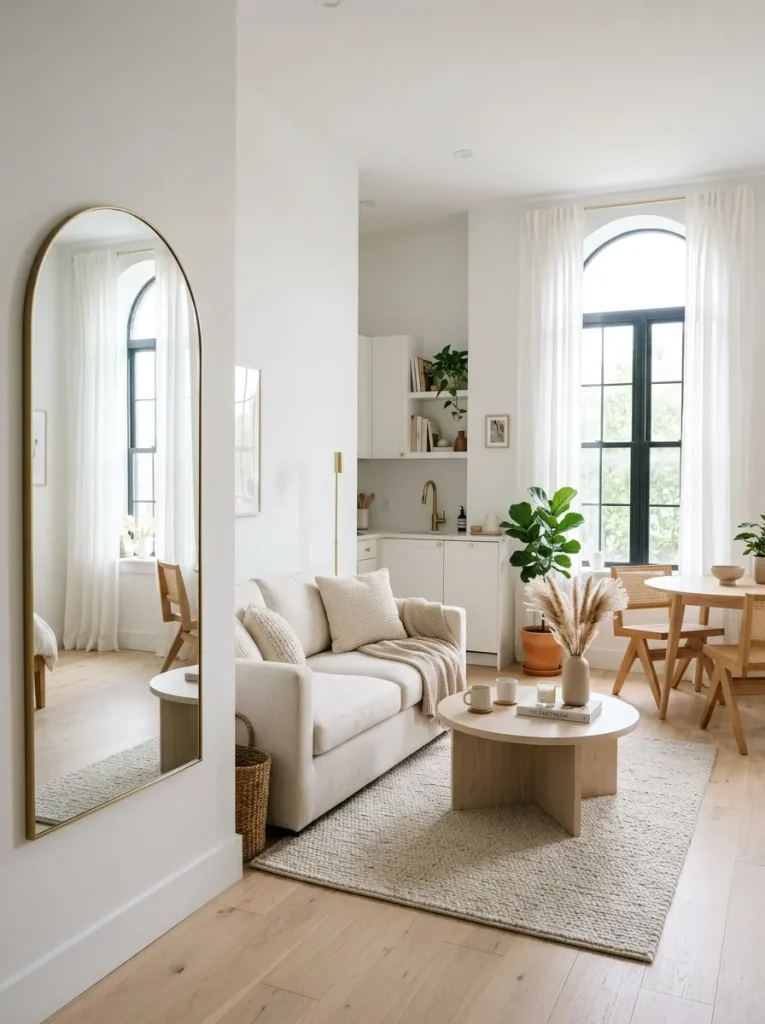
Place a large mirror where it can reflect natural light from a window rather than a cluttered corner. Keep the surrounding wall simple so the reflection adds brightness and depth instead of visual noise.
A strategically placed mirror can make a studio appear brighter and more open. Choose a tall or generously sized design for stronger visual impact, especially near the main living area. In my experience, reflecting a window gives the room more depth while helping darker corners feel less closed in.
Curtain Room Divider
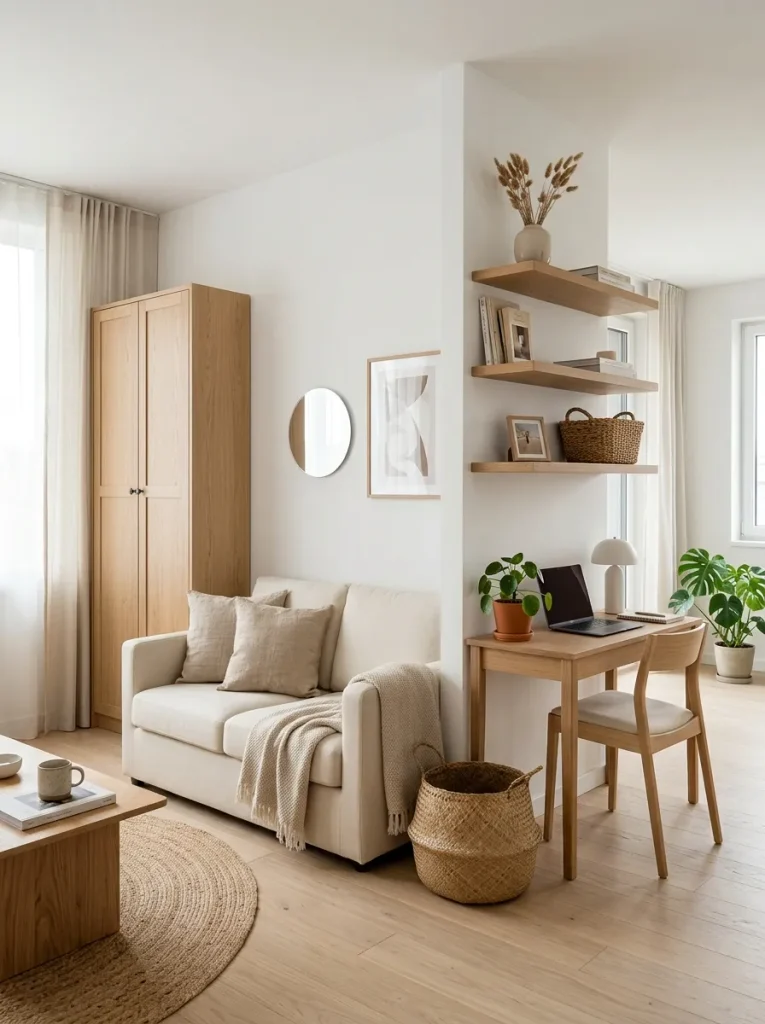
BEFORE: An open studio can make the sleeping area feel exposed, especially when guests visit. Without a visual boundary, the bed may also dominate the entire room.
AFTER: Hang ceiling-mounted curtains between the sleeping and living zones. Open them during the day for an airy feel and close them at night for privacy without building a permanent wall.
Choose lightweight linen or sheer panels if you want to preserve natural light. For stronger privacy, use thicker curtains in a soft neutral shade. Keep the track close to the ceiling so the divider feels taller and more intentional while taking almost no floor space.
Floating Nightstand
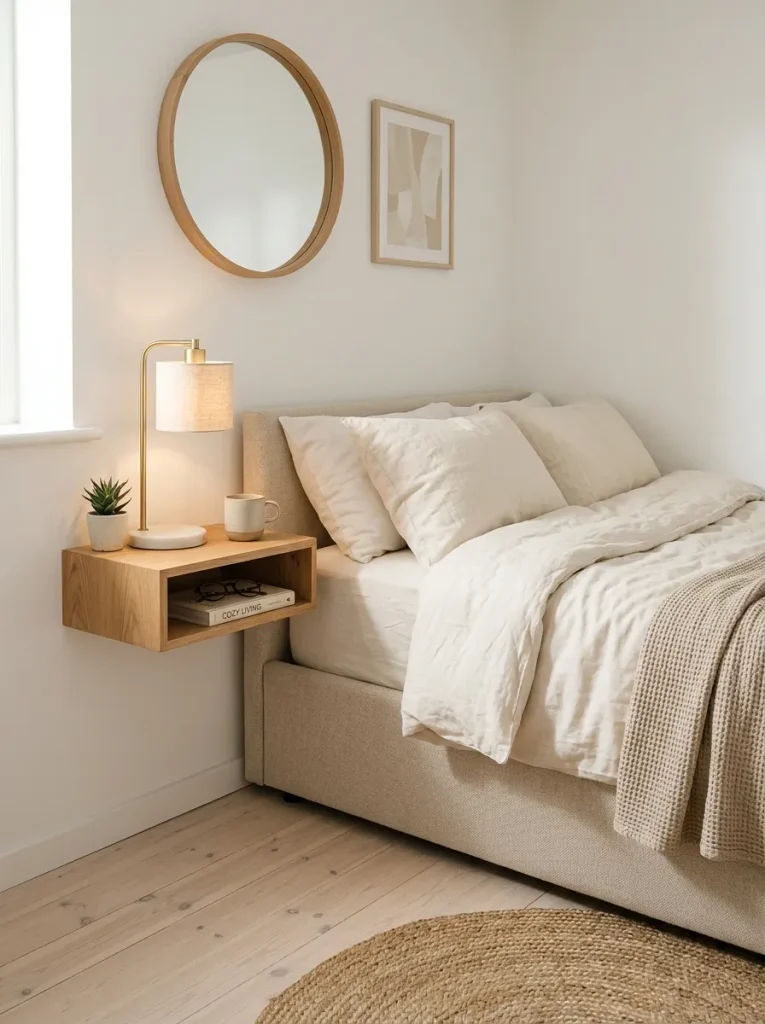
- Measure the wall: Leave enough room beside the bed for comfortable movement.
- Choose a slim shelf: Select a floating nightstand with enough depth for essentials without projecting too far.
- Mount it securely: Follow the wall and hardware requirements for the shelf’s weight.
- Keep it simple: Add only a lamp, phone and one small decorative item.
A floating nightstand keeps the floor underneath completely open, which can make a tiny sleeping area feel less crowded. It also provides a useful landing spot without adding another bulky furniture piece. I’ve noticed that pairing it with a wall-mounted lamp creates an especially clean setup in compact bedrooms.
Glass Partition
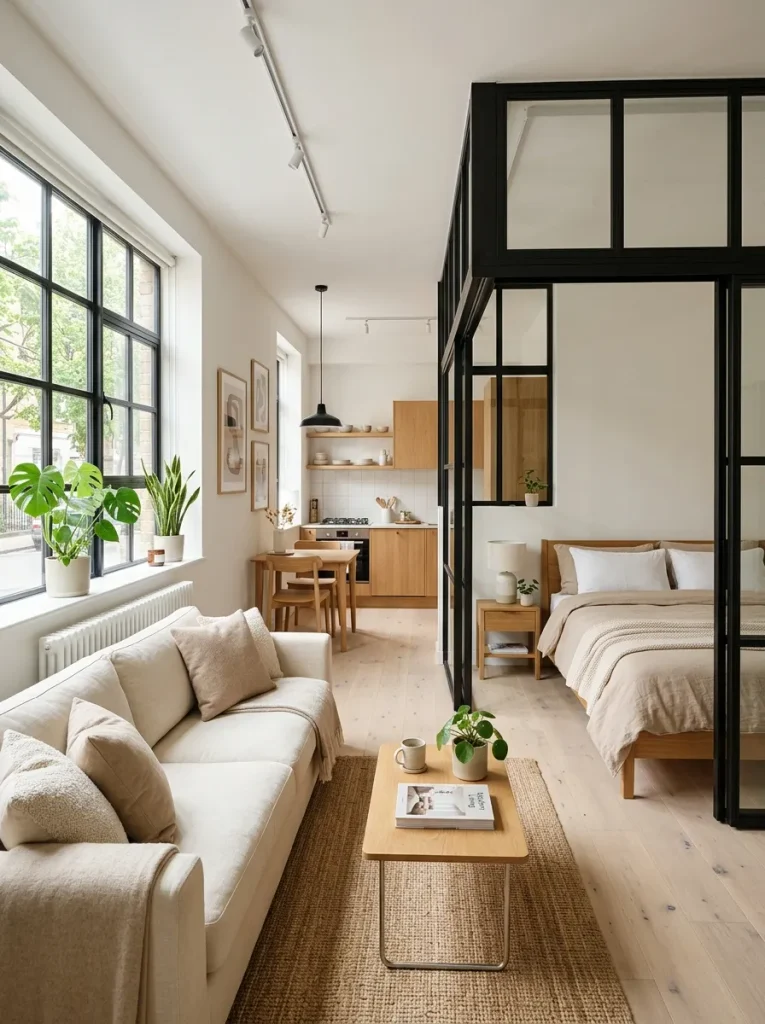
| Comparison Point | Option A: Clear Glass | Option B: Frosted Glass |
| Natural light | Maximum light flow | Slightly softer light |
| Privacy | Low | Higher |
| Visual effect | Open and spacious | More defined |
| Best for | Bright studios | Sleeping areas needing privacy |
A glass partition can define the sleeping zone while keeping the studio visually connected. Clear panels work well when natural light is limited, while frosted glass offers more privacy. Choose a slim frame and avoid covering the partition with too many decorations so the room retains its open character.
Vertical Storage
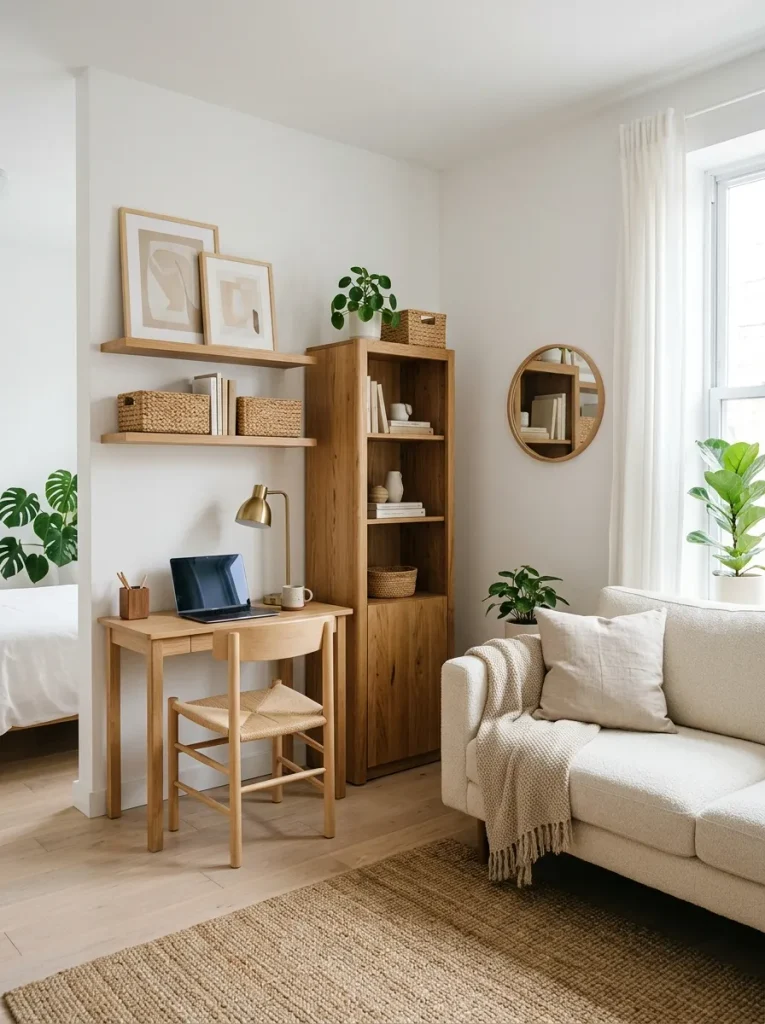
DO:
- Use tall shelves to take advantage of unused wall height.
- Store everyday items between waist and eye level.
- Keep heavier storage pieces against solid walls.
- Repeat one finish across cabinets and shelves.
DON’T:
- Fill every shelf with small decorative objects.
- Choose cabinets that block windows or walking paths.
- Stack heavy items where they are difficult to reach.
Vertical storage gives a studio more organization without consuming much floor space. Tall cabinets can hold clothing, dishes, books,or household supplies while keeping clutter contained. Leave some shelves partially empty so the room does not feel overloaded. A narrow storage tower beside a wall can provide surprisingly useful capacity.
Under-Bed Storage
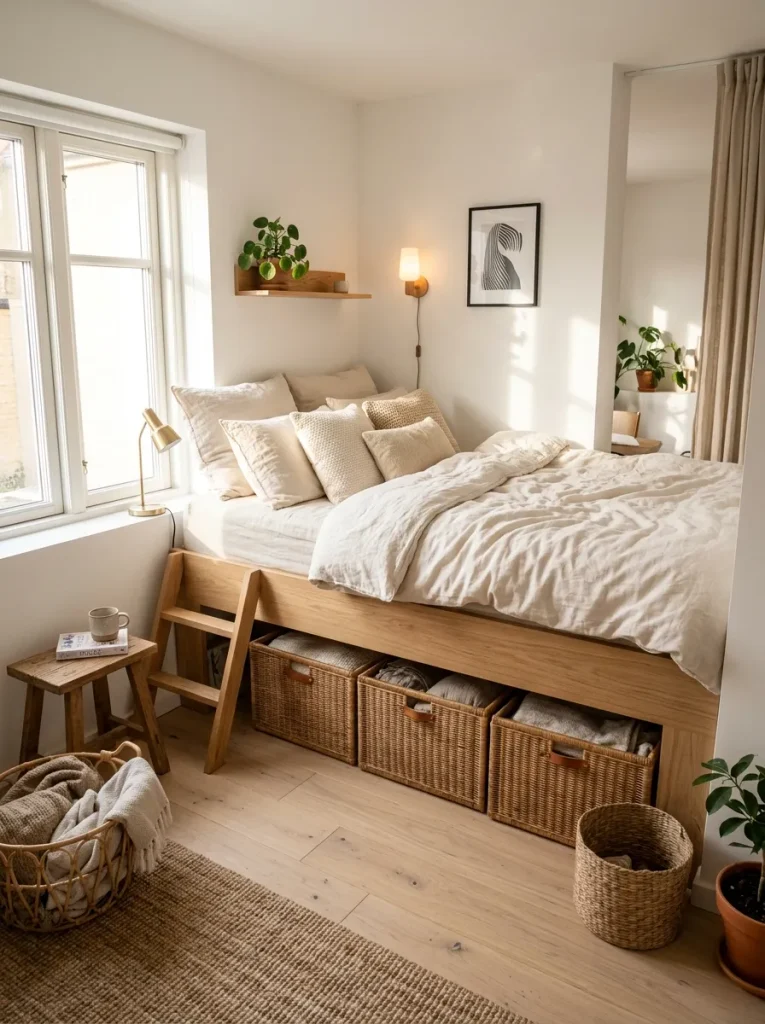
Cost: Moderate to high | Time: One day to organize | Skill Level: Beginner | Best For: Small bedrooms
Under-bed storage turns unused space into a practical place for belongings. Use built-in drawers, rolling containers or low storage boxes depending on the bed frame. I’ve noticed this works especially well for seasonal clothing, spare bedding, shoes and items that do not need daily access.
Wall-Mounted Desk
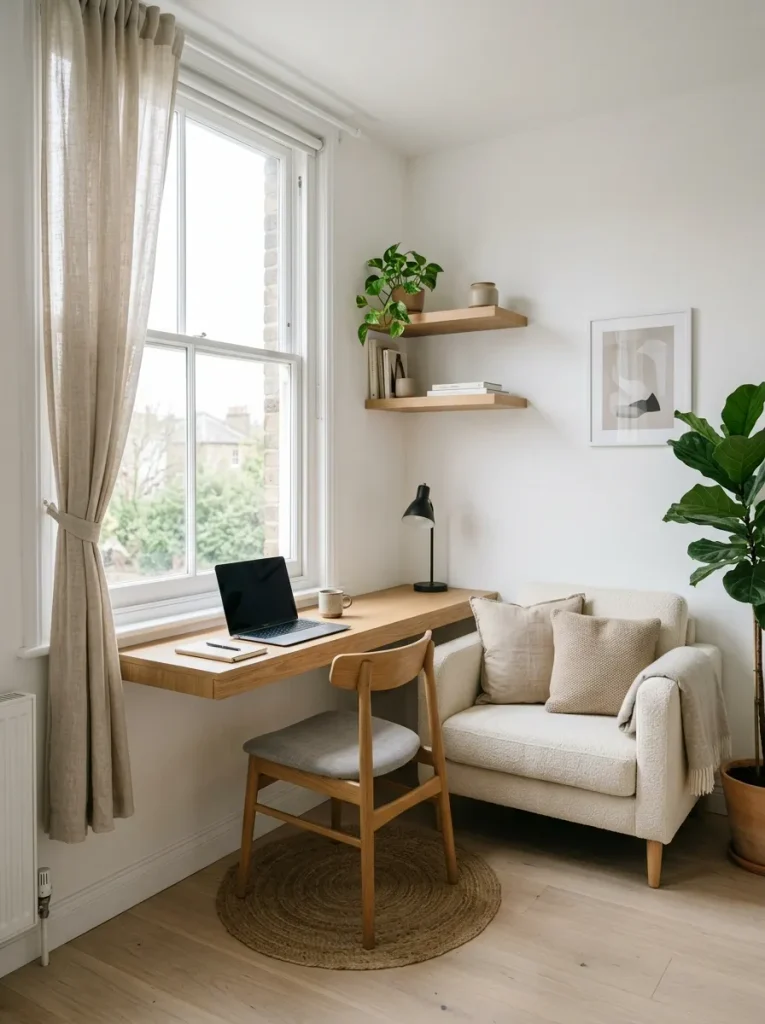
A wall-mounted desk can create a useful work area without sacrificing valuable floor space. Choose a shallow design and mount it at a comfortable working height. When the desk is not needed, keeping the surface clear helps it blend into the apartment rather than making the workspace feel like a separate bulky zone.
Place the desk near natural light when possible, but avoid blocking the main walking route. Add a compact chair that can slide underneath the surface completely. A small wall shelf above it can hold supplies while keeping the desktop open for a laptop, noteboo or morning coffee.
Foldable Dining Table
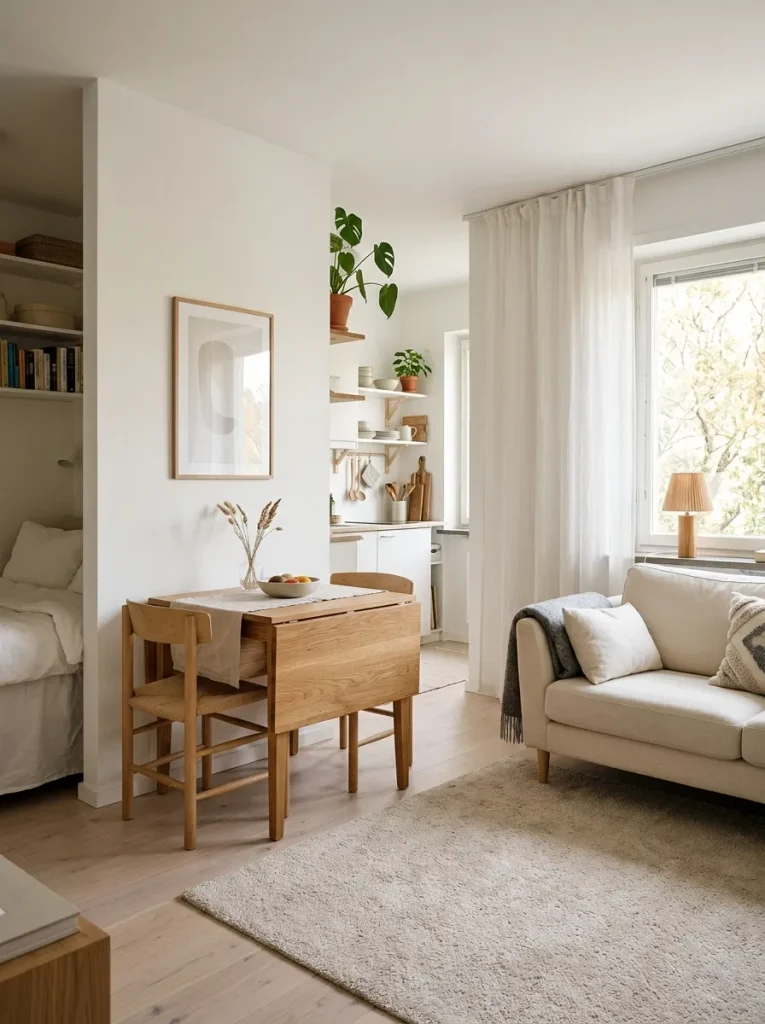
- Choose a drop-leaf table that stays narrow when folded.
- Keep folding chairs nearby so the dining area is ready when needed.
- Position the table close to the kitchen for convenient meals.
- Leave enough clearance to open the table fully.
- Use the wall above it for a small shelf or simple artwork.
A foldable dining table gives a studio a dedicated eating spot without permanently using valuable floor space. Keep it closed during work or relaxation hours, then open it for meals or guests. Choose a light wood finish that connects with other furniture so the table feels like part of the overall room.
Raised Platform Bed
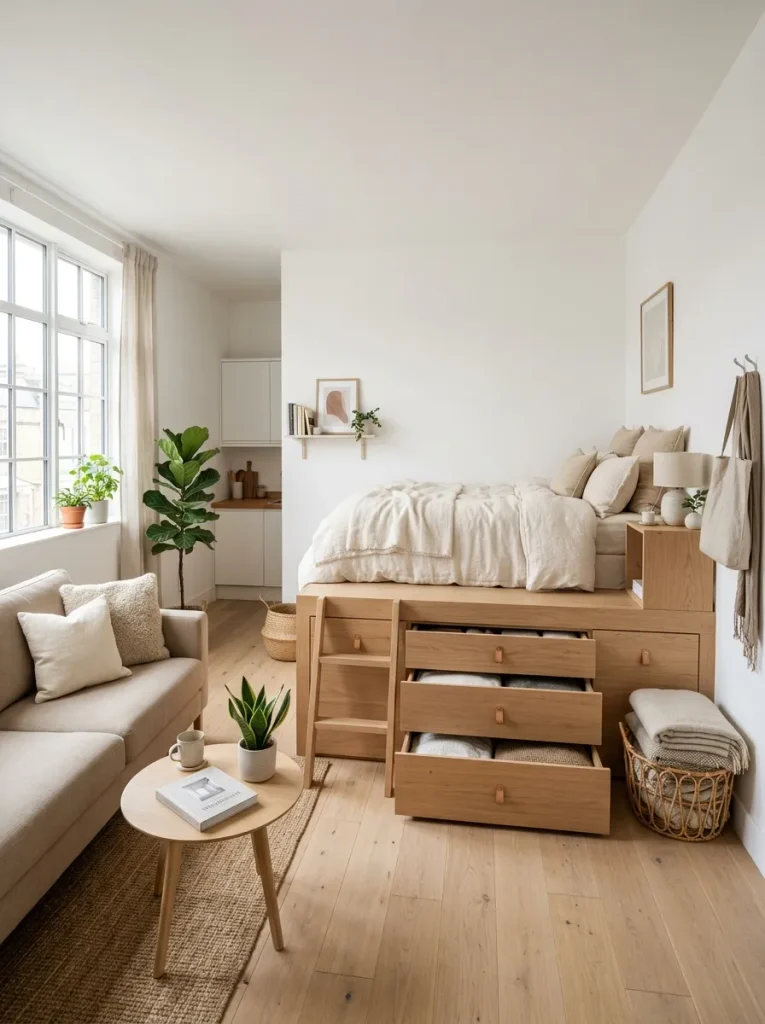
Quick Tip:
Use the space beneath a raised bed for drawers, baskets or low cabinets. Keep frequently used items near the front and seasonal belongings farther underneath so daily organization stays simple.
A raised platform bed can give one piece of furniture several useful functions. Besides defining the sleeping zone, it creates valuable storage underneath. Choose a platform height that still feels comfortable to access and keep the surrounding furniture low enough to maintain open sightlines across the studio.
Slim Sofa Design
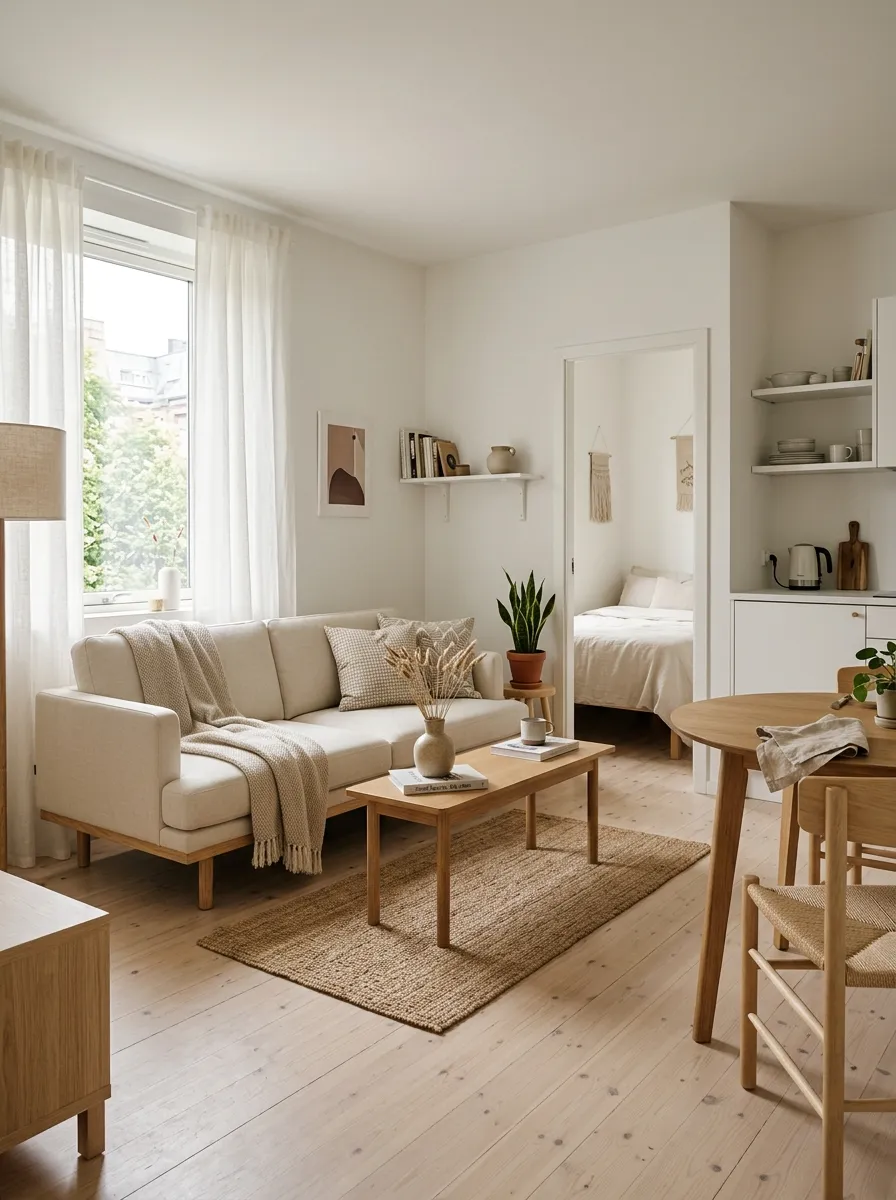
BEFORE: A deep sectional can overwhelm a studio and leave little room for movement. Its large footprint may also make nearby dining or work areas feel squeezed.
AFTER: Replace it with a compact sofa featuring a narrow depth and raised legs. The visible floor underneath helps maintain an open appearance while providing comfortable seating.
Look for sofas around the smaller end of standard dimensions and check the depth before buying. A two-seat design can work surprisingly well when paired with a small accent chair. I’ve noticed that choosing the sofa first makes it much easier to plan the remaining zones around its footprint.
Built-In Wardrobe
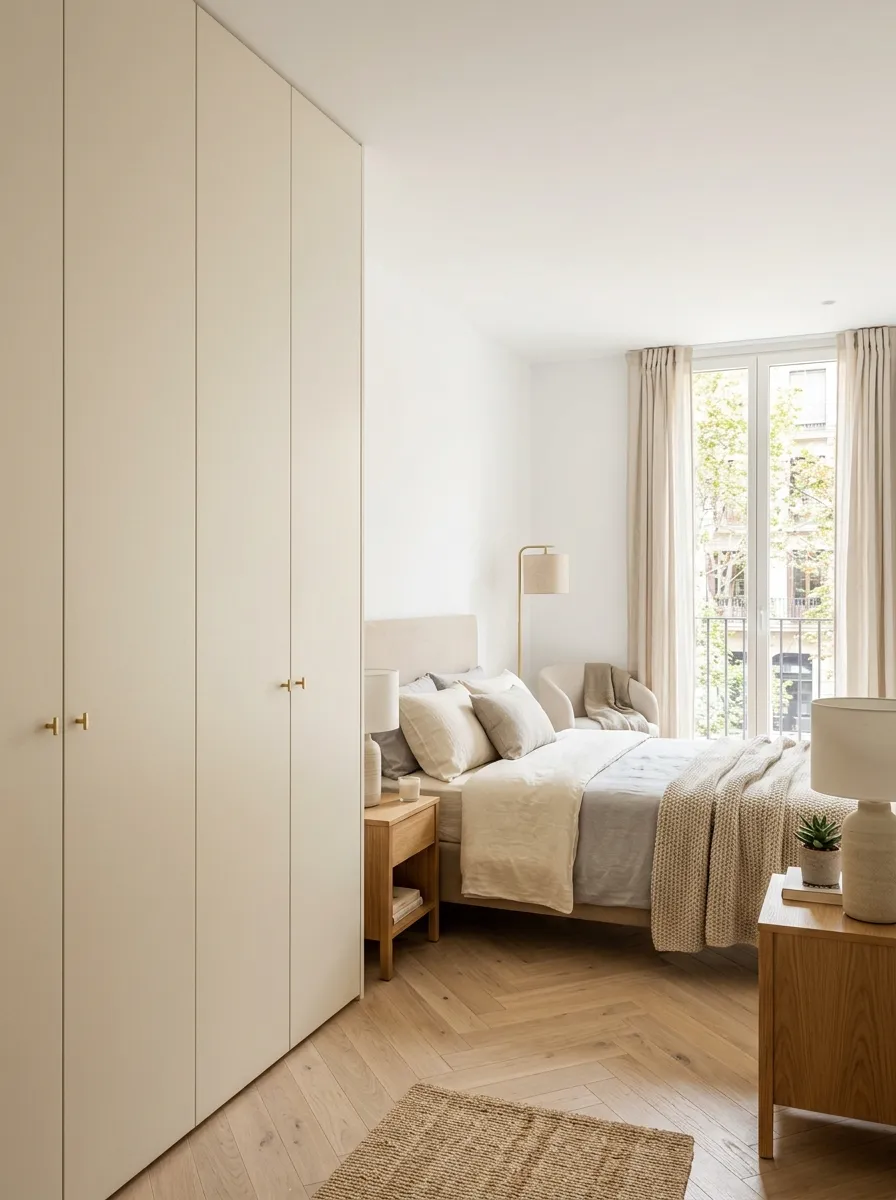
- Use full height: Extend the wardrobe close to the ceiling to maximize storage capacity.
- Choose simple doors: Flat panels in cream or white help the unit blend with the walls.
- Plan the inside: Add shelves, hanging rails and drawers based on what you actually store.
- Keep the front clear: Leave enough room for doors to open and for comfortable movement.
A built-in wardrobe can store a surprising amount without making the studio look crowded. Matching the doors to the wall color helps the unit visually recede. Add interior organizers for clothing and accessories so every section has a purpose, especially when closet space is limited.
Round Coffee Table
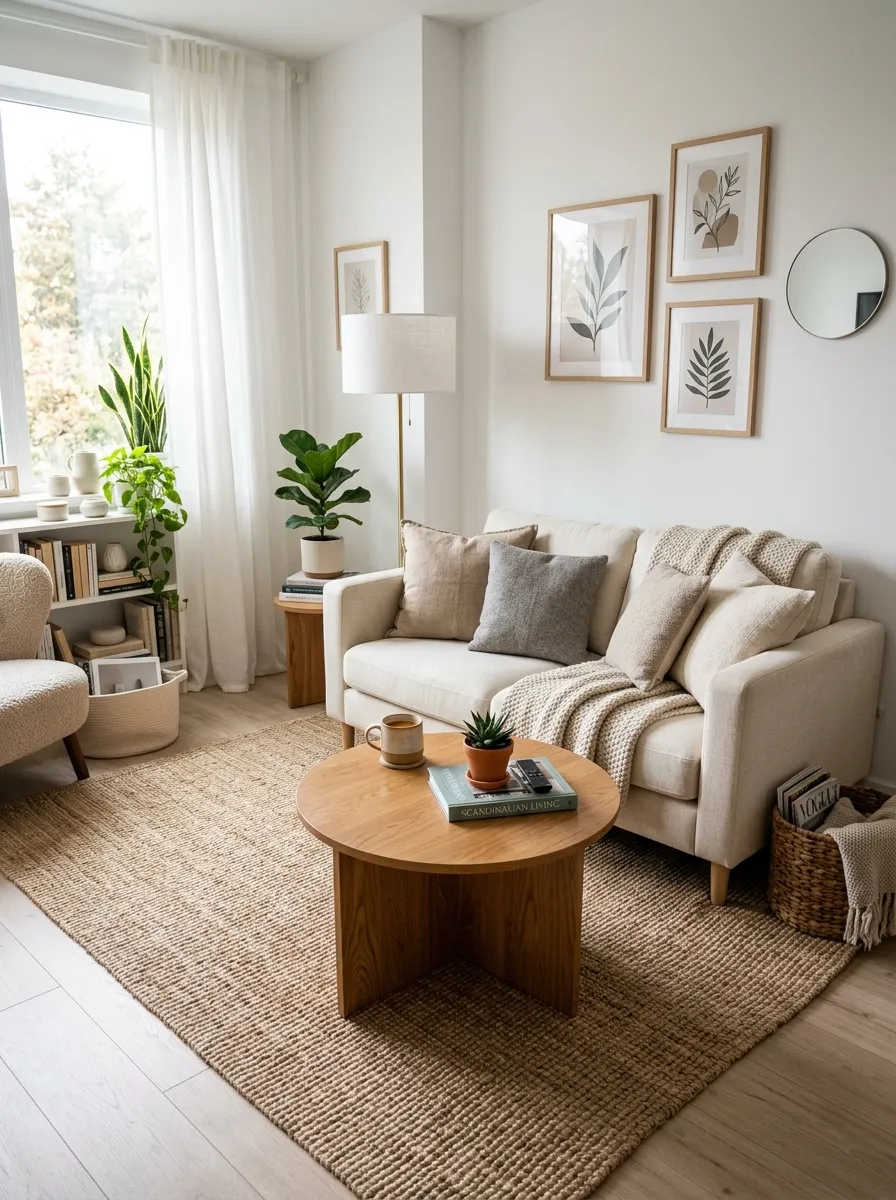
| Comparison Point | Option A: Round Table | Option B: Square Table |
| Movement | Easier around corners | Needs more clearance |
| Visual weight | Softer and lighter | More structured |
| Best for | Tight layouts | Larger seating areas |
| Seating flow | Flexible | More defined |
A round coffee table can make movement around a compact seating area easier because there are no sharp corners to navigate. Choose a smaller diameter that leaves comfortable space between the sofa and nearby furniture. A light wood or glass top can also help preserve the apartment’s airy appearance.
Hidden Storage Ottoman

DO:
- Choose an ottoman with a firm top for everyday use.
- Store blankets, extra cushions or small items inside.
- Select a neutral fabric that coordinates with the sofa.
- Keep enough clearance around it to use it as extra seating.
DON’T:
- Choose an oversized ottoman that blocks the walkway.
- Fill the storage compartment with items you rarely use.
- Place it where the lid cannot open fully.
A storage ottoman can replace several smaller pieces in a studio. Use it as a footrest, extra seat or temporary surface while keeping useful items hidden inside. I’ve seen this approach work particularly well in living areas where every piece needs to serve more than one practical purpose.
Floating Shelves
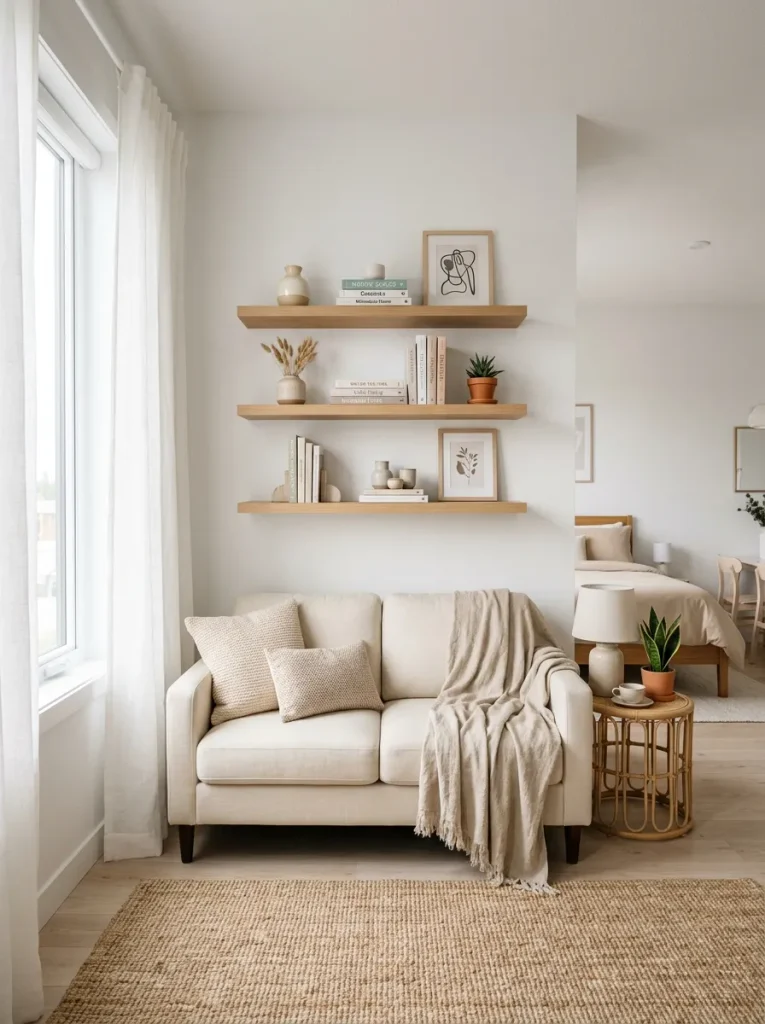
Cost: Low to moderate | Time: One afternoon | Skill Level: Beginner | Best For: Small walls
Floating shelves turn unused wall space into practical storage and display areas. Keep the arrangement simple with a few books, plants or decorative objects. I’ve noticed that leaving some shelf space empty helps a small apartment feel more open while still giving the room personality and useful vertical storage.
Clear Walking Paths
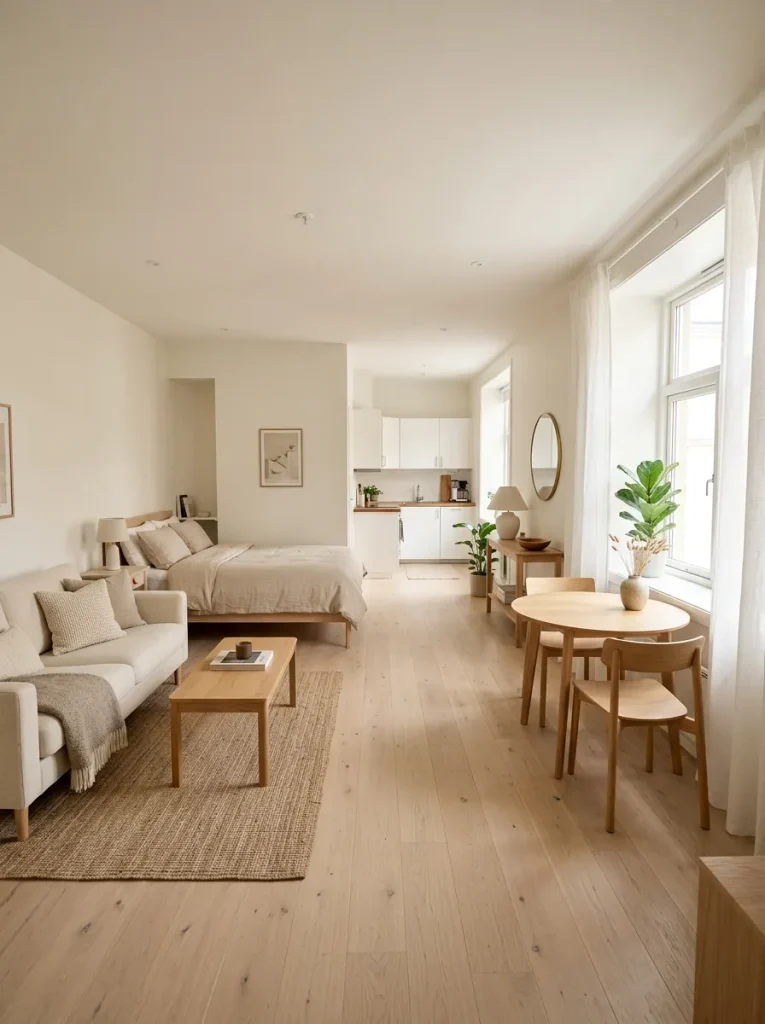
Good circulation can change the entire feel of a studio. Leave a clear route between the entrance, kitchen, bathroom, sleeping area and living space. Avoid placing chairs, baskets or side tables where people naturally walk, even if that means using slightly fewer decorative pieces.
Start by identifying the paths you use most often each day. Then position larger furniture around those routes rather than filling the room first. A few open stretches of flooring make the apartment easier to navigate and help each zone feel connected instead of crowded.
Light Color Scheme
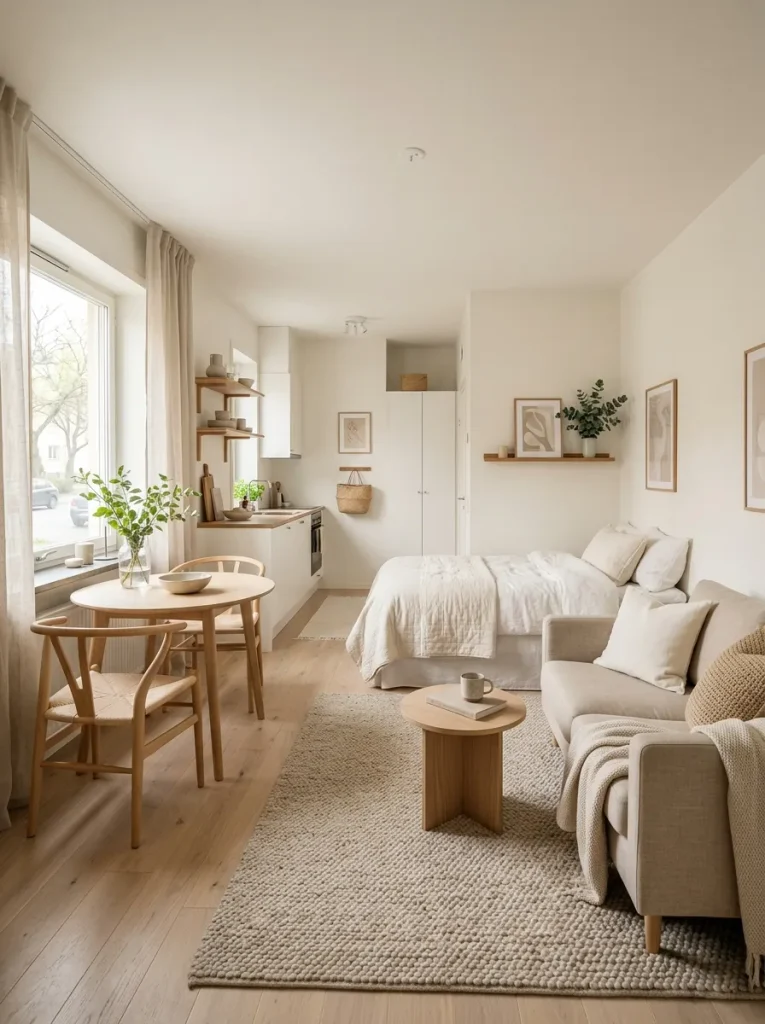
- Choose light neutrals for larger surfaces such as walls, rugs and sofas.
- Add pale wood to introduce warmth without heavy visual contrast.
- Use one or two muted accent colors for cushions or artwork.
- Repeat the same light tones across different zones for visual continuity.
- Add natural textures to keep the palette from feeling flat.
A light color scheme can help a studio feel brighter and more spacious, especially when natural light is limited. Cream, ivory, soft beige and pale wood create a calm base that works across living, sleeping and dining areas. Small darker accents can then add definition without overwhelming the room.
Wall-Mounted Lighting
Facts:
Cost: Low to moderate | Time: 30 minutes to 1 hour | Skill Level: Beginner | Best For: Saving surface space
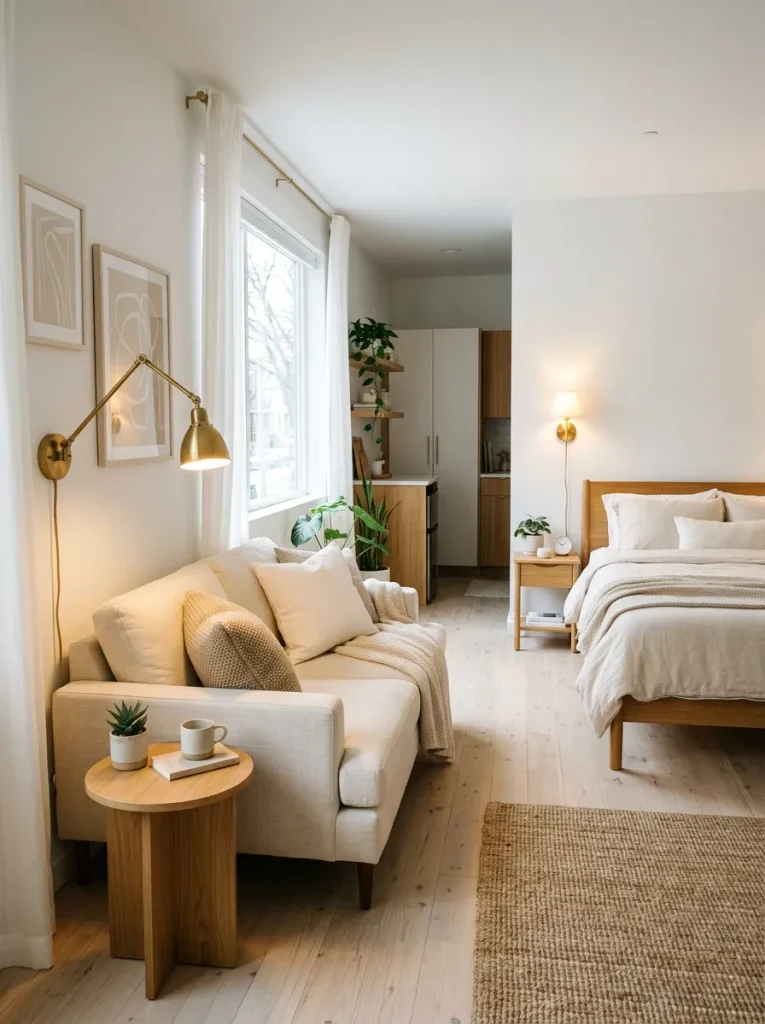
Wall-mounted lighting keeps valuable tables and nightstands free while providing focused illumination. Sconces beside the bed can replace bulky lamps, while adjustable wall lights near a sofa create a comfortable reading spot. Choose warm bulbs and simple fixtures that match the room’s existing finishes for a cohesive look.
Bedside Curtains
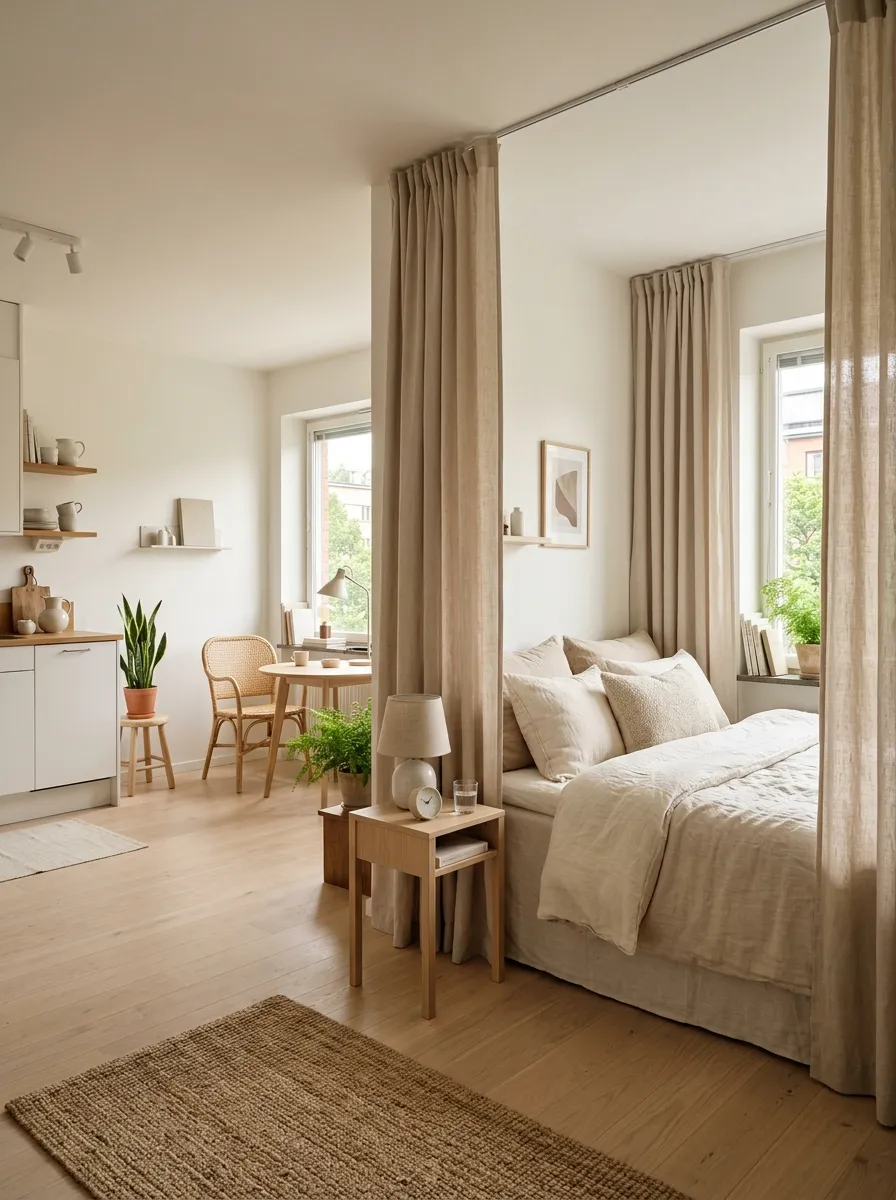
Soft curtains around the bed can create a private sleeping zone without adding a permanent wall. Choose ceiling-mounted panels that can open fully during the day and close at night. Lightweight linen keeps the area bright, while thicker fabric offers more privacy when the studio needs a stronger visual boundary.
Nesting Tables
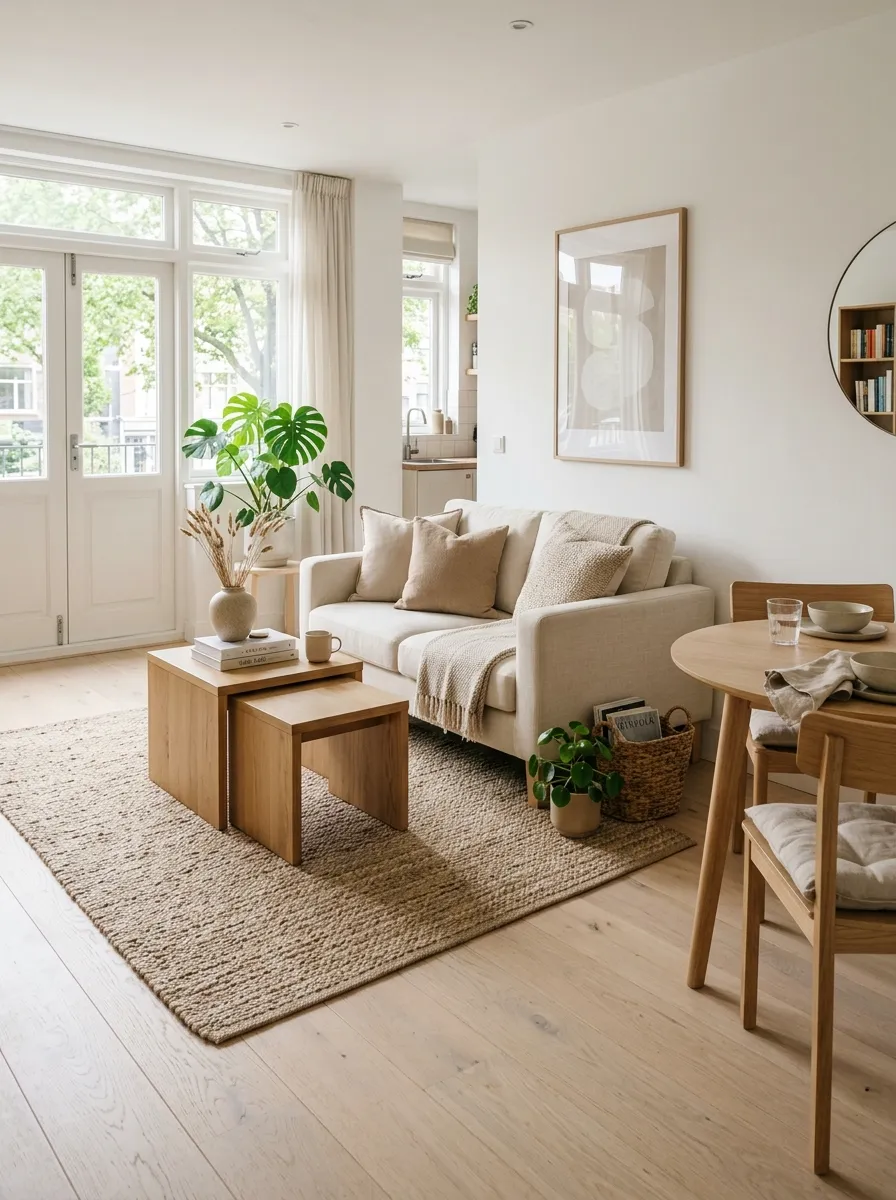
- Choose tables that slide completely underneath each other when not needed.
- Keep the larger table available for everyday drinks, books or decor.
- Pull out the smaller table when guests need extra surface space.
- Select matching finishes so both tables look intentional together.
- Leave enough room around them for comfortable movement.
Nesting tables give a small living area flexible surface space without permanently taking up the footprint of two separate tables. Keep the smaller table tucked away during quiet periods, then pull it forward when serving snacks, drink or working from the sofa.
Tall Floor Lamp
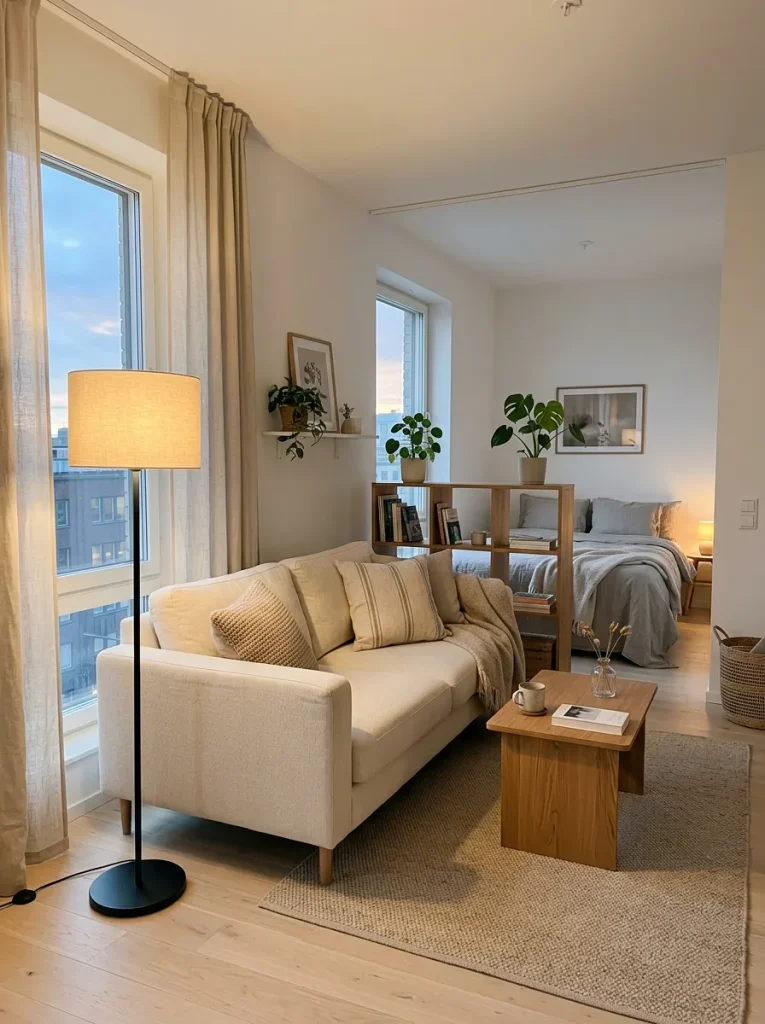
Cost: Low to moderate | Time: 15 minutes | Skill Level: Beginner | Best For: Dark corners
A tall floor lamp adds useful lighting without needing a table or cabinet underneath it. Choose a slim base and position it beside the sofa or in an empty corner. Warm bulbs create a cozy evening atmosphere while keeping valuable surfaces available for everyday items.
Sliding Door Divider
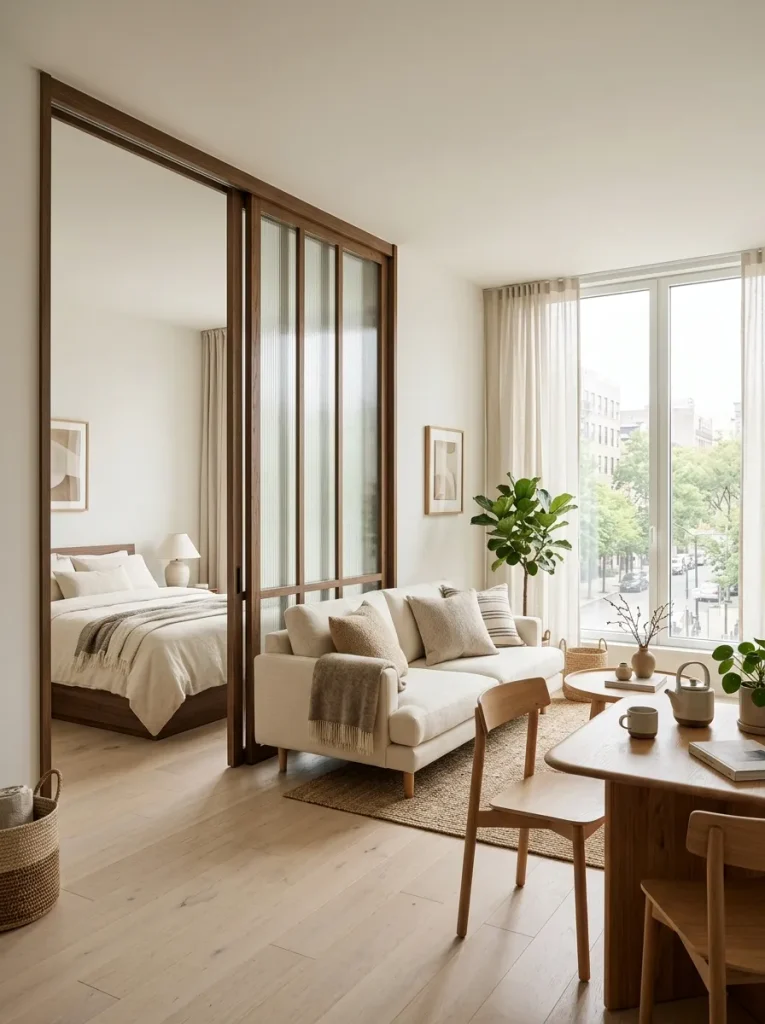
A sliding door can give a studio a stronger sense of separation without requiring the clearance of a traditional swinging door. Glass panels preserve light, while wood or frosted sections provide more privacy. Choose a slim track system and keep the surrounding furniture compact so the divider does not interrupt circulation.
Multi-Use Bench
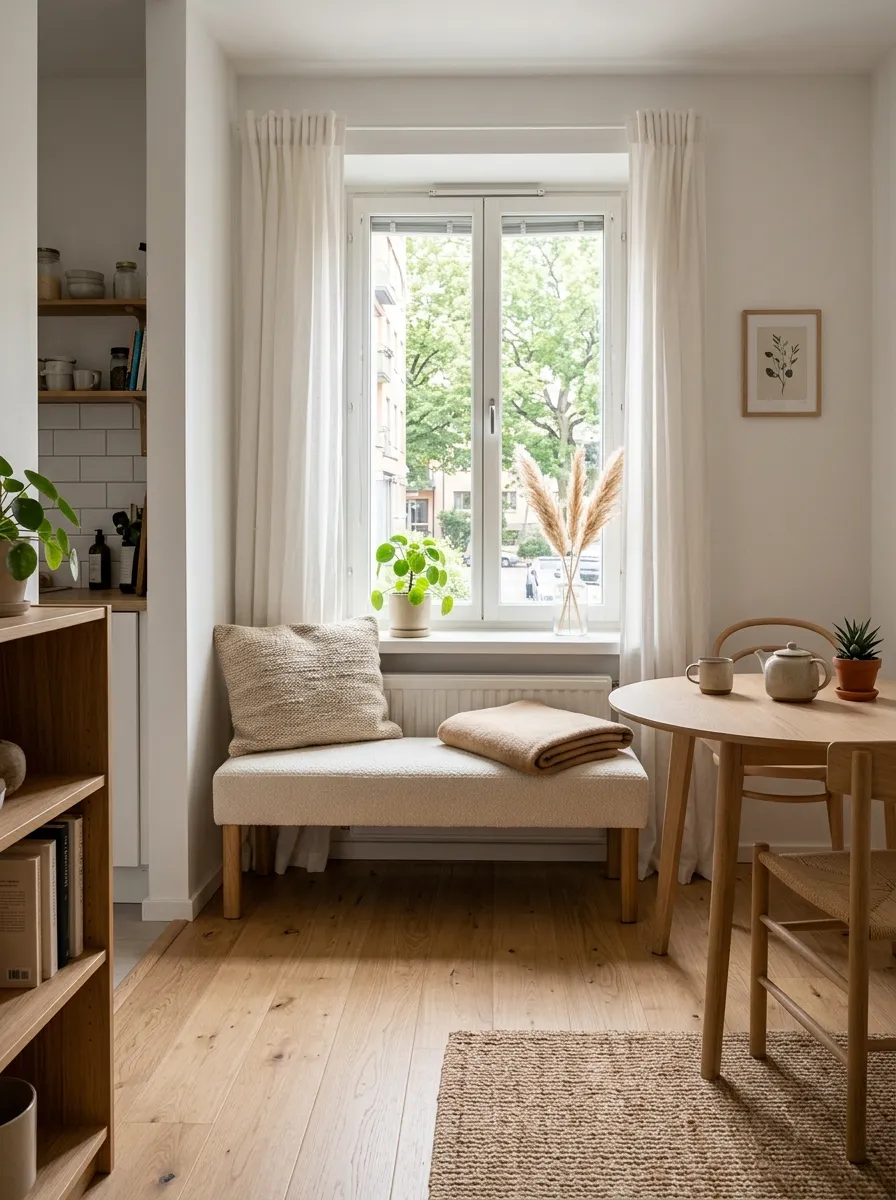
- Place the bench beneath a window or along an unused wall.
- Use it as extra seating when friends visit.
- Add a cushion for comfortable everyday use.
- Choose a narrow design that does not block the main walkway.
- Select storage seating if you need space for blankets or accessories.
A multi-use bench can serve as seating, a small resting spot or extra storage while taking up less room than a chair and cabinet combination. Keep its design simple and lightweight. In my experience, a bench works especially well near dining areas because it can slide closer to the table when needed.
Corner Reading Nook
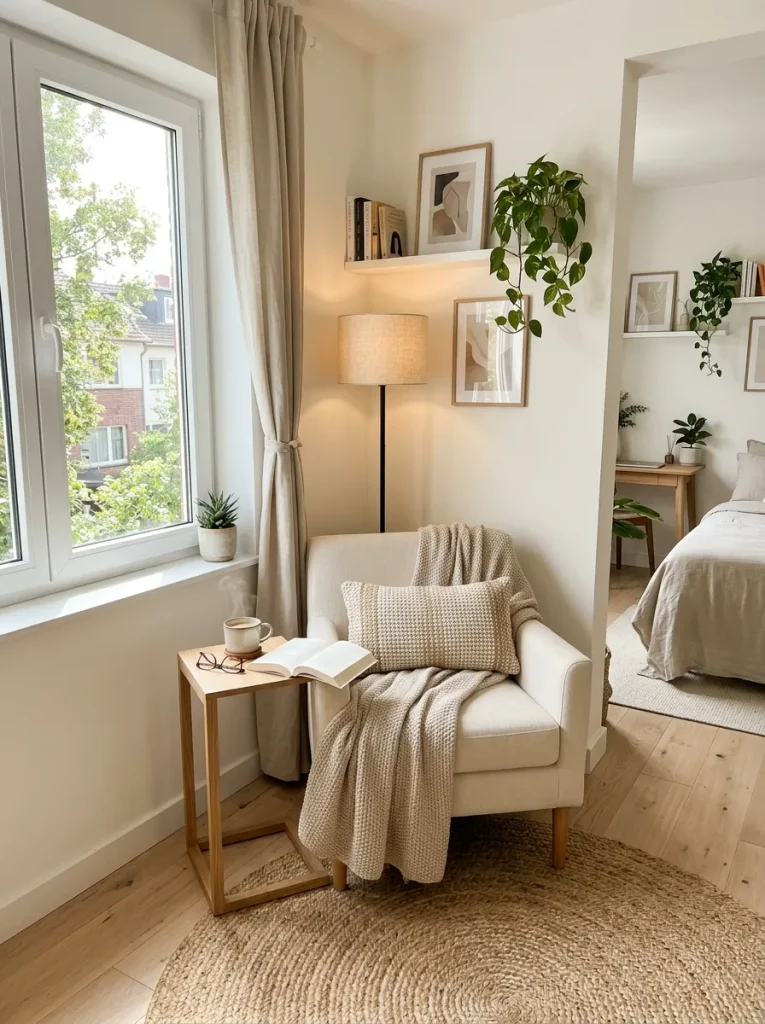
- Pick an unused corner: Choose a spot near a window or beside a quiet wall that does not interrupt circulation.
- Add compact seating: Use a narrow armchair or cushioned bench that fits comfortably within the available footprint.
- Bring in light: Add a slim floor lamp for reading after sunset.
- Keep surfaces small: Use a tiny side table for a book, drink
A small reading nook gives the studio a dedicated relaxing spot without requiring a separate room. Keep the furniture compact and use soft textures for comfort. A corner near natural light works especially well during the day, while a warm floor lamp makes the area useful in the evening too.
Open Shelving

| Comparison Point | Option A: Open Shelving | Option B: Closed Cabinet |
| Light flow | Keeps both sides bright | Blocks more visual light |
| Storage | Easy access and display | Better for hiding clutter |
| Visual effect | Airy and open | More solid and defined |
| Best use | Dividing studio zones | Concealing everyday items |
Open shelving can divide different areas while allowing light and sightlines to pass through. Use baskets or matching storage boxes for smaller belongings and leave some sections open. This approach works especially well between a bed and sofa because it creates separation without making the studio feel boxed in.
Neutral Textiles
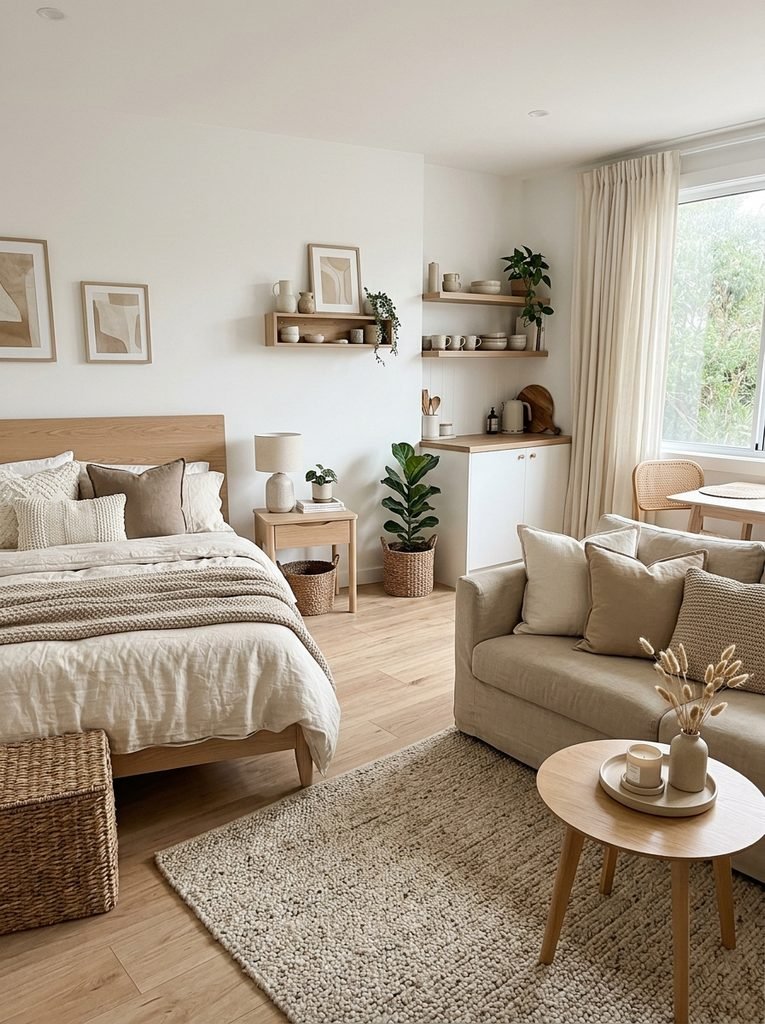
DO:
- Layer cream, ivory, beige and soft taupe textiles.
- Mix linen, cotton, woo and woven textures for depth.
- Repeat one neutral shade across different apartment zones.
- Choose washable fabrics for frequently used furniture.
DON’T:
- Use too many unrelated beige shades.
- Cover every surface with heavy patterns.
- Choose thick textiles that make the room feel visually dense.
- Ignore how fabrics will hold up to daily use.
Neutral textiles can make a studio feel connected without requiring matching furniture. Layering different materials keeps a pale palette from looking flat, while repeated colors help the living, sleeping and dining areas feel like one cohesive home. I’ve noticed that simple texture changes often add more warmth than adding extra decorative objects.
CONCLUSION
A small apartment can still feel organized, comfortable, stylish and full of personality. These Studio Apartment Ideas show how thoughtful layouts, smart storage, flexible furniture, soft lighting and simple decor can help every part of your home feel more useful.
You do not need to change everything at once. Start with one idea that solves a daily problem, then build from there. I’ve seen how small changes like these can completely shift the way a space feels. Save this post on Pinterest for your next home refresh, try the ideas that fit your lifestyl and share the article with someone who could use more space and inspiration. Start small, make it yours and enjoy the difference.nt Ideas for a brighter, calmer home. Discover smart layouts, storage tips and stylish ways to save space and inspire your next refresh.