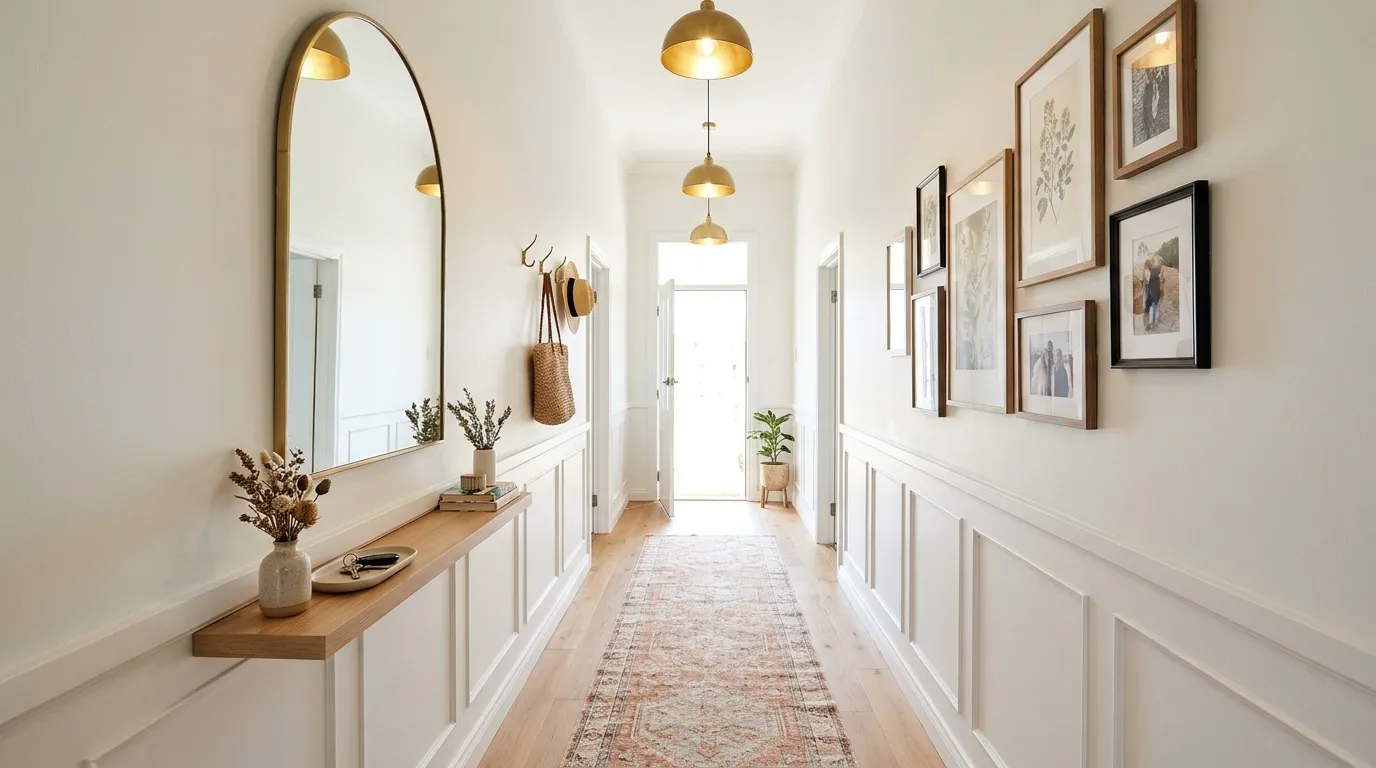
28 Hallway Decor Ideas That Make Narrow Spaces Shine
A narrow hallway does not have to feel dark, empty or impossible to decorate. The right details can make even the smallest passage feel brighter, warmer and more organized.
These Hallway Decor Ideas are designed for real homes where floor space is limited but style still matters. From slim consoles and mirrors to layered lighting, runners, wall art and practical storage, each idea focuses on making better use of the space you already have. You will find simple decorating solutions that add personality without blocking the walkway or creating unnecessary clutter.
In my experience, narrow hallways look best when decoration works vertically and every piece has a purpose. A few thoughtful changes can create a polished entrance without a major renovation or large budget.
Slim Console Table

A slim console can give a narrow hallway a useful focal point without stealing precious walking space. Choose a table around 8 to 12 inches deep, then leave the surface mostly open. One lamp, a small tray and a single decorative object are usually enough to keep the arrangement practical.
I’ve noticed that open-leg designs feel lighter than bulky cabinets in tight corridors. Use the lower area for a small basket or two, but keep the walkway completely clear. Matching the wood finish to nearby frames or flooring also helps separate hallway elements feel visually connected.
Gallery Wall

- Choose five to seven frames that share two or three colors.
- Mix photographs, botanical prints, line drawings and simple typography.
- Keep frame spacing consistent, especially along a narrow wall.
- Arrange the artwork on the floor before hanging anything.
- Leave clear space near door frames and switches.
A gallery wall brings personality upward, leaving the floor available for movement. For narrow corridors, vertical arrangements often work better than wide clusters because they follow the hallway’s shape. Repeat one accent color in the artwork and nearby accessories to make the display feel intentional rather than crowded.
Warm Wall Sconces

Quick Tip:
Use warm bulbs around 2700K to create a softer, welcoming atmosphere. Keep fixtures slim and positioned where they will not interfere with doors or walking paths and follow electrical and rental rules before installing anything permanently.
Layered lighting helps a hallway feel finished even when natural light is limited. Wall sconces can also draw attention toward artwork or architectural details without using floor space. In my experience, two smaller fixtures spaced evenly often look more balanced than one oversized light in a long, narrow passage.
Round Wall Mirror

BEFORE:
A narrow hallway can feel darker and tighter when walls are completely plain. Limited floor space also makes bulky decorative pieces difficult to use without creating obstacles.
AFTER:
Hang one generously sized round mirror where it can reflect daylight or a nearby light source. Keep the area around it simple so the reflection adds depth without creating visual clutter.
A curved mirror softens the straight lines commonly found in hallways while helping bounce light around the space. Choose a thin frame in black, brass or natural wood depending on your existing finishes. Leave enough clearance around doors and switches so the mirror remains decorative without becoming inconvenient.
Runner Rug

- Measure the hallway length and width before choosing a runner.
- Leave a small border of visible flooring along both sides.
- Select a low-pile washable design for easier cleaning.
- Use a nonslip rug pad to keep the runner securely positioned.
A well-sized runner instantly defines the corridor while adding softness underfoot. Look for subtle patterns that disguise everyday dirt, especially near entrances. Keep the design connected to your wall art or nearby rooms rather than choosing a completely unrelated color. A practical runner can become the hallway’s main decorative layer.
Floating Entry Shelf

| Feature | Open Shelf | Small Cabinet |
| Floor Space | None | Some required |
| Storage | Visible essentials | Hidden belongings |
| Visual Weight | Light and airy | More substantial |
| Best For | Narrow hallways | Wider entrances |
A floating shelf gives a narrow corridor a useful landing spot without taking up floor space. Keep only everyday essentials such as keys, sunglasses or a small tray on top. For a cleaner appearance, choose one shelf with a simple finish and let the surrounding wall provide most of the visual impact.
Framed Botanical Prints

DO
- Choose botanical prints with a limited color palette.
- Use slim frames to keep the hallway visually light.
- Arrange smaller prints vertically along long walls.
- Match the artwork colors with nearby textiles.
DON’T
- Fill every section of the wall with artwork.
- Mix too many frame finishes in one arrangement.
- Hang frames where doors can strike them.
- Choose oversized pieces that narrow the visual walkway.
Botanical artwork introduces natural color without requiring additional furniture. I’ve noticed that olive, beige and muted green prints work especially well with neutral hallways because they add interest without overwhelming the narrow proportions. Keep the arrangement slightly above eye level and repeat one botanical shade in a nearby rug or accessory.
Woven Wall Baskets

Cost: Low to Moderate | Time: 30 to 45 minutes | Skill Level: Beginner
Best For: Empty walls and lightweight storage | Style: Organic or boho
Key Benefit: Adds texture without using floor space
Woven baskets bring warmth and dimension to a hallway while keeping the floor completely open. Select baskets in different sizes but similar natural tones, then arrange them as a loose vertical grouping. Use shallow styles for decoration and reserve deeper baskets for lightweight items where appropriate.
Vertical Art Arrangement

Vertical artwork makes smart use of wall height when the hallway has limited width. Stack smaller frames above one another instead of spreading them across the walking area. Keep the gaps consistent and align the outer edges carefully. This creates a structured display that follows the hallway’s natural proportions.
Narrow Wall Hooks
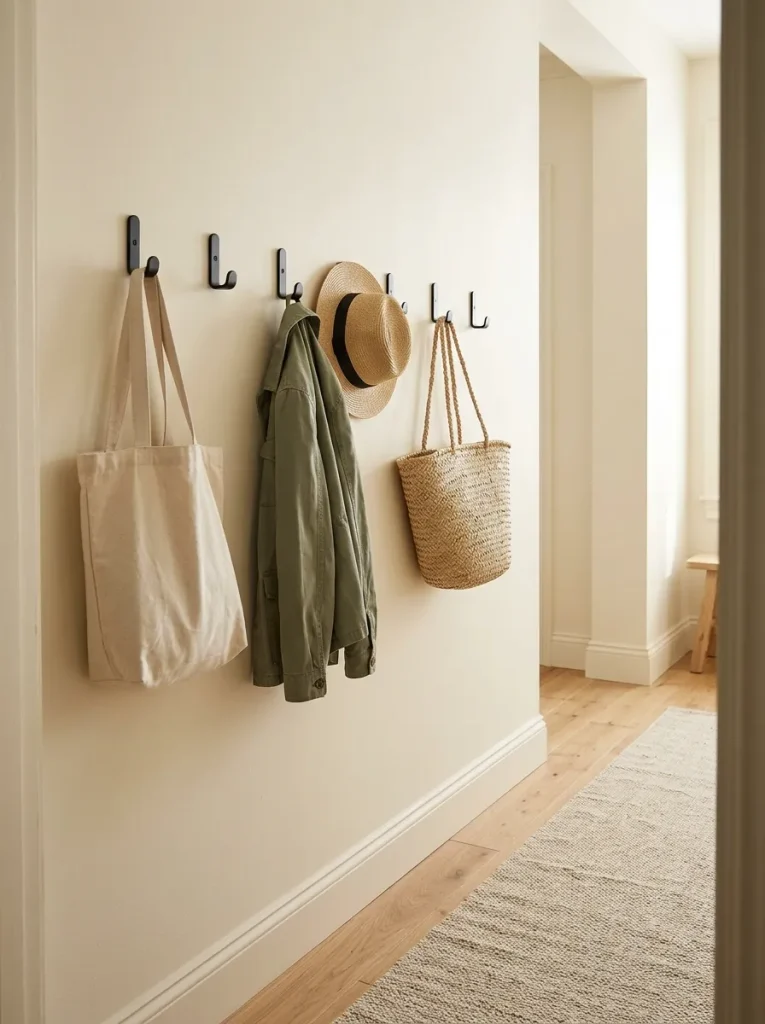
- Install hooks at a comfortable height for everyday use.
- Choose slim hooks that project minimally from the wall.
- Group them near the entrance for easy access.
- Keep only frequently used items on display.
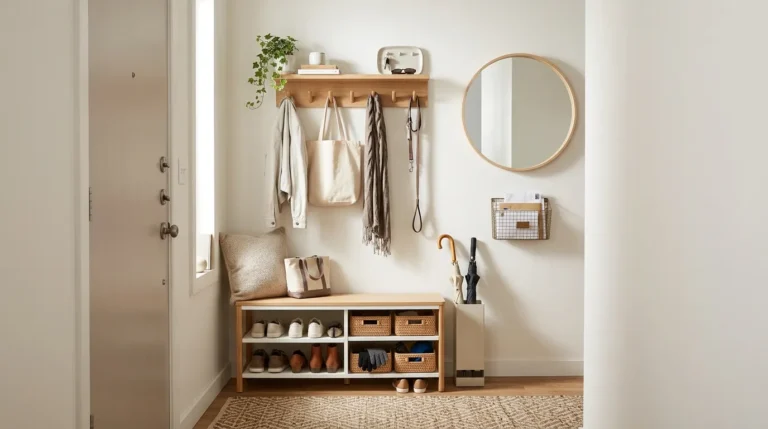
A small row of hooks can prevent coats, bags and hats from collecting on chairs or floors. Choose a finish that matches your existing hardware for a more unified appearance. For especially narrow hallways, individual hooks usually take less visual space than a bulky coat rack.
Arched Mirror

Quick Tip:
Choose a tall mirror with a narrow frame so it adds height without making the corridor feel crowded. Position it where it can reflect a window, lamp or brighter section of the home rather than a cluttered storage area.
An arched silhouette adds a softer shape to a hallway filled with straight architectural lines. A tall design can visually emphasize ceiling height while providing a useful last-minute outfit check before leaving home. Keep nearby accessories minimal so the reflection remains clean and the hallway feels more open.
Minimal Console Styling
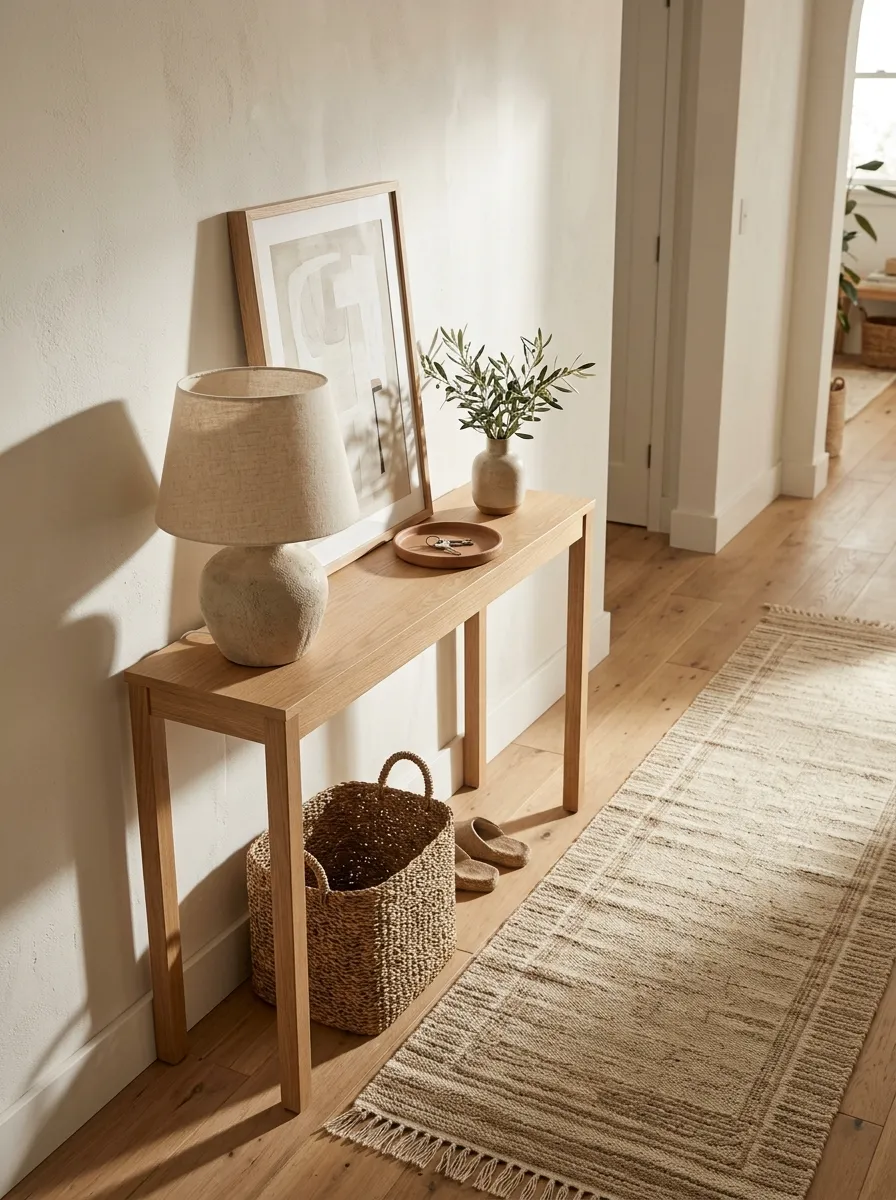
BEFORE:
A console can quickly become a drop zone for mail, keys, bags and random household items. Even a beautiful table starts looking cluttered when every available surface becomes storage.
AFTER:
Clear the surface and keep only three or four intentional pieces. Use a small tray for daily essentials, one vertical item such as a frame and one natural accent such as greenery or a ceramic vase.
The simplest styling often makes the strongest impression in a narrow corridor. Leave plenty of empty surface around decorative pieces so the console does not feel overloaded. I’ve noticed that limiting visible objects also makes everyday cleaning faster, which matters in busy homes where the hallway gets constant traffic.
Layered Picture Frames

- Select three to five frames in related finishes.
- Mix personal photographs with simple artwork or botanical prints.
- Arrange the largest frame slightly behind smaller pieces.
- Keep the grouping close enough to feel connected.
- Leave open wall space around the arrangement.
Layered frames create a collected appearance without requiring a large gallery wall. Use different frame sizes to add depth, but keep the color palette controlled. Personal photos make the hallway feel lived-in, while simple prints prevent the display from becoming too busy. This approach works particularly well above a narrow console.
Statement Wallpaper Strip

| Feature | Full Wall | Accent Strip |
| Visual Impact | Strong | Subtle |
| Material Needed | More | Less |
| Small Hallway Feel | Can feel busy | Keeps space open |
| Best For | Larger corridors | Narrow passages |
A focused wallpaper strip can introduce pattern without making a tight hallway feel enclosed. Choose a subtle botanical, geometric or textured design that coordinates with your existing colors. Before installation, check whether your walls and housing rules allow removable products. A smaller application also makes future decorating changes easier.
Decorative Wall Ledge

DO
- Choose a shallow ledge that projects minimally.
- Display lightweight frames and small decorative objects.
- Leave gaps between pieces for visual breathing room.
- Rotate artwork occasionally to refresh the hallway.
DON’T
- Place heavy objects where they could fall.
- Fill the ledge from end to end.
- Install it where doors or furniture may collide.
- Use too many small decorations at once.
A wall ledge offers flexible decoration while keeping the floor completely clear. It is especially useful for renters because artwork can be changed without redesigning the entire corridor. Keep larger pieces toward the center and smaller accents at the sides for a balanced arrangement that still feels relaxed.
Light Wood Accents

Cost: Low to Moderate | Time: 1 hour | Skill Level: Beginner
Best For: Neutral hallways | Colors: Oak, cream, beige, sage
Result: Warmer and more cohesive appearance
Light wood introduces warmth without making a narrow hallway feel visually heavy. Repeat the same wood tone through frames, shelves, trays or furniture rather than adding many unrelated finishes. I’ve noticed that pale oak works particularly well against white or cream walls because it adds definition while keeping the corridor bright.
Black Frame Contrast

A few black frames can give a neutral hallway sharper definition without adding bulky furniture. Choose matching thin frames for a polished appearance, then soften the contrast with warm wood, woven textures or cream textiles. Keep the artwork simple so the dark borders become an accent rather than dominating the corridor.
Entryway Catchall

Quick Tip:
Place the catchall exactly where you naturally drop your keys when entering. Choose a shallow tray with raised edges and keep only daily essentials inside so it does not become another clutter zone.
A dedicated landing spot can make the entire entrance feel tidier within minutes. Use a small tray for keys and loose essentials, then pair it with nearby hooks for bags or jackets. In my experience, keeping storage close to the door works better than relying on a drawer several steps away because the habit becomes automatic.
Tall Plant Accent

BEFORE:
A narrow hallway can look flat when every decorative element stays at the same height. Empty corners may also feel unfinished without adding enough room for bulky furniture.
AFTER:
Place one tall, narrow plant in an unused corner where it will not interrupt the walking path. Choose a compact planter and foliage that suits the available light.
Vertical greenery draws the eye upward while introducing a natural color that works with neutral decor. Snake plants, slim palms or realistic faux greenery can suit different lighting conditions. Keep leaves away from doorways and avoid oversized planters that reduce the usable width of the passage.
Textured Wall Panel

- Select one wall or a small section for the textured treatment.
- Choose vertical or subtle patterns to complement the hallway’s proportions.
- Match the panel color closely with existing walls and trim.
- Check rental and installation rules before applying the material.
Texture adds depth without requiring bold artwork or extra furniture. Vertical grooves can emphasize ceiling height, while linen-inspired surfaces create a softer appearance. Keep surrounding decorations restrained so the wall remains the focal feature. This approach is especially useful when you want visual interest but prefer a calm, neutral decorating scheme.
Soft Neutral Palette
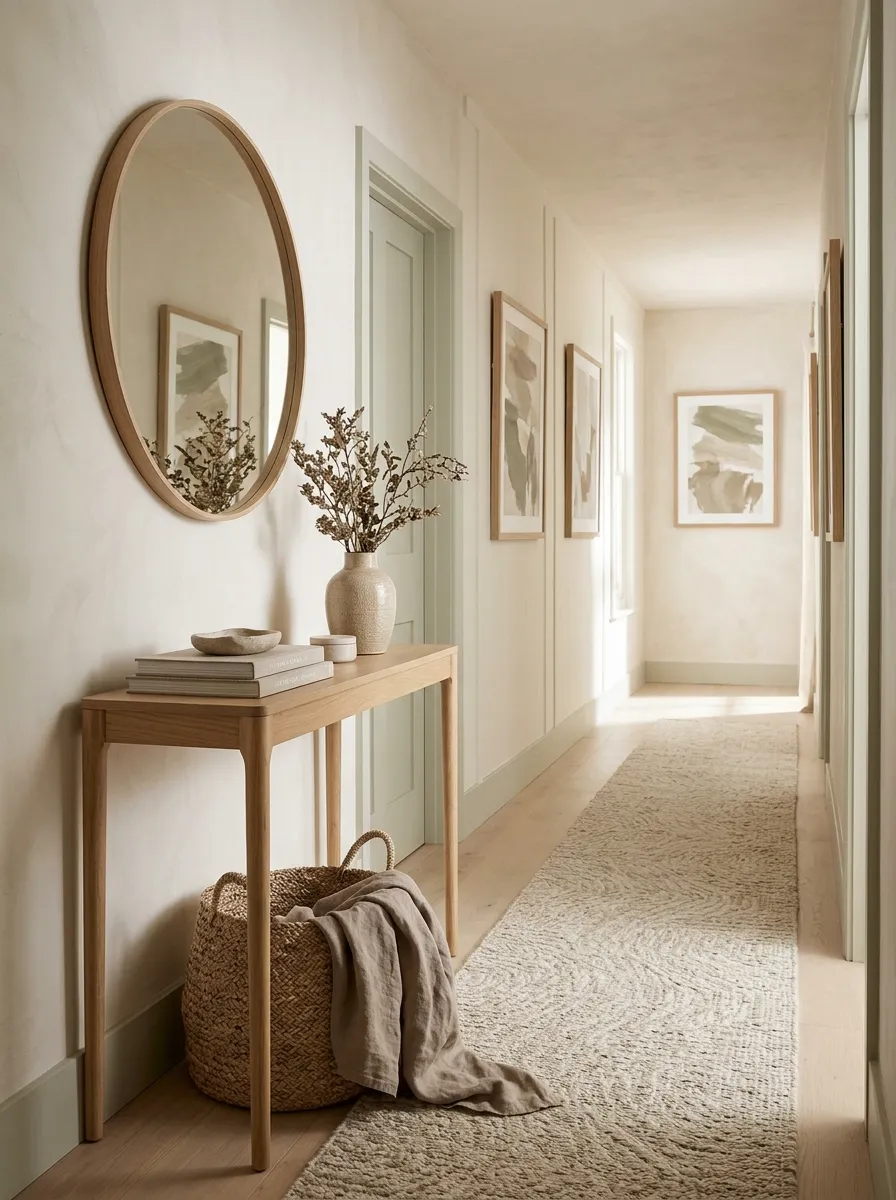
| Feature | Cool Neutrals | Warm Neutrals |
| Main Colors | White, gray, blue | Cream, beige, taupe |
| Atmosphere | Crisp and modern | Warm and welcoming |
| Best Accents | Black or silver | Wood, brass, sage |
| Visual Effect | Bright and clean | Soft and cozy |
A controlled neutral palette helps a narrow hallway feel spacious rather than visually fragmented. Start with cream or warm white as the main color, then add beige and one muted accent shade. Natural wood and woven materials provide enough texture to keep the corridor interesting without filling the walls with decoration.
Slim Shoe Cabinet
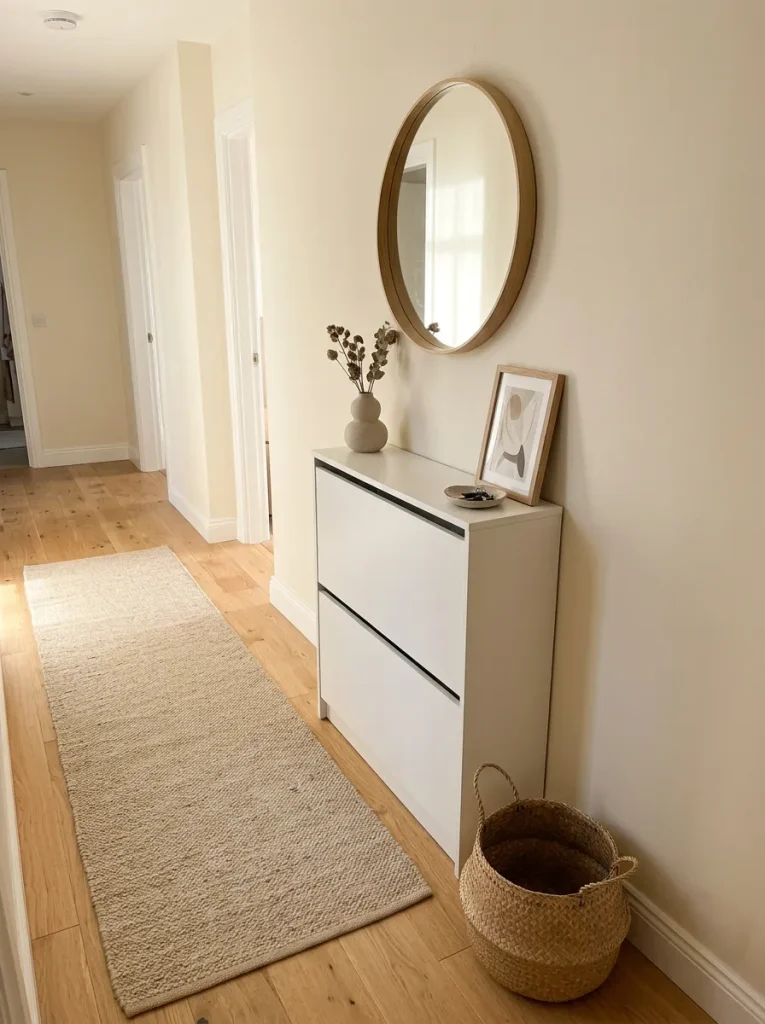
DO
- Choose a shallow cabinet designed for narrow entryways.
- Store everyday shoes inside to keep the floor clear.
- Use the top surface for one or two decorative pieces.
- Secure tall furniture properly if required for stability.
DON’T
- Choose a cabinet that restricts the walking path.
- Overfill compartments until doors become difficult to close.
- Leave frequently worn shoes scattered beside it.
- Cover nearby vents, outlets or door openings.
A slim shoe cabinet keeps footwear hidden while giving the hallway a cleaner outline. Look for a vertical design with shallow compartments rather than a deep storage unit. Pairing it with a mirror above creates a useful entry zone without consuming much floor space, especially in apartments with tight corridors.
Ceiling Pendant Light

Cost: Moderate | Time: 1 to 2 hours | Skill Level: Intermediate
Best For: Dim hallways | Finish: Brass, black or natural materials
Result: Focused overhead illumination
A distinctive ceiling light can become a decorative feature without taking up wall or floor space. Choose a compact fixture with a simple silhouette and warm bulb. For rental homes or shared buildings, confirm that electrical changes are permitted before replacing an existing fixture. Keep the scale proportional to the hallway.
Family Photo Line
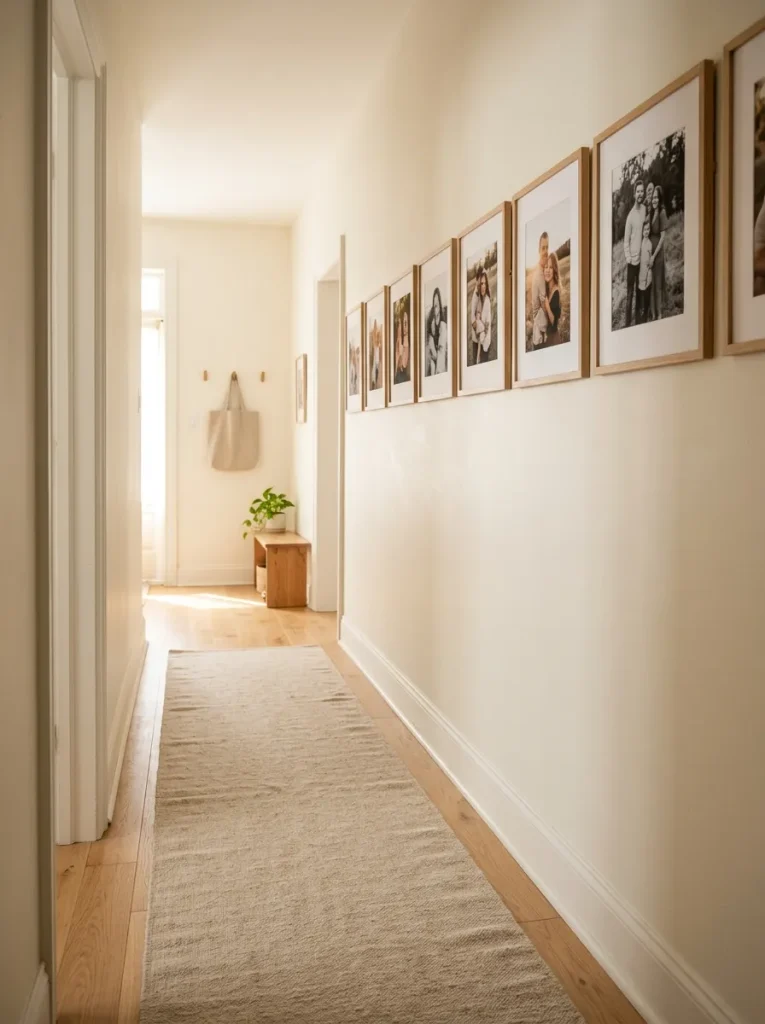
Quick Tip:
Print photographs in the same size and use matching frames to create a clean visual line. Leave equal spacing between each frame and keep the arrangement away from door swings or high-traffic contact points.
A family photo line turns an ordinary passage into a personal display without taking up valuable floor space. Choose meaningful moments rather than filling every available section of wall. I’ve seen simple black-and-white photographs work especially well because they add personality
Mirrored Console Styling
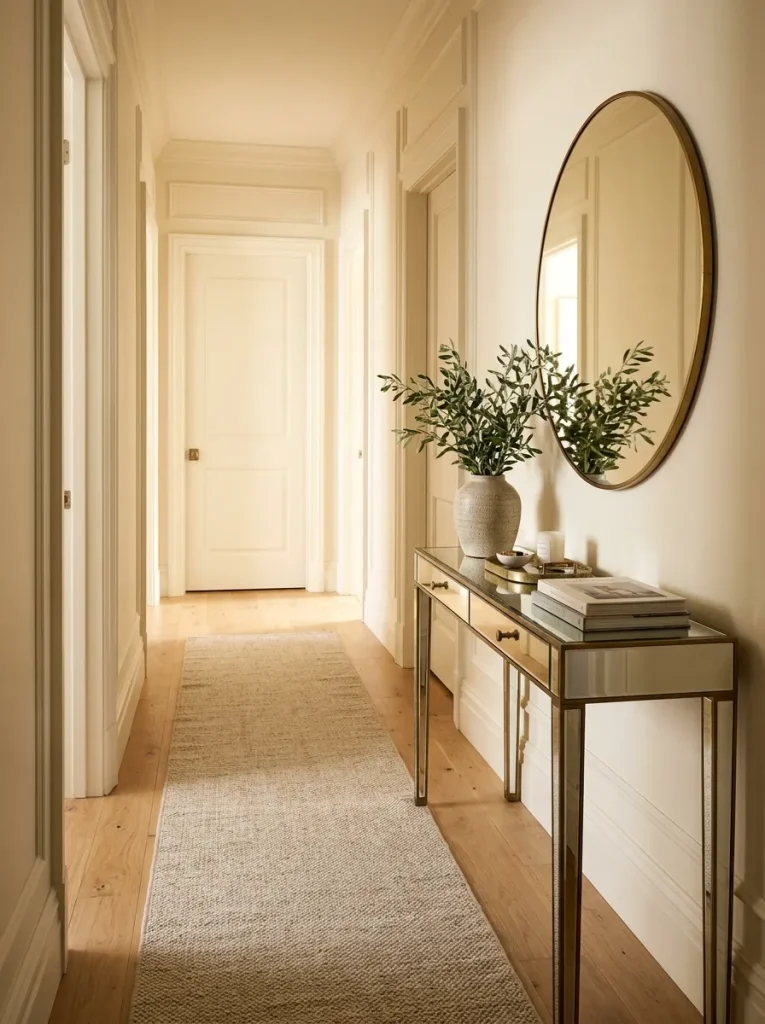
BEFORE:
A narrow hallway can feel visually heavy when furniture has dark finishes or solid panels. Decorative objects may also compete with limited walking space.
AFTER:
Choose a slim console with reflective surfaces or a light finish, then keep the styling minimal. Add one tray, a small vase and a mirror above it to create a compact focal point.
Reflective furniture can bounce available light and make the corridor appear less enclosed. Avoid combining too many shiny surfaces, since excessive reflection can feel busy. A single mirrored element balanced with soft textiles and natural wood gives the hallway enough brightness while keeping the overall look comfortable and approachable.
Gallery Light Strip
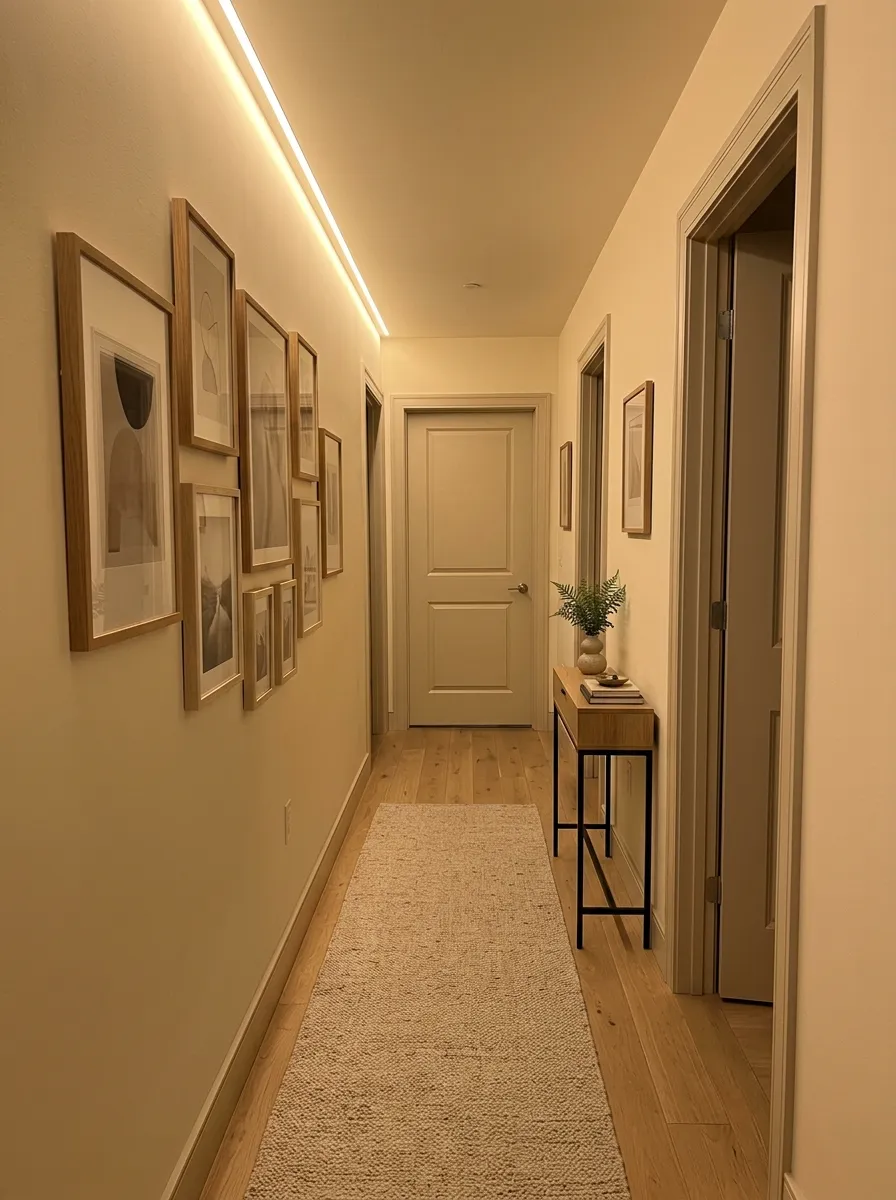
- Choose a warm LED strip or slim picture light suitable for the space.
- Position the light so artwork receives even illumination.
- Hide or organize visible cables for a cleaner appearance.
- Use approved adhesive or mounting hardware where required.
Good lighting can make even simple artwork feel more intentional. A narrow light source above or beside a gallery adds a soft evening glow without requiring another floor lamp. Keep the brightness moderate so the hallway remains comfortable at night. This setup works particularly well where natural daylight disappears after sunset.
Natural Wood Bench

| Feature | Backless Bench | Storage Bench |
| Footprint | Very slim | Slightly deeper |
| Storage | None | Hidden compartments |
| Appearance | Light and open | More substantial |
| Best For | Tight hallways | Wider entry areas |
A narrow bench provides a practical place to sit while putting on shoes without requiring a full entryway setup. Choose a backless design for the smallest corridors, then slide a basket underneath for bags or footwear. Keep cushions slim and neutral so the furniture does not visually narrow the passage.
Layered Hallway Lighting

DO
- Combine overhead lighting with one softer secondary source.
- Choose warm bulbs for a comfortable evening atmosphere.
- Highlight artwork or mirrors with focused lighting.
- Keep fixtures slim in narrow walking areas.
DON’T
- Rely entirely on harsh overhead lighting.
- Use cool bulbs that make warm decor look dull.
- Place lamps where cords cross the walkway.
- Install fixtures that interfere with doors or ceiling fans.
Layered lighting gives a hallway different levels of brightness throughout the day. Keep the main light functional, then use sconces or accent lights to create softer pools of illumination. I’ve noticed that warm lighting also makes beige, cream, wood and woven textures appear richer after sunset, giving the corridor a more finished appearance.
CONCLUSION
A narrow hallway can become one of the most inviting areas of your home with a few thoughtful changes. These Hallway Decor Ideas show how mirrors, artwork, lighting, runners, greenery and slim storage can add both style and function without taking over the walkway.
I’ve noticed that even one small update, such as a warm light or well-placed mirror, can change how the entire corridor feels. Start with the area that bothers you most, choose one idea and build from there. Save this post on Pinterest for your next decorating project, try your favorite ideas and share it with someone who needs inspiration for a narrow hallway.