27 Flooring Ideas for White Kitchen Cabinets
The right floor can completely change how a white kitchen looks and feels. A simple cabinet color gives you a beautiful starting point, but the flooring determines whether the room feels warm, modern, classic, rustic or refined.
These Flooring Ideas for White Kitchen Cabinets explore a range of colors, patterns, textures and materials that work beautifully with bright cabinetry. From warm oak and soft greige to stone-inspired tile and bold geometric patterns, there are plenty of ways to create a kitchen that feels balanced and inviting.
Choosing flooring can feel overwhelming when countertops, walls, hardware and cabinets all need to work together. In my experience, looking at the complete color palette first makes the decision much easier. These ideas can help you compare different looks, spot combinations you love and choose a floor that suits both your style and everyday needs.
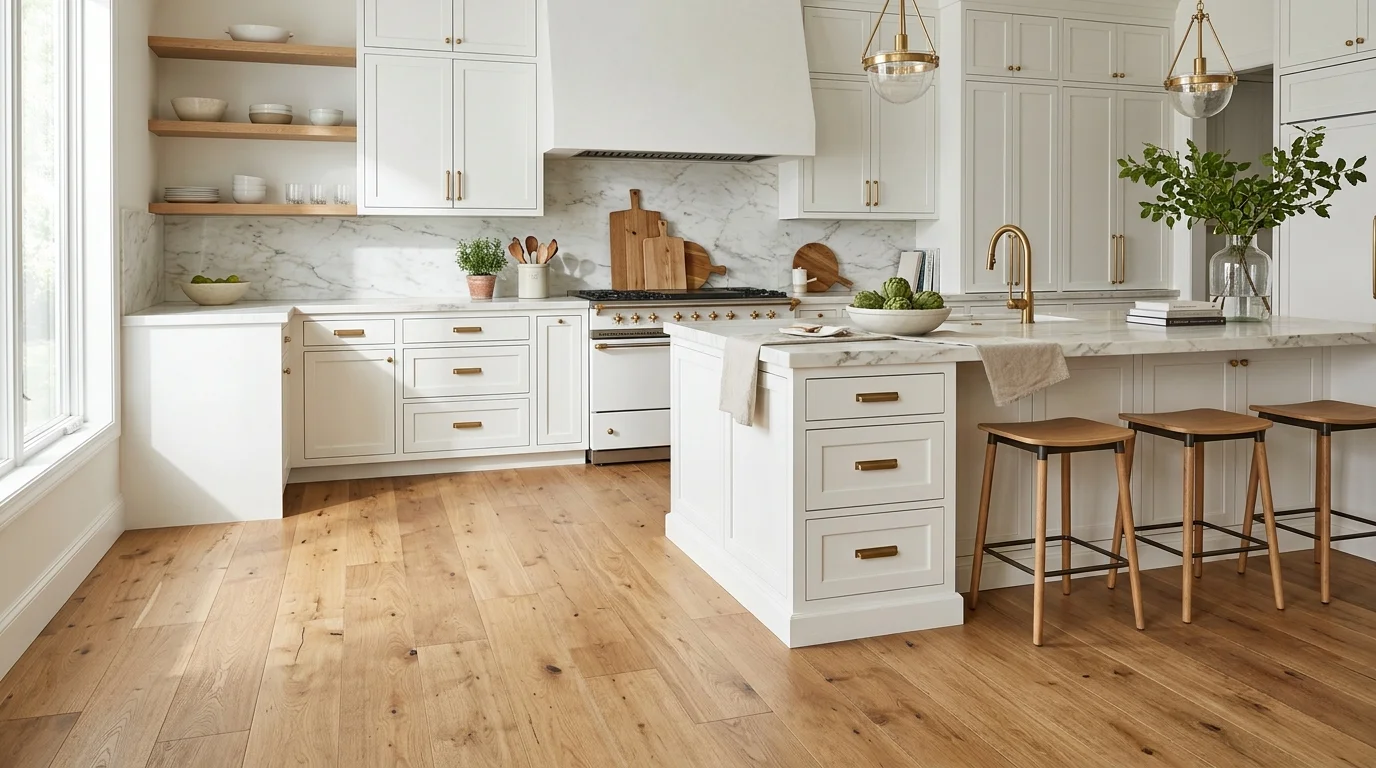
Warm Oak Planks

Warm oak flooring brings instant warmth to crisp white cabinetry without making the kitchen feel heavy. The golden beige undertones soften the clean white surfaces and create a balanced foundation. In my experience, this pairing works especially well in kitchens that receive plenty of daylight.
- Choose light to medium oak for a softer contrast.
- Look for natural wood grain rather than highly glossy finishes.
- Match the floor undertones with nearby stools, shelves or wood accents.
- Wide planks can make a compact kitchen feel more open.
- A matte or low-sheen finish keeps the look relaxed.
The beauty of warm oak is its flexibility. It works with modern, farmhouse, Scandinavian and transitional kitchens while giving white cabinets a more grounded appearance. For a cohesive room, repeat one or two warm wood tones elsewhere instead of introducing several competing finishes.
Soft Gray Tile
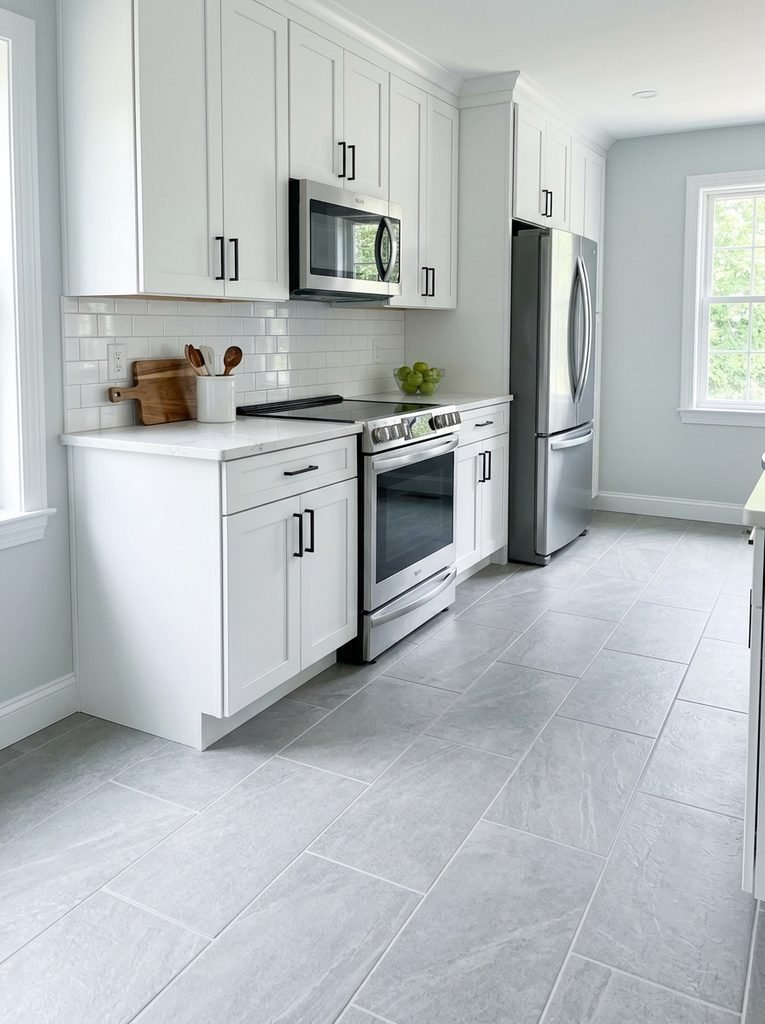
Soft gray tile creates a calm contrast beneath bright white cabinetry, especially when you want a kitchen that feels polished without strong color. The gentle gray tone gives the floor visual definition while keeping the overall palette light. It also works naturally with stainless steel appliances and cool-toned countertops.
- Select medium-light gray for a bright appearance.
- Choose porcelain for a durable, low-maintenance surface.
- Use narrow grout lines for a cleaner visual effect.
- Consider subtle stone patterns for added depth.
- Test gray samples beside the cabinets in daylight.
The right gray depends on the rest of the room. Blue-gray tiles create a cooler atmosphere, while greige-gray flooring feels warmer and more welcoming. For many white kitchens, a softly textured tile provides enough visual interest without competing with decorative backsplashes or statement lighting.
Natural Stone Look

Quick Tip:
Choose flooring with several subtle neutral tones instead of a single flat color. Small variations in cream, taupe and gray can hide everyday crumbs and footprints while creating a richer connection between white cabinets and stone-inspired surfaces.
Natural stone-look flooring can give white kitchens a refined appearance without requiring actual stone maintenance. Large-format porcelain tiles are especially useful for creating fewer visible grout lines, which can make the floor feel more continuous. I’ve noticed that softly veined patterns tend to pair better with white cabinetry than extremely bold marble effects.
Matte Charcoal Tile
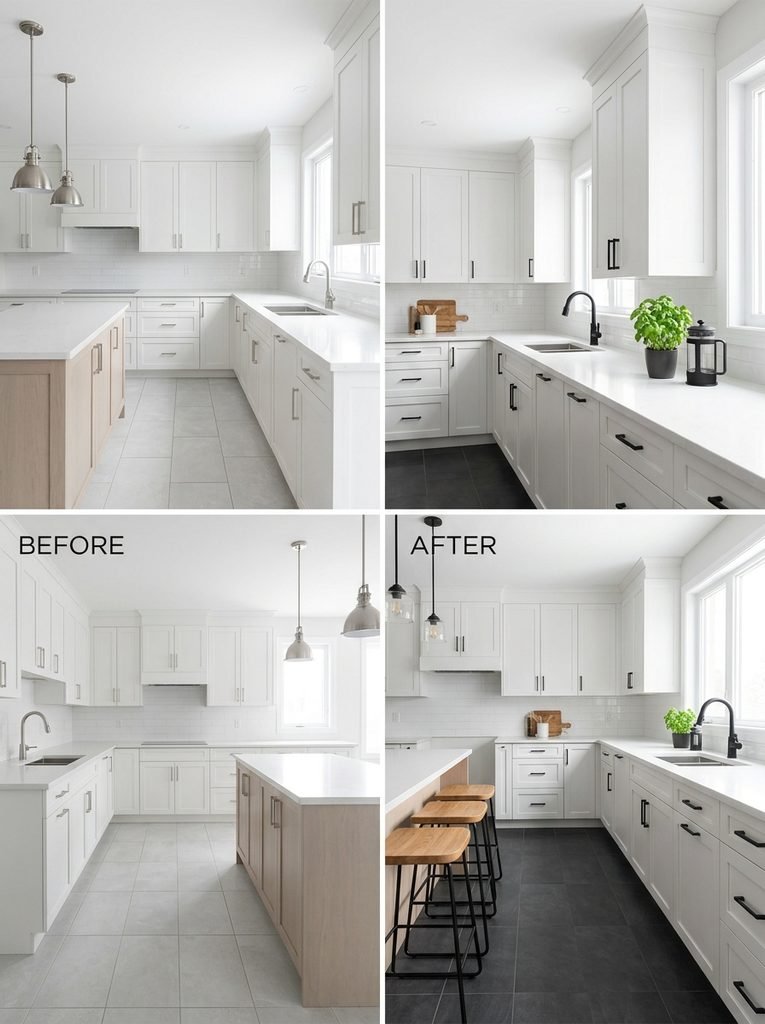
Before:
A white kitchen with a pale floor can sometimes lack contrast, especially when the cabinets, walls and counters share similar light tones. The room may feel clean but visually flat.
After:
Matte charcoal flooring adds depth beneath the white cabinetry while keeping the upper half of the kitchen bright. Black hardware and dark accents can connect the floor to the rest of the room.
A dark floor works particularly well when the kitchen has generous natural light. Keep the surrounding finishes lighter so the charcoal surface becomes an intentional grounding element rather than making the room feel enclosed. For smaller kitchens, large tiles with minimal grout can help maintain a cleaner visual flow.
Wide-Plank Vinyl
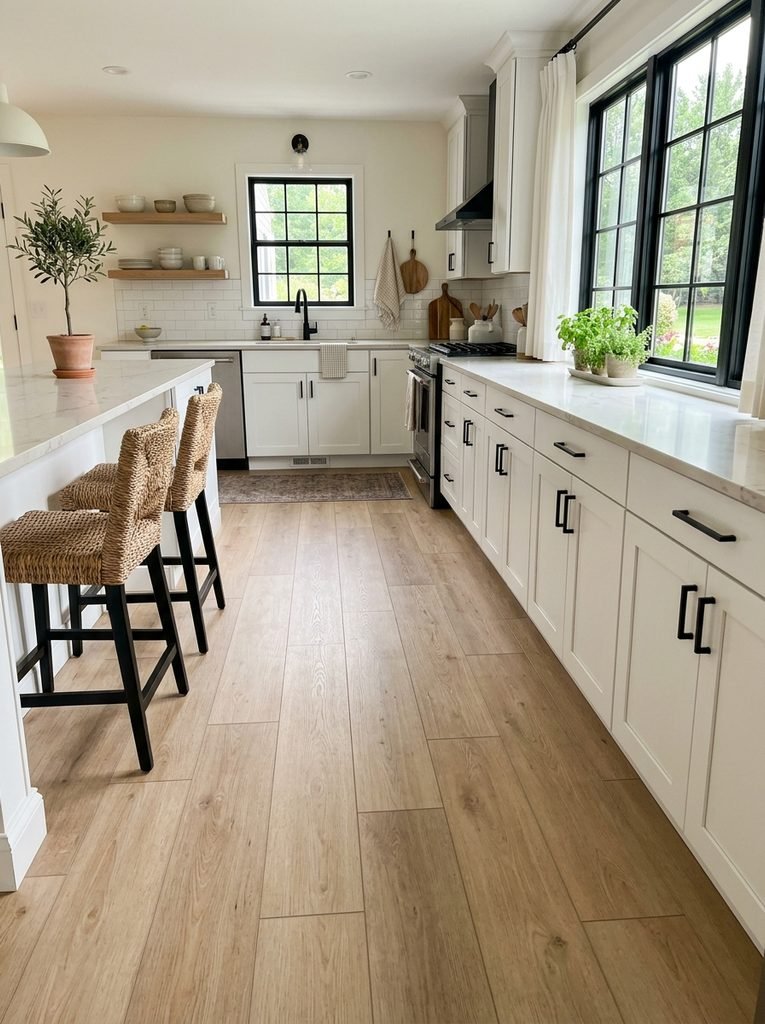
- Choose a wood tone that complements the cabinet undertones rather than matching them exactly.
- Select wide planks with subtle grain for a spacious appearance.
- Use a low-sheen finish to create a natural wood-like surface.
- Check several samples under both daylight and evening lighting.
Wide-plank vinyl gives you the visual warmth of wood with a practical surface for busy kitchens. It can work especially well for households that want an approachable look without committing to delicate flooring. Keep the cabinet color crisp and let the flooring provide most of the room’s warmth.
Cream Stone Tile
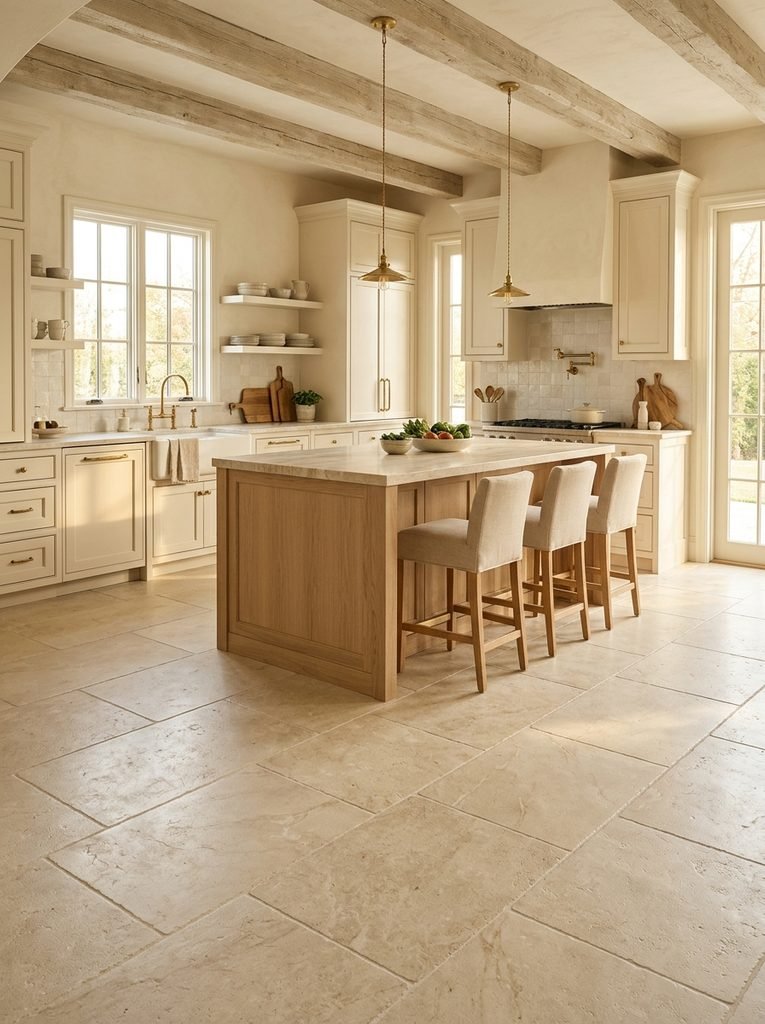
| Feature | Cream Stone Tile | White Cabinets |
| Visual Effect | Warm and grounded | Bright and clean |
| Undertone | Cream, beige, taupe | Crisp white |
| Texture | Subtle stone variation | Smooth surfaces |
| Best Pairing | Warm metals and wood | Neutral accents |
Cream stone-look flooring prevents an all-white kitchen from feeling overly stark. Its warm undertones create a softer transition between the cabinets and the floor, particularly when paired with oak accents or brass fixtures. For a cohesive finish, carry one creamy tone into the backsplash, countertop veining or nearby textiles.
Greige Porcelain Tile
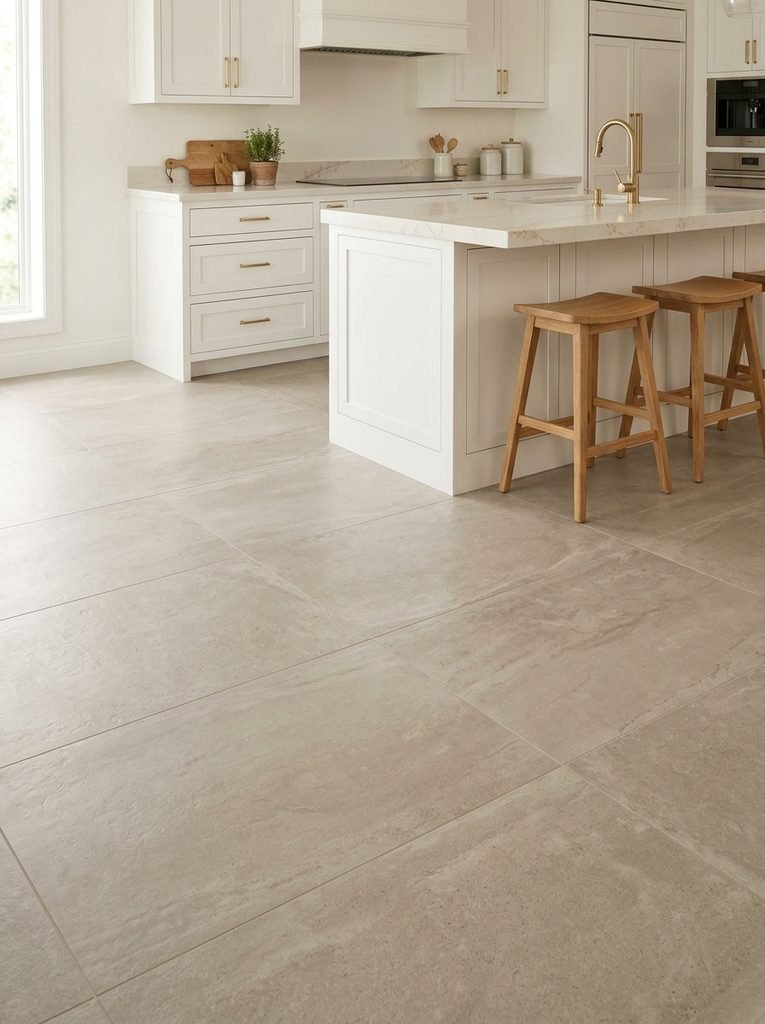
DO:
- Choose greige with warm beige undertones for softer contrast.
- Test samples beside the cabinets before installation.
- Coordinate the tile with countertop veining.
- Use larger tiles to reduce visible grout lines.
DON’T:
- Choose strongly blue-gray flooring with warm cabinets.
- Mix several unrelated beige tones.
- Ignore how artificial lighting changes the tile color.
- Use high-contrast grout without considering the overall palette.
Greige flooring bridges the gap between cool gray and warm beige, making it especially useful for white kitchens with mixed finishes. I’ve noticed it works nicely when cabinets, countertops and walls have slightly different undertones. A softly textured porcelain surface adds depth while keeping the room bright and easy to maintain.
Light Maple Flooring
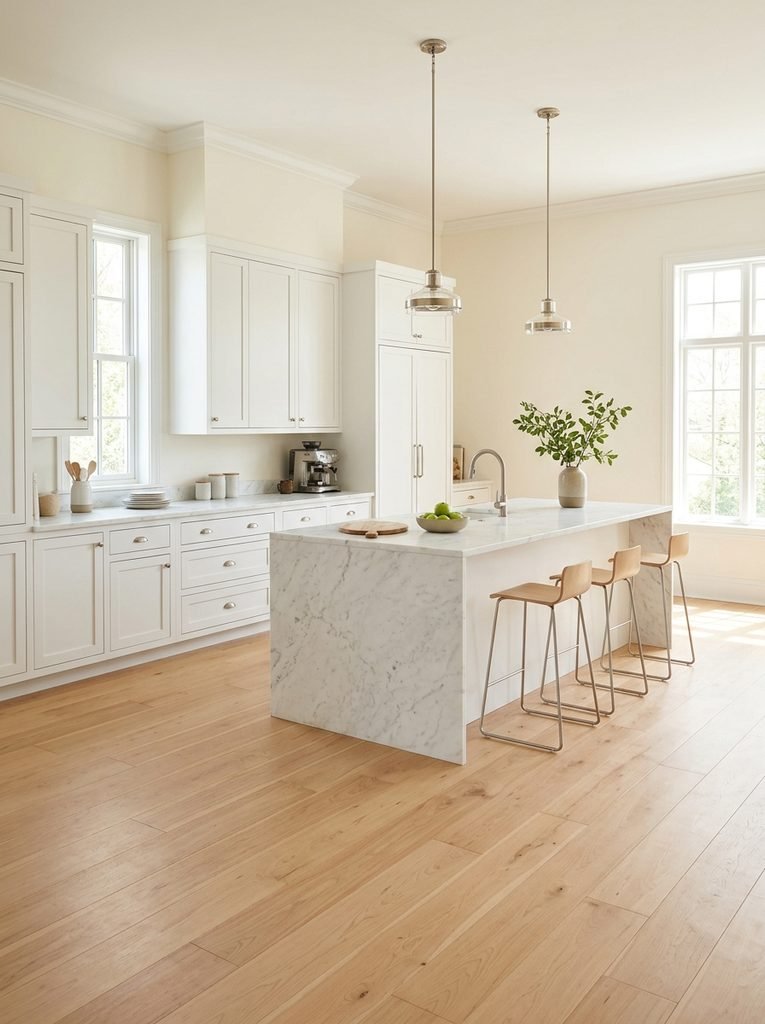
Cost: Moderate to high | Time: Several days | Skill Level: Professional installation recommended
Best For: Bright, airy kitchens | Result: Warm and spacious appearance
Light maple creates a gentle transition between white cabinetry and the floor without introducing a dramatic color shift. Its subtle grain keeps the room visually interesting while maintaining a clean palette. This combination suits kitchens where you want warmth but prefer to avoid the deeper contrast created by walnut, espresso or charcoal flooring.
Checkerboard Pattern
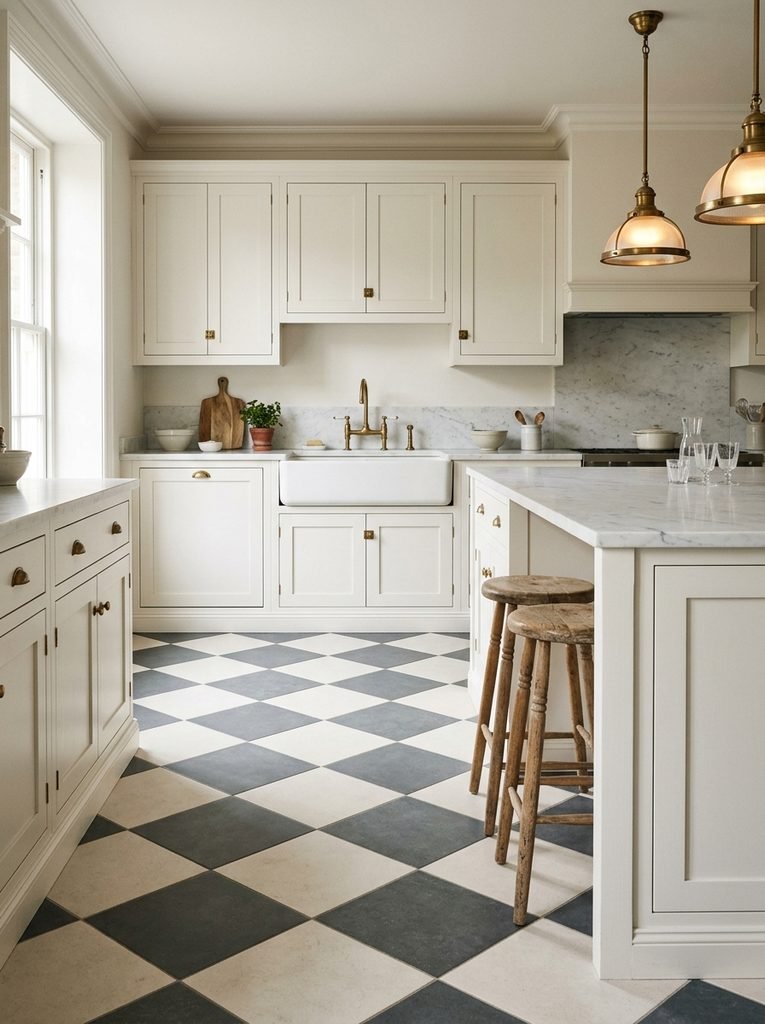
A checkerboard floor gives white cabinetry a strong graphic foundation without requiring colorful materials. The pattern can feel classic with soft neutrals or more contemporary with crisp black and white. Keep the backsplash and countertops relatively restrained so the floor remains the main visual feature rather than competing with several patterns.
Herringbone Wood
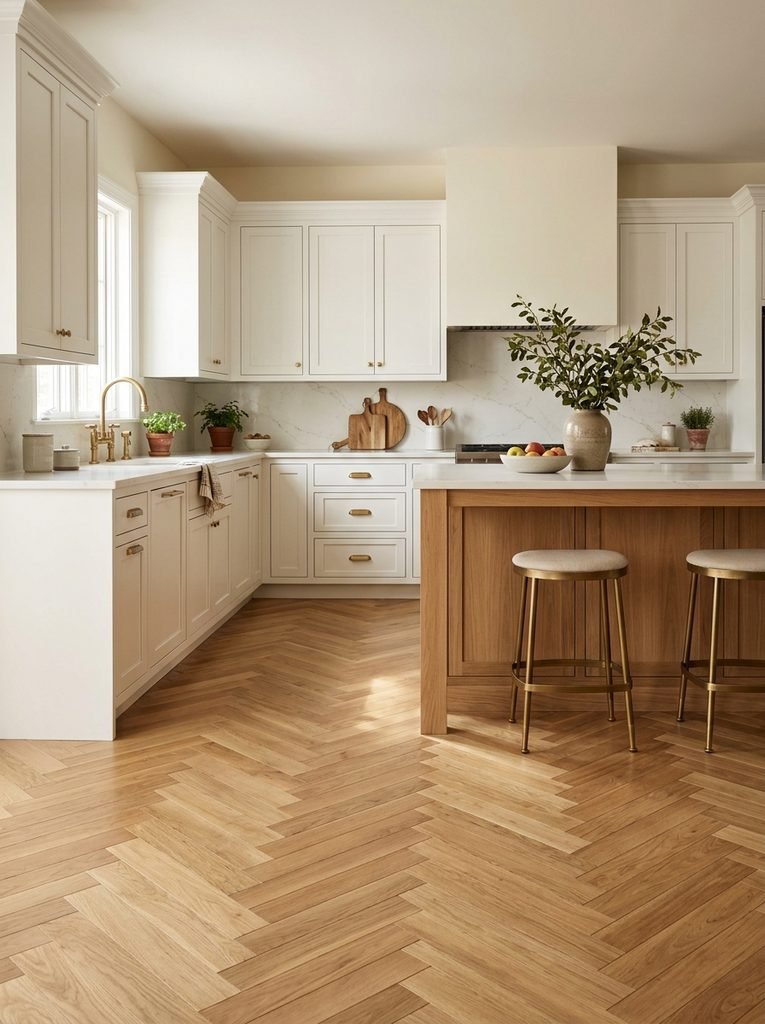
Quick Facts:
Cost: Moderate to high | Time: Several days | Skill Level: Intermediate to professional
Best For: Traditional and transitional kitchens | Result: Added movement and texture
Herringbone flooring gives a white kitchen more visual movement while keeping the color palette calm. The angled boards naturally draw attention across the room and can make a simple cabinet layout feel more detailed. For the most balanced result, choose a restrained wood tone and let the pattern provide the statement.
Warm Beige Planks
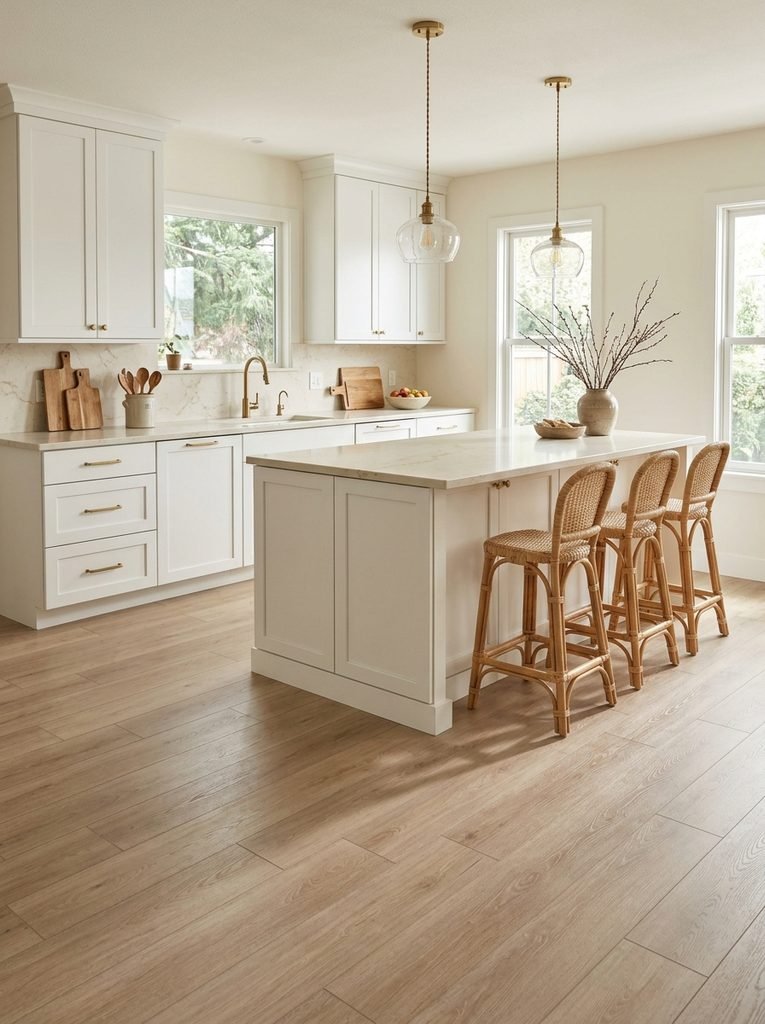
Warm beige flooring softens the crisp appearance of white cabinetry and creates an inviting base for natural materials. It works especially well with cream countertops, woven seating and light wood accessories. Choose a finish with gentle tonal variation rather than strong yellow undertones so the kitchen stays fresh throughout different lighting conditions.
Black Hexagon Tile

Black hexagon tiles bring a bold, modern look to a living room while adding geometric detail to the floor. Their dark finish creates a striking contrast with light walls, neutral upholstery and natural wood furniture. Whether you prefer minimalist decor or an industrial-inspired interior, these tiles can give your space a distinctive and polished appearance.
To keep the room from feeling too dark, balance the flooring with cream curtains, a light-colored sofa and plenty of natural light. A large beige rug can soften the seating area while allowing the hexagonal pattern to remain visible around the edges. Choose a matte, slip-resistant finish suitable for your flooring needs, and consider how the tile color will work with the room’s overall lighting.
Soft White Marble
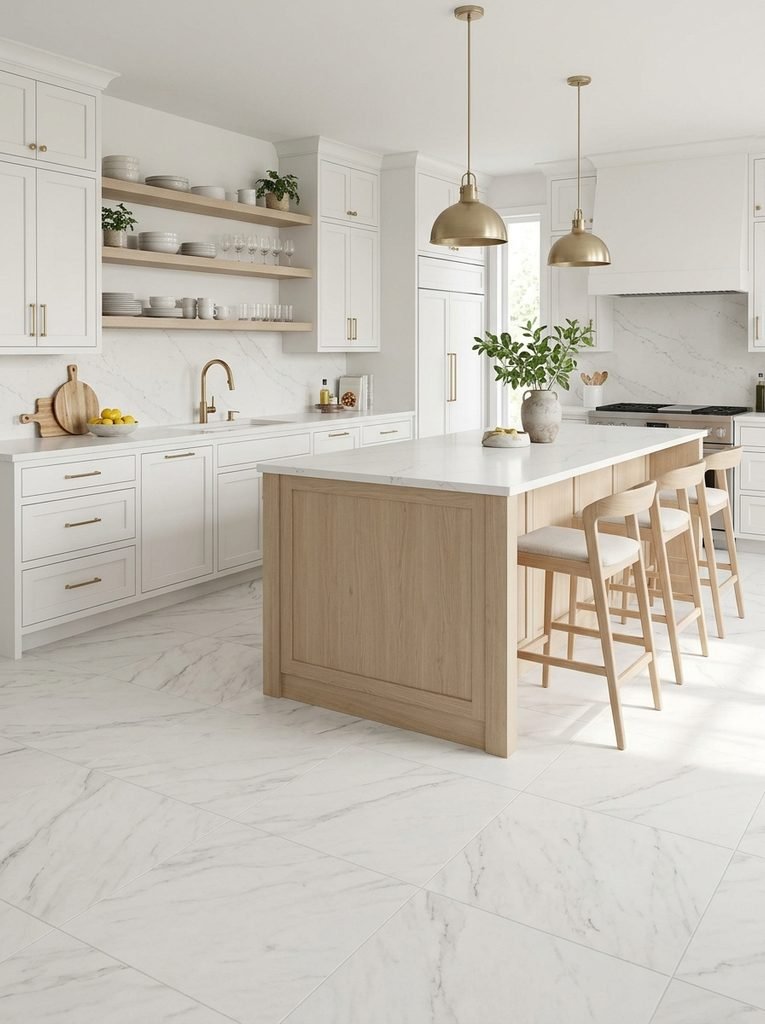
Marble-look flooring keeps a white kitchen bright while adding subtle movement beneath the cabinetry. Soft gray veining prevents the floor from appearing completely flat and can connect naturally with veined countertops. For everyday kitchens, porcelain versions offer a practical alternative while preserving the refined stone-inspired appearance.
Natural Walnut Planks
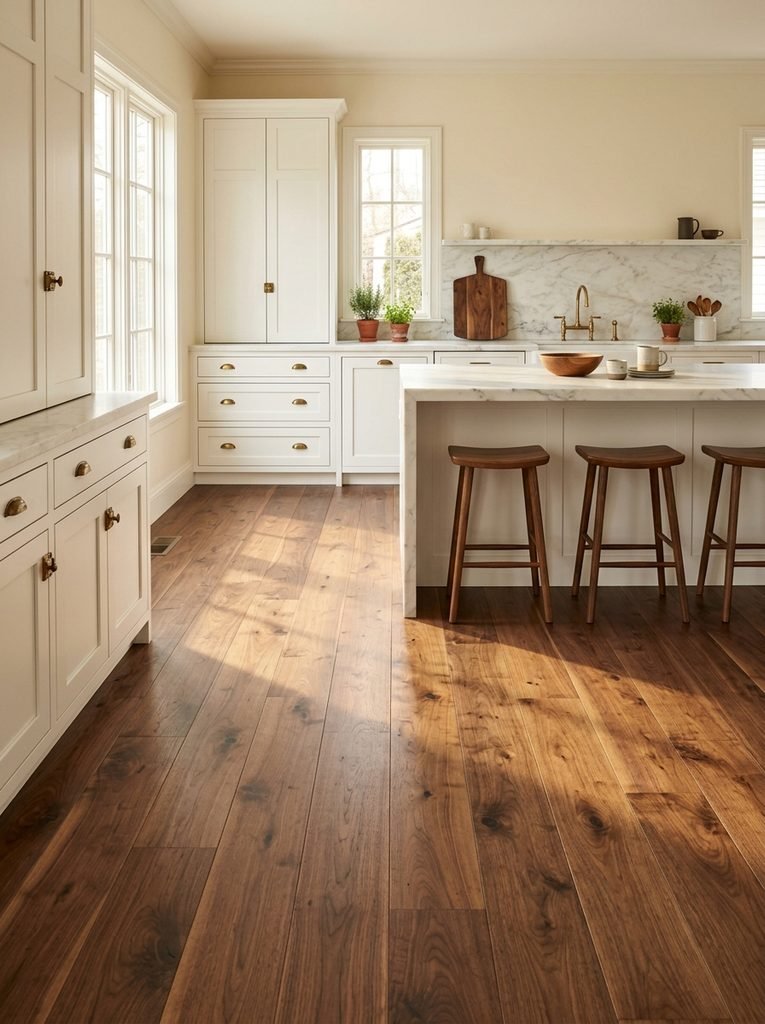
- Select medium or lighter walnut if the kitchen is compact.
- Balance dark flooring with bright countertops and walls.
- Repeat walnut in only a few accents for visual consistency.
- Use a matte finish to soften the contrast.
Rich walnut creates a strong foundation beneath white cabinets and gives the room a more substantial, furniture-like character. I’ve seen this combination work particularly well when the countertop stays light and the walls remain neutral. The contrast becomes intentional rather than overwhelming, especially when natural light reaches the floor.
Terracotta Tile
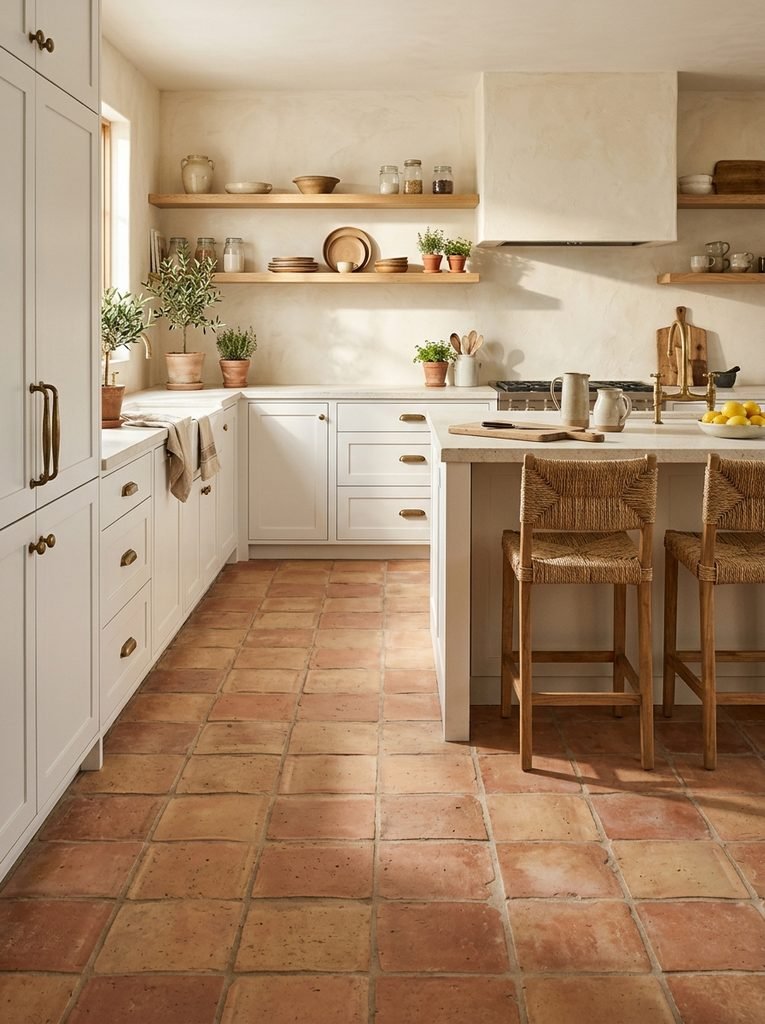
Terracotta tiles bring natural warmth and rustic character to a living room. Their earthy shades create a welcoming foundation that pairs beautifully with cream upholstery, wooden furniture, woven accessories and soft neutral walls. Whether you prefer a Mediterranean-inspired interior or a relaxed farmhouse look, this flooring adds color without making the room feel overly decorated.
For a balanced design, choose furniture in light, neutral shades that complement the rich tile color. A natural fiber rug can soften the seating area while leaving enough terracotta visible to appreciate its texture. Keep in mind that many unsealed terracotta tiles are porous and may need sealing and regular care to protect them from stains and moisture.
Natural Slate Flooring

Quick Facts:
Cost: Moderate to high | Time: Several days | Skill Level: Professional installation preferred
Best For: Rustic and contemporary kitchens | Result: Rich texture and contrast
Slate introduces natural texture beneath bright cabinetry without relying on a glossy finish. Its gray and charcoal variations can hide small marks while giving the floor a grounded appearance. Keep the walls, counters and larger furnishings light so the darker stone remains balanced rather than dominating the kitchen.
Pale Oak Chevron
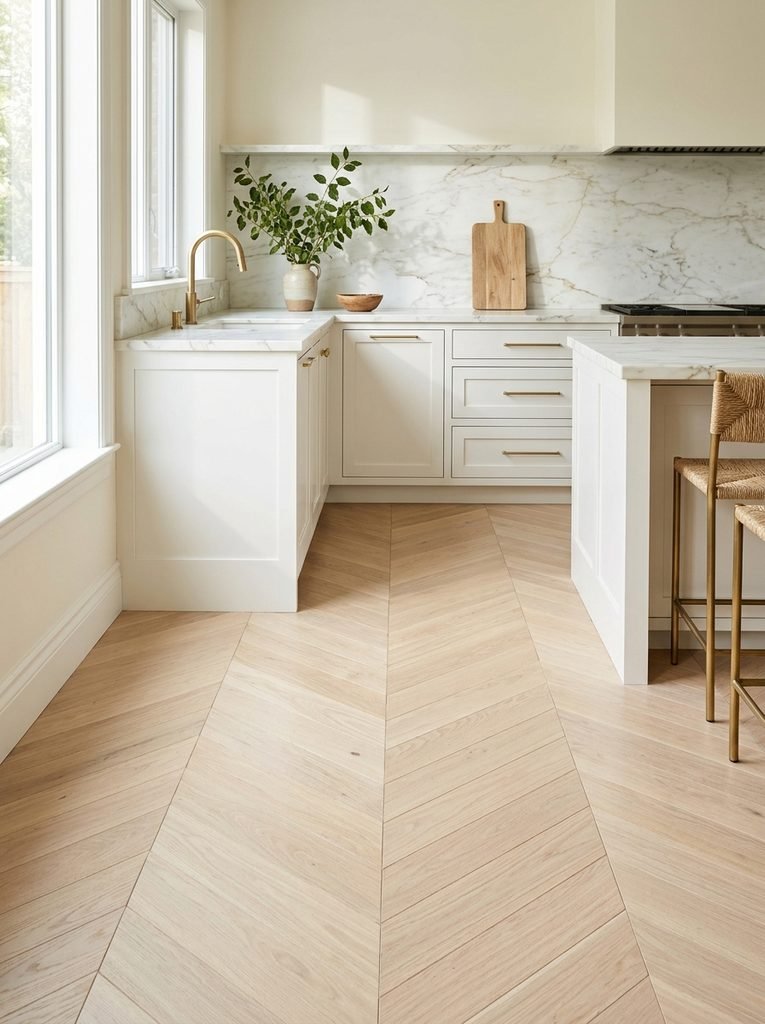
| Feature | Pale Oak Chevron | Standard Oak Planks |
| Pattern | Angled chevron layout | Straight plank layout |
| Visual Effect | More movement | Calmer appearance |
| Style | Refined and decorative | Casual and versatile |
| Best Use | Statement floor | Subtle foundation |
Pale oak keeps the kitchen light while the chevron arrangement adds architectural interest. Because the wood tone remains understated, the floor can become a focal point without competing with white cabinetry. This approach works especially well when the rest of the kitchen uses simple surfaces and limited decorative patterns.
Mosaic Stone Floor

A mosaic stone floor brings texture, character and a distinctive finish to your living room. Small pieces of natural stone in complementary shades create visual interest without relying on bold furniture or colorful decorations. Choose a pattern that works with your room’s size and existing color palette for a balanced appearance.
To keep the space welcoming, pair patterned flooring with simple upholstery, neutral walls and natural wood accents. A large area rug can soften the seating zone while allowing the stone design to remain visible around the edges. Before installing mosaic flooring, consider the stone’s finish, maintenance requirements, and comfort underfoot.
Cream Limestone Look

Cost: Moderate | Time: Several days | Skill Level: Professional installation recommended
Best For: Warm white kitchens | Result: Soft, cohesive foundation
Cream limestone tones create a warm connection between bright cabinetry and surrounding neutral finishes. The subtle variation keeps the floor from looking flat while avoiding the stronger contrast of dark tile. For a balanced palette, pair it with creamy countertops, natural wood or muted brass details rather than icy gray accents.
Light Concrete Finish
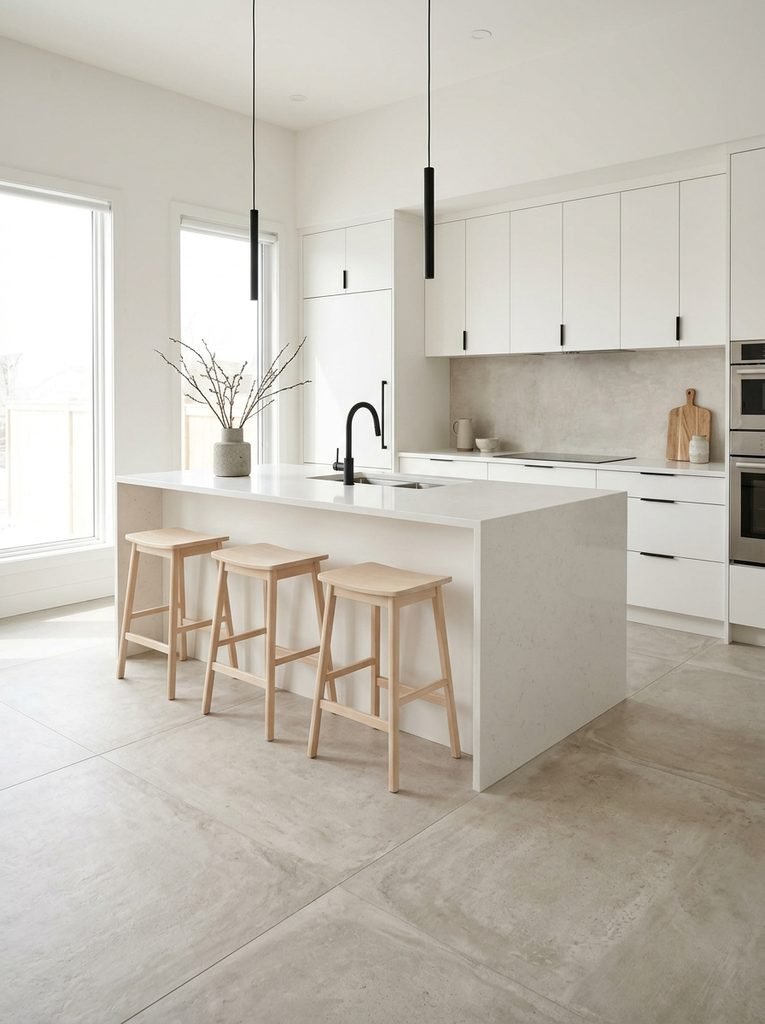
A light concrete finish gives white cabinetry a modern foundation without making the kitchen feel too stark. The gentle gray surface adds texture and contrast while keeping the overall palette bright. I’ve noticed this look becomes especially cohesive when repeated through a small concrete accessory, gray backsplash detail or similarly toned countertop.
Honey Oak Boards
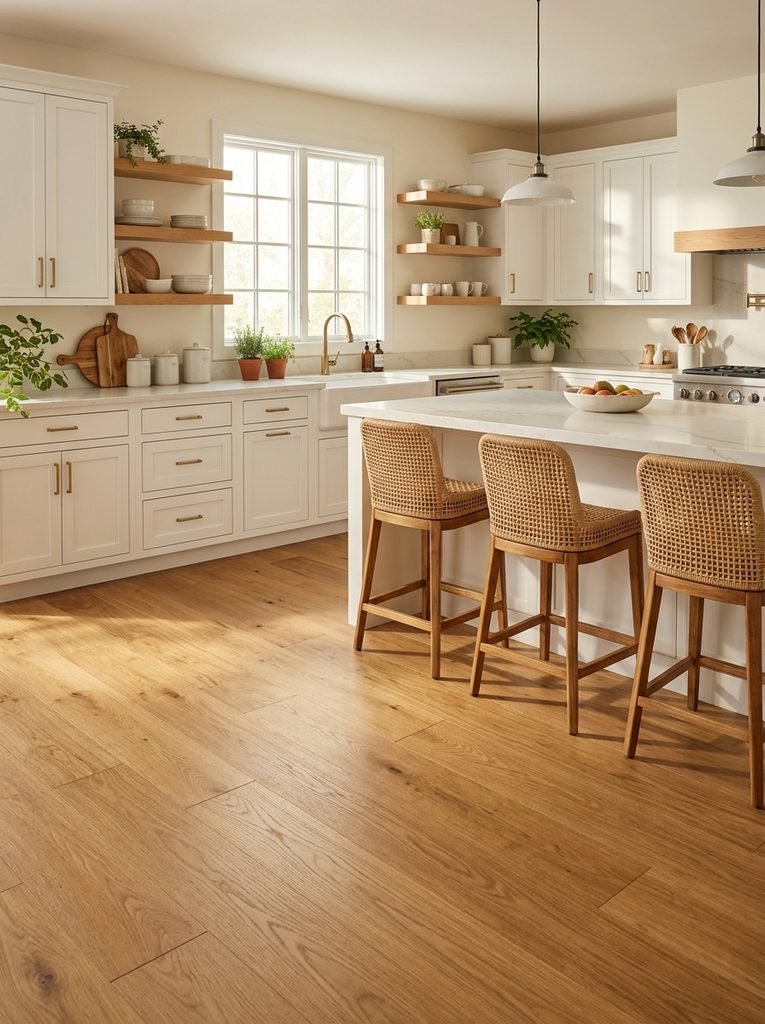
- Choose honey oak with balanced golden undertones rather than strong orange tones.
- Pair it with warm white walls to keep the palette cohesive.
- Repeat the wood tone through stools or open shelving.
- Use simple cabinet hardware so the floor remains the warm focal point.
- Sample the flooring beside the cabinets before installation.
Honey oak adds warmth immediately, making bright white cabinetry feel less clinical and more inviting. It suits farmhouse, transitional and casual contemporary kitchens particularly well. Keep other wood finishes close in tone so the room feels coordinated. A restrained palette lets the natural grain provide enough character without adding visual clutter.
Ivory Porcelain Planks

Cost: Moderate | Time: Several days | Skill Level: Professional installation recommended
Best For: Moisture-prone kitchens | Result: Warm wood appearance
Ivory porcelain planks create the warmth of wood while keeping the kitchen’s palette light and cohesive. Their subtle grain adds texture without introducing strong contrast. This flooring works particularly well when you want white cabinetry to remain the brightest feature while still giving the room a comfortable, lived-in foundation.
White Oak Herringbone
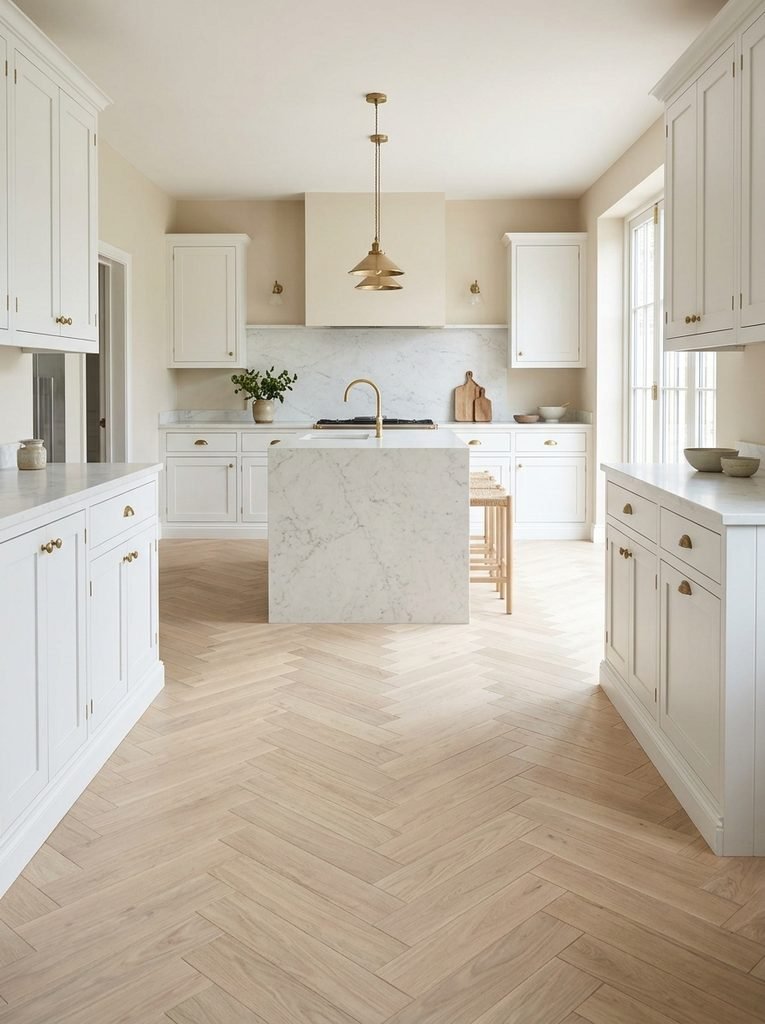
White oak and white cabinetry create a bright foundation, while the herringbone layout adds movement underfoot. The pale wood prevents the pattern from becoming visually heavy. For a polished result, keep the backsplash simple and choose cabinet hardware that repeats one subtle metallic tone already present elsewhere in the kitchen.
- Keep plank tones close to avoid a patchwork appearance.
- Align the pattern carefully with the kitchen’s main sightline.
- Choose matte or low-sheen flooring for a softer finish.
- Pair with simple countertops when the floor has strong directional movement.
Taupe Stone Tile
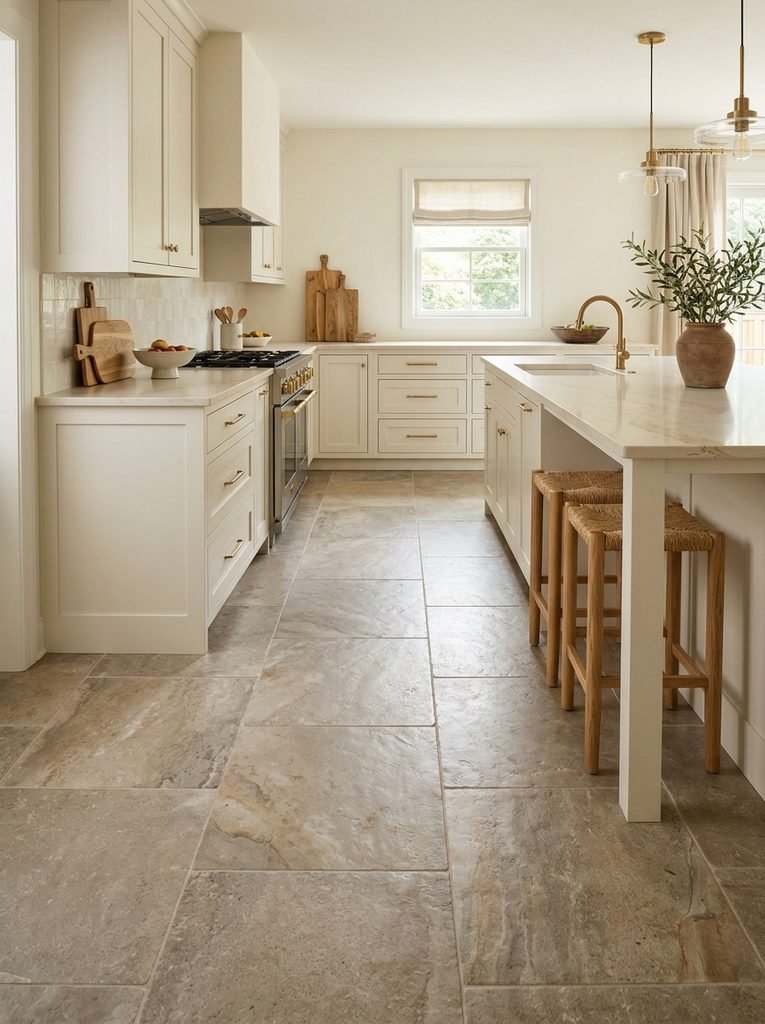
Taupe stone tiles create a timeless foundation for a living room, blending the warmth of beige with the understated elegance of gray. Their neutral color works beautifully with contemporary, traditional and modern organic interiors. The subtle variations in natural stone add depth and character without competing with furniture or decorative accents.
For a welcoming look, combine taupe flooring with cream upholstery, light wood furniture and soft linen curtains. A textured area rug can define the seating arrangement while allowing some of the stone surface to remain visible. Before choosing your tiles, compare samples under your room’s natural and artificial lighting, as taupe can appear warmer or cooler depending on the surrounding colors.
Soft Greige Planks

Before:
White cabinetry, pale walls and a very light floor can sometimes blend together, leaving the kitchen without enough visual definition. The surfaces may look clean but lack warmth and depth.
After:
Soft greige planks introduce gentle contrast while keeping the room bright. The beige-gray coloring connects naturally with both warm and cool finishes, making it easier to coordinate countertops, hardware and furnishings.
Greige flooring is especially useful when a kitchen contains mixed undertones. It can bridge warm wood accents with cooler appliances or stone surfaces without forcing the entire room into one color family. Choose a low-sheen finish and subtle grain for a relaxed appearance that remains practical for everyday kitchen traffic.
Warm Stone Mosaic
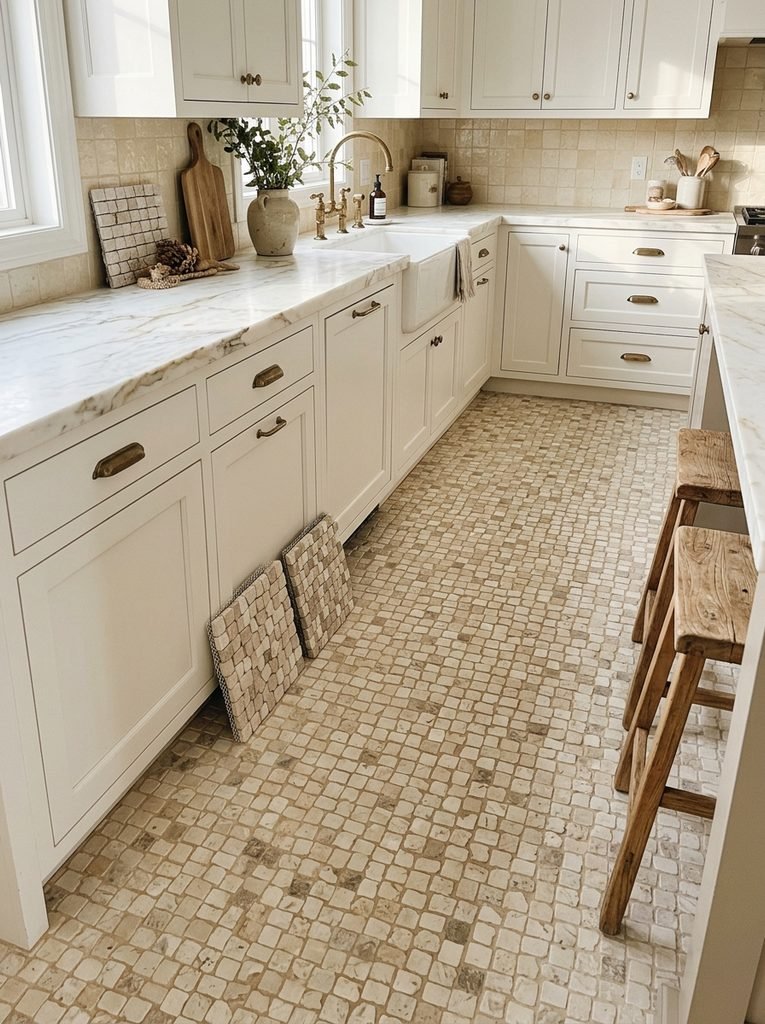
- Start with a mosaic containing two or three closely related neutral tones.
- Lay out several samples beside the cabinets and countertop.
- Keep grout close to the dominant tile color for a unified appearance.
- Repeat one mosaic shade in the backsplash or nearby accessories.
A warm mosaic floor adds detail beneath simple white cabinetry without requiring bold color. The smaller pieces create texture and movement, making the floor feel handcrafted. This approach suits kitchens with traditional or European-inspired details, especially when brass fixtures, natural wood, and softly veined counters are already part of the design.
Pale Travertine Look

Pale travertine-look flooring brings understated luxury and natural warmth to a living room. Its soft ivory and sandy beige tones create a bright foundation that pairs beautifully with contemporary, Mediterranean and minimalist interiors. The subtle stone patterns add depth and character without overwhelming the rest of the decor, making the room feel calm and cohesive.
For a welcoming finish, combine these tiles with cream upholstery, natural wood furniture and textured fabrics. Keep accessories simple so the delicate stone effect remains visible, and add a neutral area rug to define the seating space. Porcelain tiles with a travertine-inspired finish can offer a practical alternative to natural stone, with specific maintenance needs depending on the product and finish.
CONCLUSION
White cabinets give you a flexible foundation and the right flooring can add the warmth, contrast, texture or character your kitchen needs. From natural wood tones to soft neutrals, stone-inspired surfaces and striking patterns, these Flooring Ideas for White Kitchen Cabinets offer plenty of inspiration for different styles and spaces.
I’ve seen how a carefully chosen floor can change the entire feel of a kitchen without changing the cabinetry. Save this post on Pinterest so you can revisit your favorite ideas, try the look that fits your space and share the article with someone planning a kitchen update. Your perfect combination may be one saved idea away.