
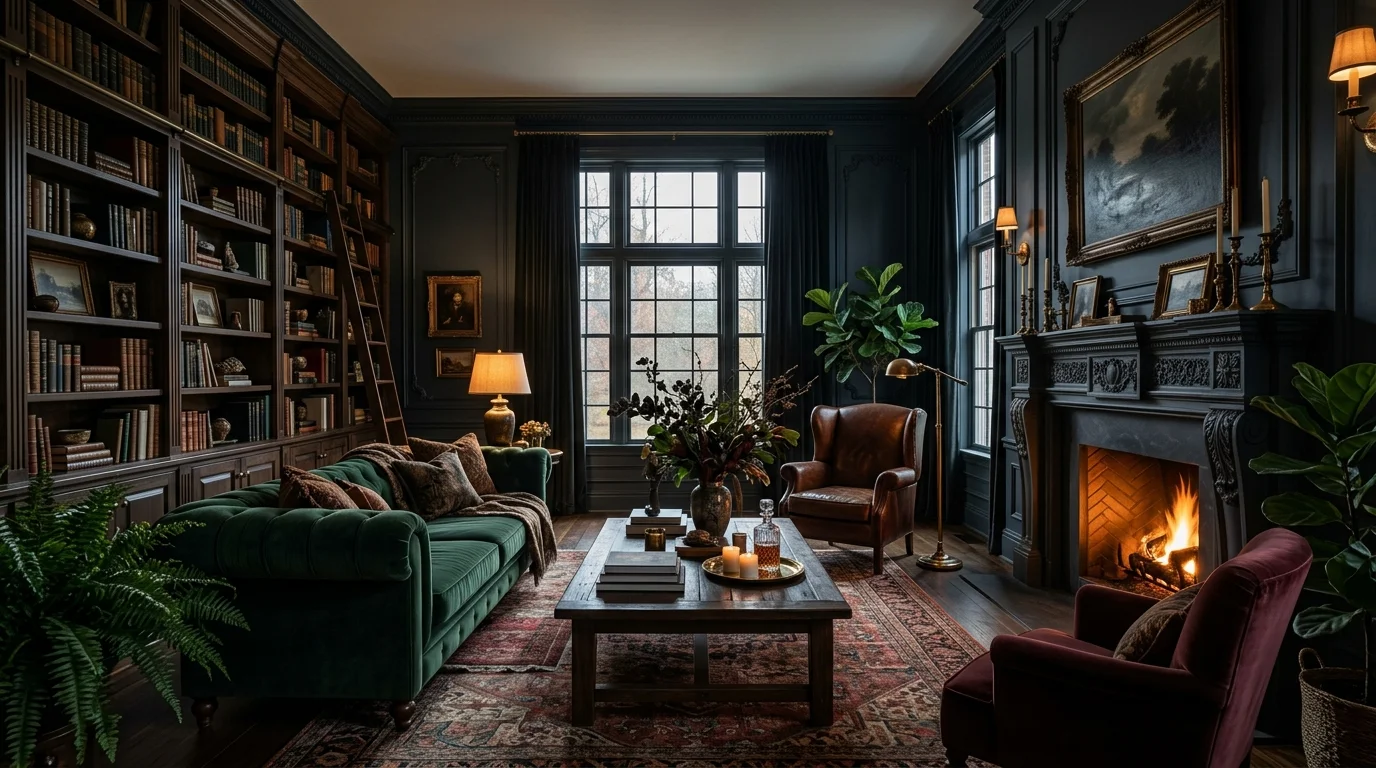
28 Moody Living Room Ideas for a Dramatic Sanctuary
Dark colors, rich textures and warm lighting can turn an ordinary living room into a space that feels intimate, stylish and full of character.
These Moody Living Room Ideas will help you create a dramatic sanctuary without making your home feel gloomy or overcrowded. Whether you love charcoal walls, forest green interiors, burgundy velvet sofas, or warm walnut furniture, there are plenty of ways to bring depth and personality into your space.
The secret is balancing darker shades with comfortable fabrics, thoughtful lighting and natural materials. Even a small living room can feel inviting with the right combination of colors and furniture. Start with one feature you love, then build around it gradually. You do not need a complete renovation to create a room that feels beautifully layered and uniquely yours.
Charcoal Accent Walls

Dark walls instantly give a living room a dramatic and sophisticated character. Charcoal is especially useful because it feels softer than pure black while still creating depth. Pair it with warm wood furniture, creamy fabrics and subtle metallic accents to keep the room from feeling cold.
For the best result, paint one main wall behind the sofa or fireplace. Add layered lighting and a few reflective accessories to prevent the darker color from absorbing too much light. This approach works particularly well in rooms with simple furniture and uncluttered layouts.
Layered Black Textures
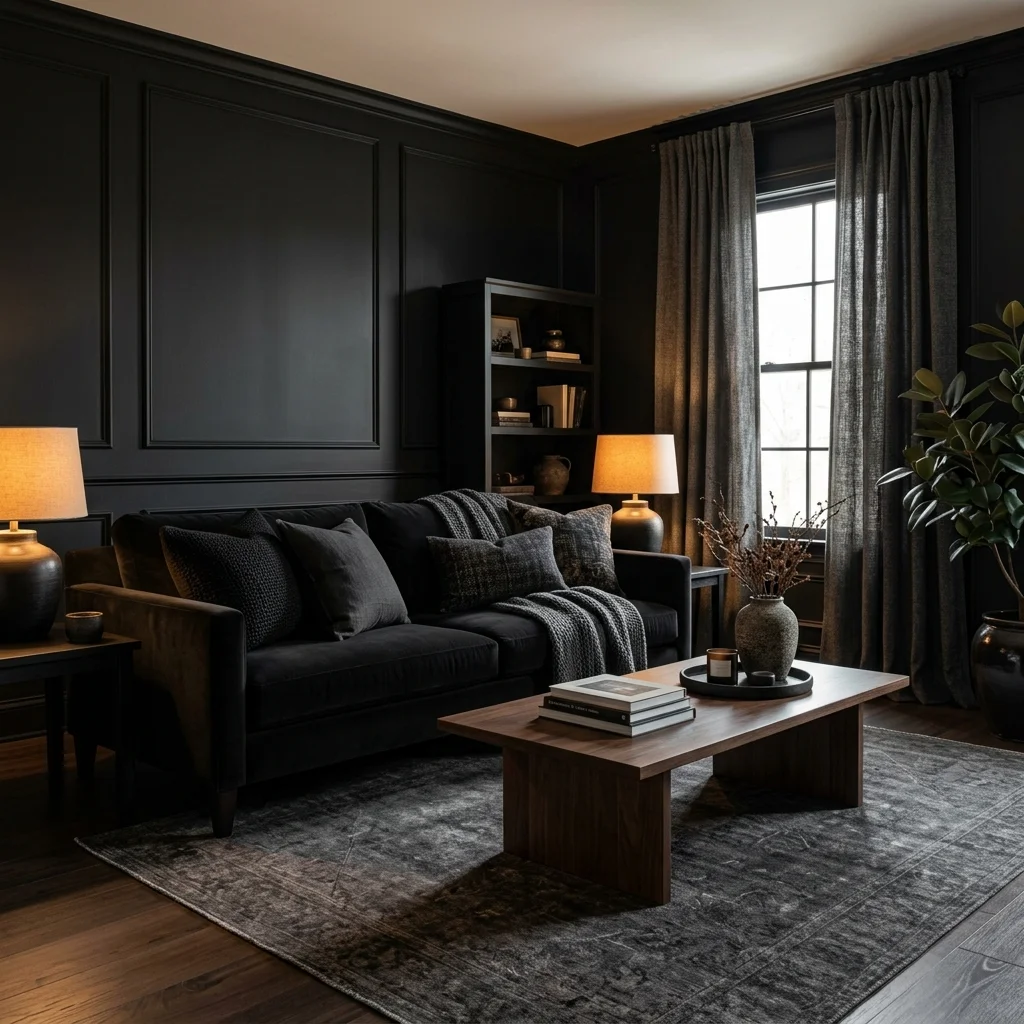
Black interiors feel far more inviting when several textures work together. Instead of relying on one flat shade, combine matte walls, velvet upholstery, woven cushions and natural wood. Each surface catches light differently, giving the room dimension without introducing too many colors.
- Walls: Choose matte black or deep graphite paint for a soft finish.
- Seating: Use velvet or textured fabric to make the sofa feel comfortable.
- Curtains: Select heavier black or charcoal drapes for visual depth.
- Accessories: Introduce dark wood, aged brass, or smoked glass.
- Lighting: Place warm lamps at different heights to soften shadows.
A restrained palette keeps everything cohesive. Let texture provide the contrast and leave a few lighter surfaces visible so the room still feels comfortable for everyday living.
Forest Green Walls

Forest green brings a rich, nature inspired mood to a living room without feeling as stark as black. Its deep undertones pair beautifully with walnut furniture, leather seating, antique brass and warm neutral fabrics. The result feels grounded, intimate and visually layered.
Quick Tip:
Test a few green paint samples on different walls before committing. Forest green can appear nearly black in low light, so check the color during both daytime and evening hours. Choose warm white bulbs to preserve its inviting undertones.
For a balanced finish, repeat the green in small details such as cushions, artwork, or a ceramic vase. Keep the largest furniture pieces in complementary shades rather than matching everything exactly. This creates a connected look while allowing the wall color to remain the main feature.
Burgundy Velvet Sofas

A burgundy sofa can become the defining feature of a dramatic living room. Its deep red tones add warmth and richness, especially against charcoal walls, dark timber, or muted beige backgrounds. Velvet enhances the color because its surface shifts between brighter and darker shades as light moves across it.
Before
A neutral living room with pale furniture and plain cushions may feel visually flat, particularly when every piece has a similar tone.
After
A burgundy sofa introduces a strong focal point, while brass accents and warm lighting create a more layered appearance. The rest of the furniture can remain simple.
Choose a sofa with clean lines if you prefer a contemporary look, or curved arms for a vintage inspired atmosphere. Keep surrounding patterns subtle so the upholstery remains the star.
Warm Walnut Furniture

Dark rooms need natural materials to keep them from feeling too heavy. Walnut furniture provides warm brown undertones that complement deep green, charcoal and chocolate colored walls. Its visible grain adds detail without introducing another bold color or busy pattern.
- Choose a walnut coffee table with a visible natural grain.
- Add a matching sideboard or media console to create visual continuity.
- Balance the wood with a dark upholstered sofa.
- Introduce cream textiles to soften the overall palette.
Walnut works especially well when repeated two or three times throughout the room. Avoid matching every wooden item perfectly, as slightly varied finishes can make the space feel more collected and natural.
Moody Marble Accents

Marble adds a refined finish to dark interiors, particularly when its veining contrasts with the surrounding furniture. Black marble with subtle white markings feels dramatic, while dark brown or green marble introduces a softer, more organic appearance.
| Design Element | Option A | Option B |
|---|---|---|
| Coffee table | Polished black marble | Honed dark marble |
| Accessories | Bright brass | Brushed antique brass |
| Sofa fabric | Smooth leather | Textured velvet |
| Overall finish | Sleek and modern | Soft and understated |
A marble coffee table can anchor the seating area without requiring a major renovation. If natural stone exceeds your budget, consider a well made marble look surface. Keep surrounding accessories simple so the stone pattern remains visible.
Dramatic Floor To Ceiling Curtains

Long curtains add height and softness to a dramatic living room. Charcoal, espresso and deep olive fabrics work beautifully with dark walls, while heavy linen blends or velvet create rich folds that add visual depth.
Do
- Mount the curtain rod close to the ceiling to emphasize height.
- Extend the rod beyond the window frame to expose more glass.
- Choose a fabric with enough weight to hang neatly.
- Repeat the curtain color in a cushion or decorative accessory.
Don’t
- Choose curtains that stop awkwardly above the floor.
- Cover every window with thick fabric if natural light is limited.
- Mix too many competing patterns.
- Ignore the curtain lining when managing sunlight and privacy.
Floor length curtains can make an ordinary window feel architectural. In smaller rooms, use a color close to the wall shade for a quieter effect.
Antique Brass Lighting

Cost: Moderate, depending on the number and style of fixtures.
Time: A few hours for replacing accessible lamps or installing suitable fittings.
Skill Level: Beginner for plug in lamps, professional help for new wiring.
Best For: Dark rooms that need warmth and focused illumination.
Antique brass lighting introduces a golden contrast that looks especially striking against dark paint. Use a floor lamp beside the sofa, a table lamp near a reading chair and wall sconces around artwork or a fireplace. Different light sources make the room more flexible and comfortable.
Choose warm white bulbs and check their brightness before buying several. A beautiful fixture cannot compensate for poor illumination, so layer ambient light with task lighting wherever people read, work, or relax.
Chocolate Brown Walls

Chocolate brown creates a cocoon like atmosphere that feels warmer than many cool dark shades. It pairs naturally with caramel leather, walnut, rust colored accessories and creamy textiles. The combination is especially effective in rooms designed for evening relaxation.
I’ve noticed that brown interiors look most inviting when their shades vary slightly. Use a deep brown wall color, medium toned wood and lighter caramel or tan upholstery rather than repeating one identical shade everywhere.
Before painting the entire room, test the color near your windows and lamps. A brown that looks rich in daylight may appear much darker at night. Soft lighting and a lighter rug help preserve the room’s depth without making it feel enclosed.
Moody Gallery Walls
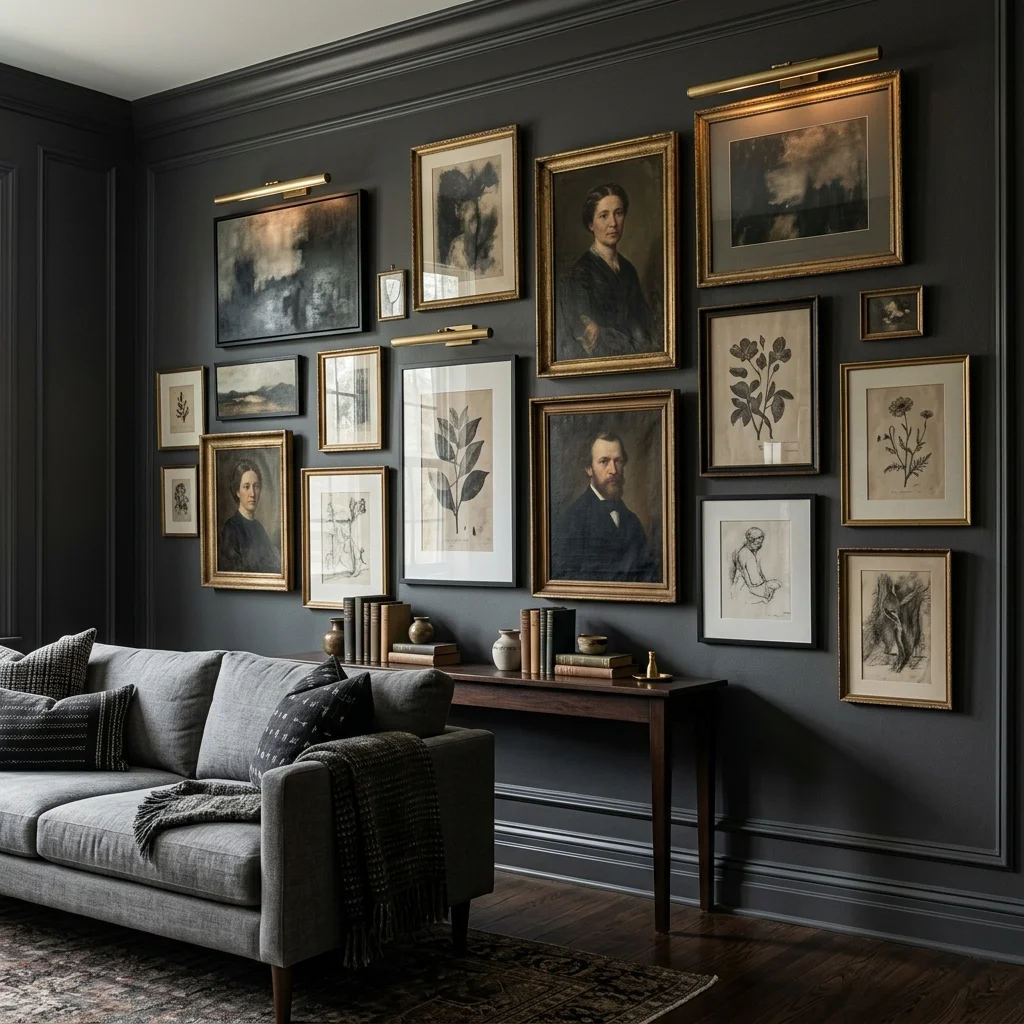
Artwork gives dark walls personality and creates a focal point without adding bulky furniture. Black and white photography, muted landscapes, vintage portraits and abstract prints all work well against charcoal, navy, or forest green backgrounds.
- Select three to seven pieces that share a related color palette.
- Combine different frame sizes for a collected appearance.
- Arrange the artwork on the floor before making holes in the wall.
- Keep the center of the arrangement near seated eye level.
- Use picture lights when you want the artwork to stand out at night.
A gallery wall works best when the pieces relate to one another without being identical. Leave enough space between frames to keep the arrangement readable, especially above a sofa or narrow console.
Dark Ceiling Designs

Quick Tip:
Test a dark ceiling color on a small section first, particularly if your room has low ceilings. Use warm lighting and keep the walls or flooring lighter when you want the room to feel balanced.
A dark ceiling can visually connect exposed beams, pendant lights and dark furniture into one cohesive design. In taller rooms, it adds intimacy and makes a large space feel less empty. In smaller rooms, the same treatment can feel dramatic, but careful lighting becomes more important.
Consider painting the ceiling and upper trim the same shade for a continuous finish. Keep the floor and main upholstery lighter if you want contrast rather than a fully enclosed effect.
Leather And Linen Contrast

Leather and linen create an appealing balance between polished and relaxed materials. Cognac leather adds warmth, while linen cushions and curtains soften the room’s darker surfaces. This combination works well in modern rustic, industrial and contemporary living rooms.
Before
A room filled with dark leather, polished metal and smooth surfaces may look harsh or overly formal.
After
Linen, wool and woven accessories introduce softer textures, making the seating area more inviting while preserving its dramatic character.
Choose leather in cognac or deep brown and pair it with linen in oatmeal, warm gray, or muted olive. Mix cushions of different sizes, but keep their colors connected. The result feels layered rather than overly coordinated.
Sculptural Black Furniture

Sculptural furniture brings visual interest to a dark living room without relying on bright colors. Rounded coffee tables, curved armchairs and asymmetrical side tables soften the sharp lines often found in modern interiors.
- Start with one distinctive piece, such as a curved coffee table.
- Keep the main sofa simple to avoid competing silhouettes.
- Repeat black in smaller details like picture frames or lamp bases.
- Add a pale rug to separate dark furniture from the floor.
The strongest result comes from contrast in shape rather than quantity. One sculptural table can create more impact than several decorative objects competing for attention. Check the furniture’s dimensions before purchasing so walkways remain clear.
Moody Fireplace Surrounds

A dark fireplace surround creates a natural focal point and anchors the seating arrangement. Black stone, charcoal tile and deep painted finishes all work well with warm wood mantels and restrained metallic accents.
| Design Element | Option A | Option B |
|---|---|---|
| Fireplace finish | Matte black tile | Dark natural stone |
| Mantel | Warm oak | Dark walnut |
| Wall color | Deep charcoal | Muted navy |
| Styling | Minimal ceramics | Brass accessories |
Choose materials suitable for the heat exposure and follow the fireplace manufacturer’s installation requirements. A decorative surround should never interfere with ventilation or required clearances.
For a cohesive design, repeat one fireplace material or color elsewhere in the room. Black frames, a dark coffee table, or matching sconces can connect the focal point to the rest of the space.
Deep Navy Interiors

Do
- Sample navy paint in both daylight and artificial light.
- Combine blue walls with warm wood and creamy textiles.
- Add brass or bronze details for gentle contrast.
- Use layered lighting to bring out the blue undertones.
Don’t
- Assume every navy shade looks the same in low light.
- Match every fabric to an identical blue.
- Block windows with unnecessary dark furniture.
- Rely on one ceiling light for the entire room.
Deep navy offers a dramatic alternative to black while retaining a sense of color. It works particularly well with gray upholstery, oak furniture and antique brass. Introduce a few lighter accents to keep the space from becoming visually flat.
Vintage Moody Rugs

Cost: Varies widely by size, material and whether the rug is vintage or reproduction.
Time: One afternoon to measure, place and style.
Skill Level: Beginner.
Best For: Adding pattern, warmth and visual connection to dark furniture.
A vintage inspired rug introduces several complementary colors without requiring additional wall decoration. Faded patterns are particularly useful because they provide detail without overpowering a dramatic palette.
Measure the seating area before shopping. Ideally, the front legs of the main sofa and chairs should rest on the rug, creating a connected arrangement. Choose rust, muted burgundy, or smoky blue details that already appear elsewhere in the room.
If the floor is dark, select a rug with lighter sections for contrast. A rug pad also helps prevent slipping and protects the flooring underneath.
Floor To Ceiling Bookshelves

Built in bookshelves can make a living room feel architectural, especially when painted in charcoal, deep green, or navy. Books add varied colors and textures, while framed photographs, small sculptures and ceramics keep the shelves from appearing too uniform.
Quick Tip:
Leave some shelf space empty instead of filling every section. Group books by a loose color family, alternate vertical and horizontal stacks and use warm shelf lighting to highlight selected objects.
Dark shelving looks especially effective when the surrounding walls share a similar color. This creates a continuous backdrop that lets the objects stand out. If built ins are outside your budget, tall freestanding bookcases can provide a similar effect without major renovation.
Secure tall shelving appropriately, particularly in homes with children or pets. Keep heavy objects on lower shelves and avoid overcrowding the upper sections.
Dark Wood Paneling

Dark wood paneling creates depth through both color and structure. Vertical grooves draw the eye upward, while wider panels can create a more traditional or refined appearance. Walnut and espresso finishes pair especially well with charcoal upholstery and warm neutral accessories.
Before installing paneling, decide whether you want the wood grain to remain visible or prefer a painted finish. Natural wood adds warmth, while painted panels produce a more uniform contemporary look.
Use paneling on one feature wall if the room is small or already contains substantial dark furniture. Repeat the wood tone in a console or coffee table to connect the elements without making every surface identical.
Oversized Abstract Artwork
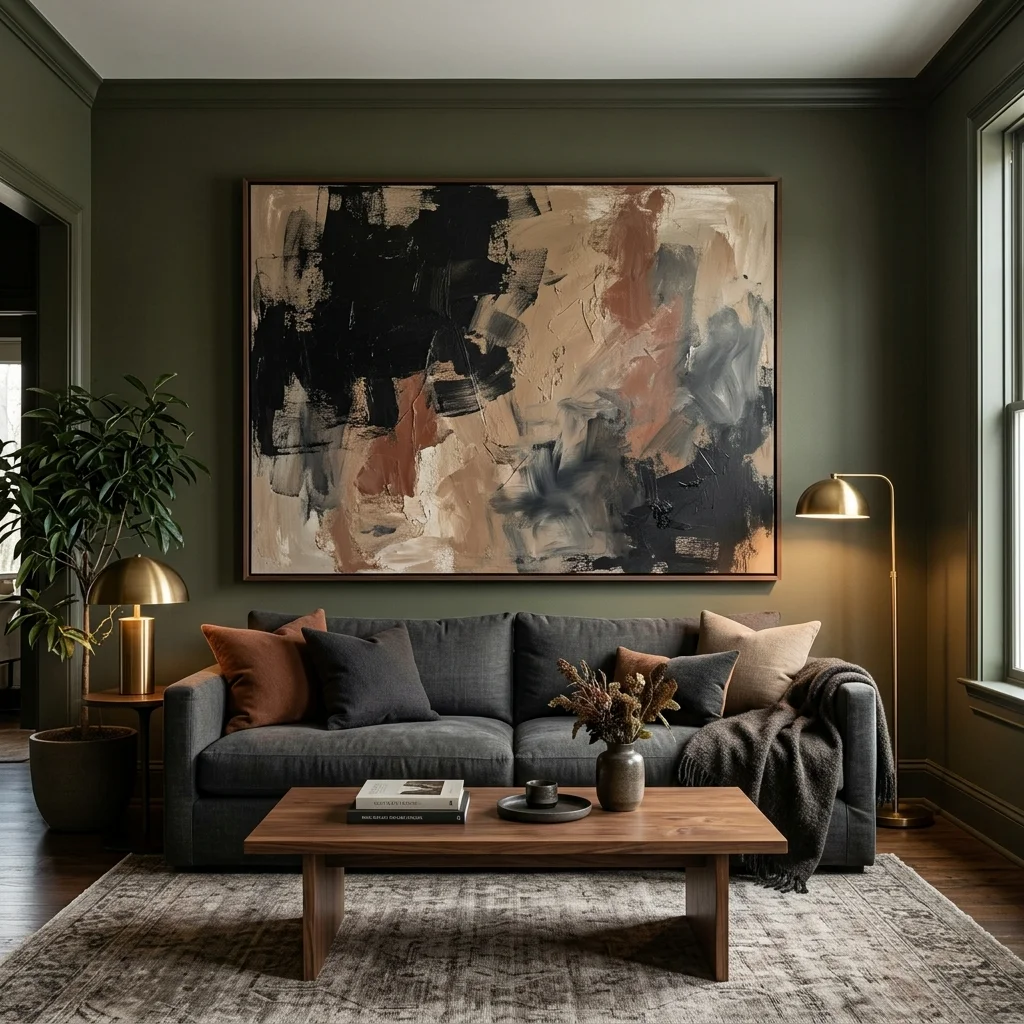
A large artwork can make a dark living room feel intentional rather than crowded with decoration. Abstract paintings with broad brushstrokes and muted colors create visual movement while allowing the walls and furniture to remain the main design elements.
- Measure the sofa width before selecting the artwork.
- Choose a canvas that visually relates to the seating area.
- Repeat two or three colors from the artwork in cushions or accessories.
- Hang the piece at a comfortable viewing height.
- Add a picture light if the wall needs more evening interest.
Large artwork often looks more balanced than a collection of tiny frames above a substantial sofa. If original paintings are too expensive, look for affordable prints or create a simple abstract canvas using a restrained palette.
Moody Small Living Rooms
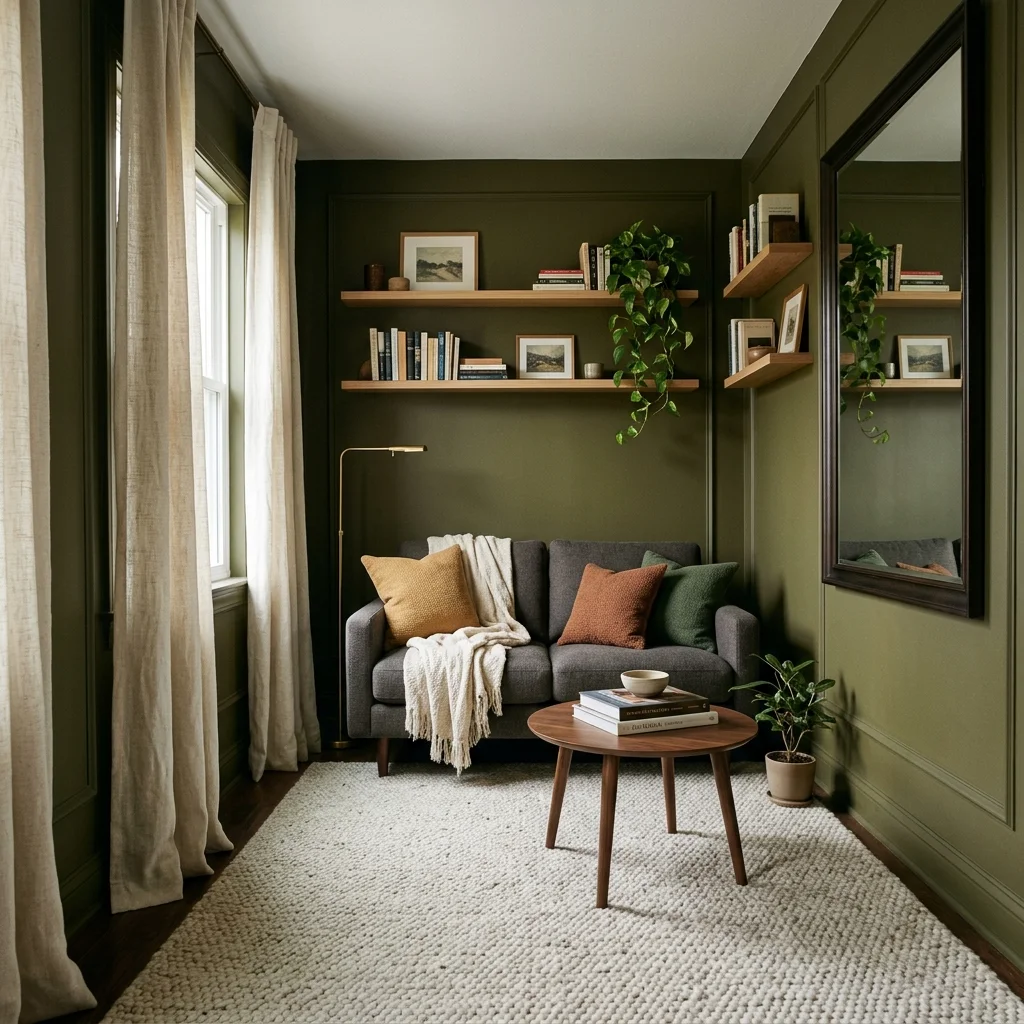
Before
A small living room filled with oversized furniture, heavy dark curtains and scattered accessories can feel cramped and difficult to navigate.
After
A compact sofa, a round coffee table and a restrained dark palette create a more organized room. A pale rug and well placed mirror introduce contrast without sacrificing the dramatic mood.
Choose furniture according to the actual dimensions of the room rather than the size of the pieces in inspiration photos. Leave clear walking paths, use wall mounted storage where practical and avoid bulky side tables beside narrow seating.
Dark paint can work in small spaces, too. The key is balancing it with suitable lighting, a thoughtful layout and a few lighter surfaces.
Olive Green And Brass
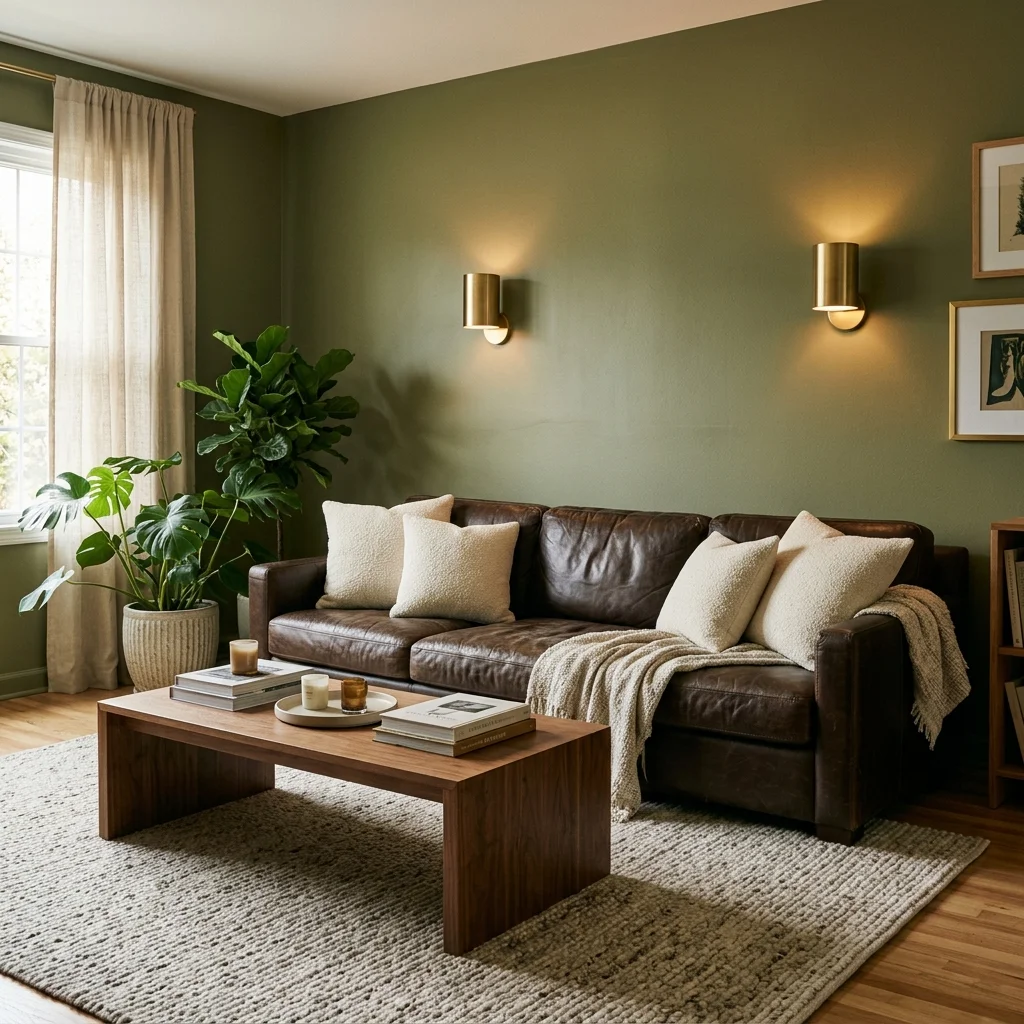
Olive green and brass create a warm, understated combination that suits both modern and vintage inspired interiors. The green provides an earthy backdrop, while brass introduces small highlights that catch the light without overwhelming the room.
Do
- Pair olive walls with walnut or medium oak furniture.
- Use brushed brass for lamps, handles and small accessories.
- Introduce cream fabrics to soften the darker palette.
- Add greenery to reinforce the natural tones.
Don’t
- Combine too many competing metallic finishes.
- Choose a green without testing its undertones.
- Use highly reflective gold on every surface.
- Crowd the room with unnecessary decorative objects.
This palette works especially well in living rooms with wood flooring and natural fabrics. Keep brass accents concentrated in a few places, allowing their warm finish to stand out against the muted green backdrop.
Moody Industrial Interiors

Cost: Moderate to high, depending on furniture and renovation needs.
Time: A weekend for styling, longer for structural changes.
Skill Level: Beginner for decor updates, professional support for major alterations.
Best For: Loft apartments, contemporary homes and spaces with exposed architectural features.
Industrial interiors combine hard materials such as concrete, steel and brick with softer furnishings. The contrast is important because too many rough surfaces can make a living room feel cold.
Introduce a leather sofa, wool rug and warm wood table to soften the industrial details. Black metal frames and simple pendant lights reinforce the aesthetic without requiring artificial structural changes.
If your home lacks exposed brick or concrete, use textured finishes and metal accessories to suggest the style. Preserve existing features where possible rather than making expensive renovations solely for appearance.
Layered Ambient Lighting

Lighting determines whether a dark living room feels welcoming or gloomy. Several smaller sources usually provide a more comfortable atmosphere than one bright overhead fixture because they distribute light at different heights.
- Start with general lighting that illuminates the room safely.
- Place a table lamp beside the sofa for reading or relaxing.
- Add a floor lamp near a dark corner.
- Use wall sconces or picture lights to highlight architectural features.
- Choose compatible warm white bulbs and check their brightness.
Dimmers can help adjust the atmosphere throughout the day. If you rent your home, plug in lamps and removable lighting solutions offer flexibility without electrical alterations.
The goal is to create a room where you can read, entertain and unwind comfortably, not simply a room that looks dramatic in photographs.
Black And Cream Styling

Black and cream provide a timeless contrast that feels dramatic without relying on several strong colors. Black grounds the room, while cream upholstery, rugs and curtains reflect light and soften the darker elements.
| Design Element | Option A | Option B |
|---|---|---|
| Main wall | Matte black | Soft charcoal |
| Sofa | Cream boucle | Warm ivory linen |
| Wood accents | Dark walnut | Natural oak |
| Accessories | Black metal | Brushed brass |
For a more relaxed finish, introduce warm wood and tactile fabrics rather than using stark white everywhere. Cream has softer undertones that help black interiors feel more comfortable.
Keep the larger surfaces simple and use smaller accessories to introduce pattern. A single striped cushion or abstract print can provide enough detail without disrupting the clean contrast.
Moody Reading Corners
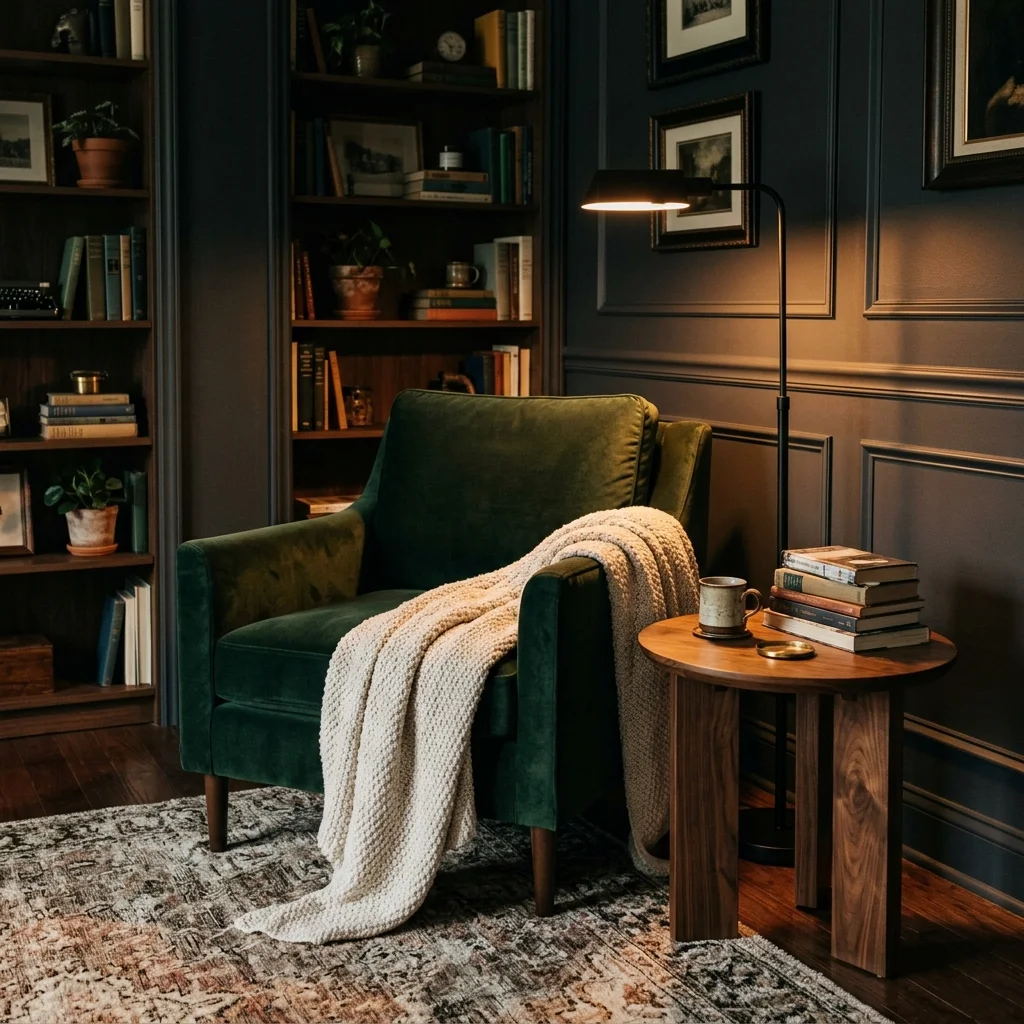
A dedicated reading corner makes a living room more functional while adding another layer of visual interest. A comfortable armchair, a small side table and focused lighting are enough to create a useful space without requiring a separate room.
Quick Tip:
Place the chair near a window for daytime reading, then position a floor lamp beside it for evenings. Make sure the lamp directs enough light onto the book without shining directly into your eyes.
Choose a chair fabric that complements the main sofa rather than matching it exactly. A deep green chair can add color to a charcoal room, while cognac leather works well with navy or olive walls.
Keep a small basket nearby for books and blankets. Practical storage prevents the corner from becoming cluttered and makes it easier to use every day.
Moody Bohemian Layers
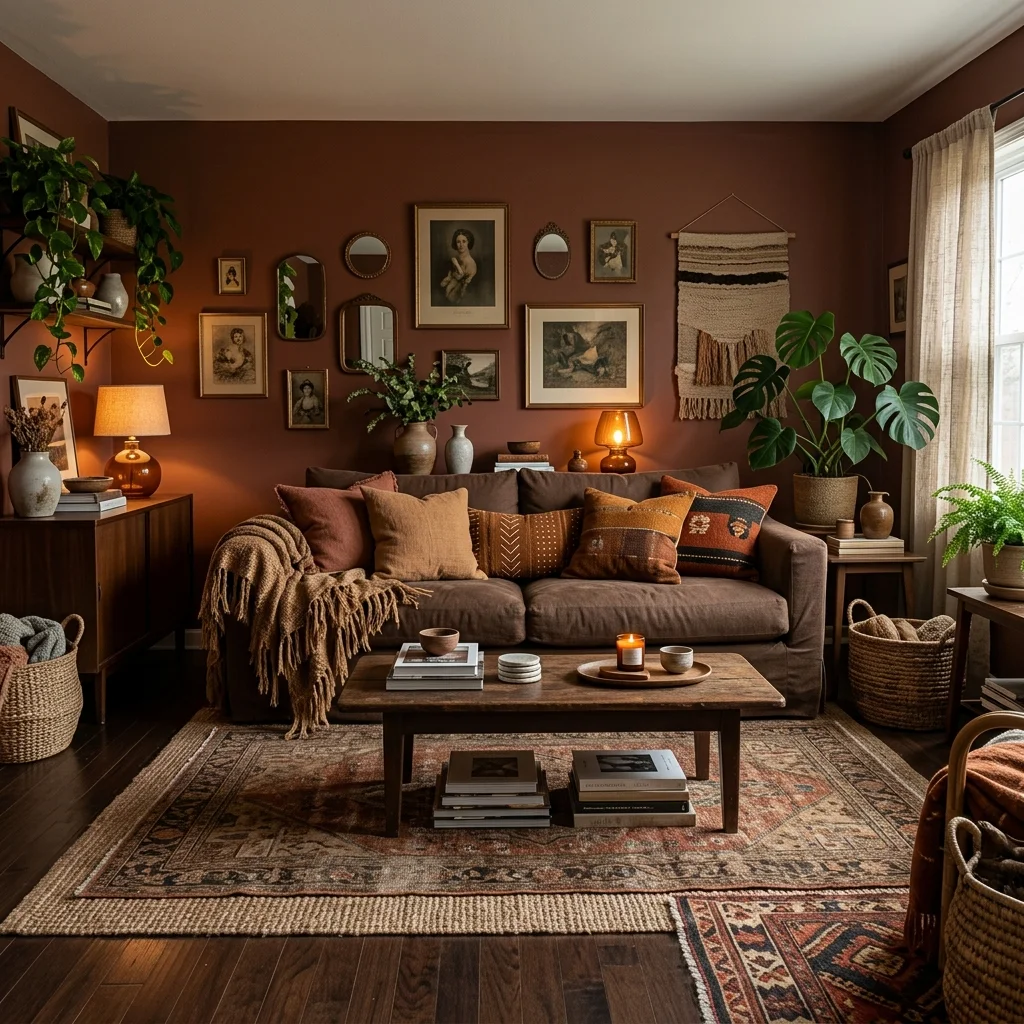
Bohemian styling brings warmth and personality to dark living rooms through layered textiles, handmade looking ceramics, natural fibers and collected accessories. Deep terracotta, muted rust, olive and chocolate brown work especially well together.
Do
- Layer a patterned rug over a suitable neutral foundation when practical.
- Mix linen, wool, cotton and woven materials.
- Display a few handmade looking ceramic pieces.
- Use plants to introduce natural shapes and fresh green tones.
Don’t
- Cover every surface with decorative objects.
- Mix patterns without a shared color connection.
- Block walkways with baskets and floor cushions.
- Overlook the care needs of indoor plants.
The best bohemian interiors feel collected over time rather than purchased as a matching set. Start with the large furniture pieces, then add a few meaningful textures and accessories. Leave some open space so each layer remains visible.
Moody Minimalist Living Rooms

Minimalism can make dark interiors feel calm rather than crowded. A limited palette, clean furniture shapes and carefully chosen accessories allow the wall color and architectural details to stand out.
Cost: Flexible, especially when working with existing furniture.
Time: One afternoon to declutter and rearrange.
Skill Level: Beginner.
Best For: Small apartments, contemporary homes and people who prefer uncluttered rooms.
Start by removing objects that do not serve a practical or decorative purpose. Keep the main seating, one coffee table and a small selection of accessories. Introduce texture through a wool rug, linen cushions, or natural wood rather than adding more colors.
A minimalist room still needs personality. Choose one artwork, sculptural lamp, or distinctive side table that reflects your taste. The aim is not an empty space, but a room where every item has a clear purpose.
Candlelit Moody Living Rooms
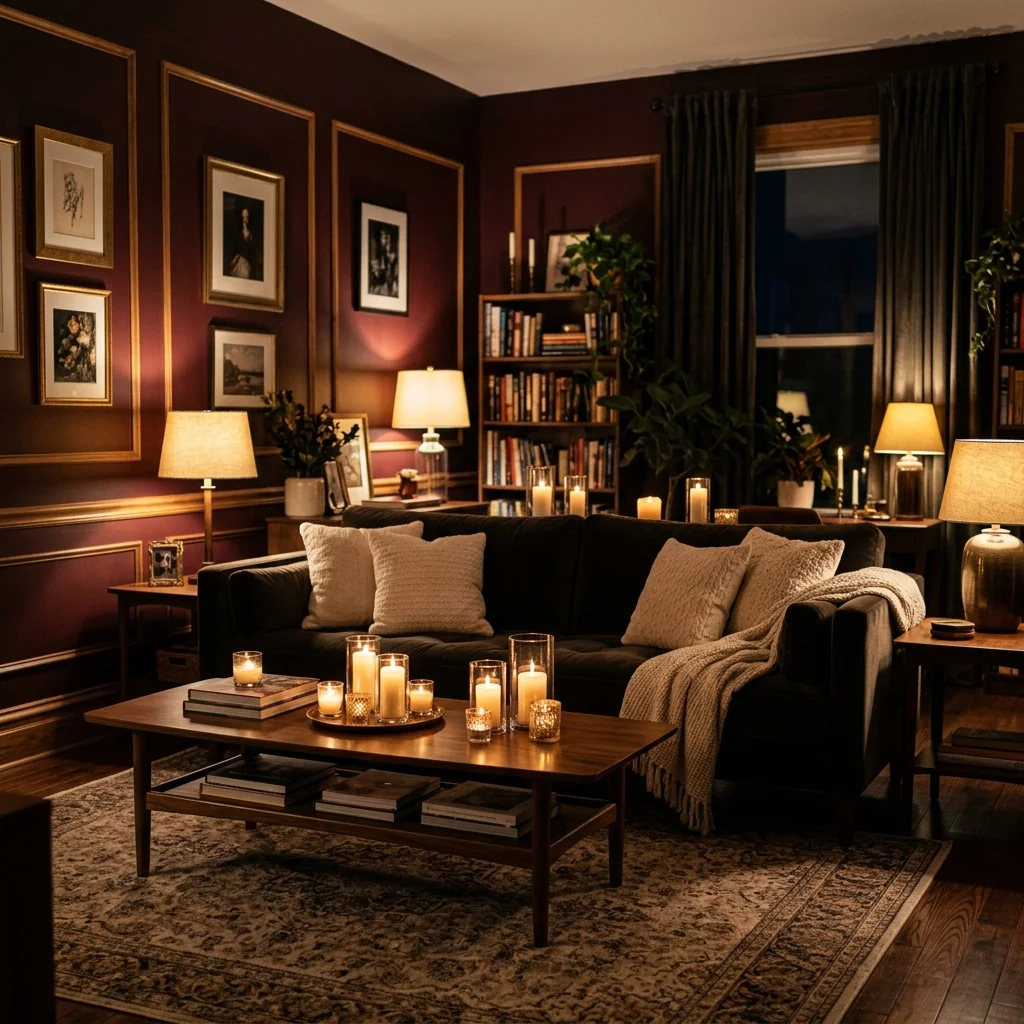
Candlelight adds a gentle glow that makes a dramatic living room feel intimate, especially during quiet evenings. Combine candles with shaded lamps and soft textiles to create warmth without relying on overhead lighting alone.
Choose a mix of candle heights and place them on stable, heat resistant surfaces. Grouping a few together on a tray creates a focal point, while a single candle on a side table adds a quieter accent.
For everyday convenience, high quality flameless candles offer a similar visual effect without an open flame. Keep real candles away from curtains, cushions, books and other combustible materials and never leave them burning unattended.
The final touch is restraint. Let the warm light, rich wall colors and comfortable furniture create the atmosphere rather than filling every surface with decorations.
CONCLUSION
Creating a dramatic living room does not require expensive furniture or a complete home makeover. Small changes, such as painting an accent wall, adding velvet cushions, choosing a vintage rug, or layering warm lighting, can make your space feel more inviting and distinctive.
The best Moody Living Room Ideas are the ones that reflect your personal style while keeping everyday comfort in mind. Start with one change that fits your budget, then add complementary textures and colors as you go.
Save this article on Pinterest for inspiration, try your favorite ideas and share it with someone planning a cozy living room refresh. Your dream sanctuary can begin with one thoughtful detail.


