27 Laundry Room Ideas
Laundry can quickly become a pile of clothes, baskets, bottles and unfinished chores. A few smart changes can make the room easier to use and much more enjoyable to keep organized.
These Laundry Room Ideas focus on practical storage, better layouts, folding areas, drying solutions, and clever ways to use every inch of space. Whether you have a spacious utility room or a narrow laundry area, you’ll find ideas that can fit your needs and style. I’ve noticed that even small changes, such as adding a dedicated basket or creating a clear folding surface, can make laundry routines feel far less frustrating. As you explore these ideas, you’ll discover simple ways to create a cleaner, more functional space that supports your everyday routine.
Wall-Mounted Drying Rack

Laundry days feel lighter when drying space stays within easy reach. A wall-mounted rack folds flat when unused, then opens quickly for shirts, delicate fabrics, towels or items that should not enter the dryer. Mount it above a counter or beside the washer where each load can move smoothly from wash to dry.
In my experience, keeping the rack off the floor makes a small utility room feel noticeably more organized. Choose a sturdy model with several rails and enough clearance for airflow. A simple neutral finish also keeps the room visually calm while giving you a practical place for air-drying clothes.
Built-In Folding Counter

A clear folding surface can turn laundry piles into a quick, organized routine. Install a durable countertop directly above front-loading machines, leaving enough depth to sort clothing comfortably without blocking doors, vents or controls.
- Choose quartz, laminate or sealed wood for a durable surface.
- Keep the counter slightly wider than the machines when possible.
- Leave comfortable standing space in front for folding.
- Add a nearby basket for clothes waiting to be sorted.
- Use the surface for folding, stain checking and temporary storage.
I’ve noticed that a dedicated counter encourages clothes to be folded immediately instead of collecting on chairs or beds. Keep everyday supplies nearby, but avoid filling the surface with decorative objects. The more open workspace you have, the faster you can sort a full load and put everything away.
Pull-Out Laundry Sorters

Sorting becomes much easier when every category has a designated place. Pull-out laundry sorters can hide inside a tall cabinet, keeping dirty clothes contained while preserving a clean, uncluttered floor.
Quick Tip:
Choose removable bags or baskets that lift out easily for carrying a full load. Label each compartment with simple categories such as lights, darks, towels or delicates so everyone in the household knows where clothing belongs.
A three-section sorter works especially well for families because clothes can be separated before wash day arrives. I’ve seen narrow cabinets make a surprisingly big difference in compact rooms. Look for ventilated baskets or washable liners, especially if damp towels may sit for a short time before washing.
Should I continue with the next 3 ideas?
Slim Utility Shelving

Before: Cleaning supplies, detergents and spare towels compete for space around the machines. Bottles often end up on the floor or scattered across a crowded counter.
After: Slim vertical shelves give every frequently used item a clear home. Baskets hide smaller supplies, while the open shelves keep essentials visible and easy to grab.
A narrow shelving unit makes use of vertical space without consuming valuable floor area. Keep heavy detergent bottles on the lower shelves and lighter items higher up. For a polished look, group products inside matching baskets instead of displaying every colorful package. This setup works particularly well beside stacked machines.
Hanging Rod Station

- Choose the location: Mount the rod above a counter, between cabinets or beneath an existing shelf.
- Check clearance: Leave enough room for garments to hang without touching the countertop or floor.
- Install securely: Anchor the brackets into wall studs or use hardware rated for the expected weight.
- Add matching hangers: Slim hangers conserve space and keep the station visually tidy.
A hanging rod gives freshly washed clothing a temporary home before it reaches the closet. It also reduces wrinkles on shirts, dresses and lightweight fabrics that should not sit in a basket. Keep several empty hangers nearby so transferring garments from the dryer takes only a few seconds.
Washer-Dryer Pedestals
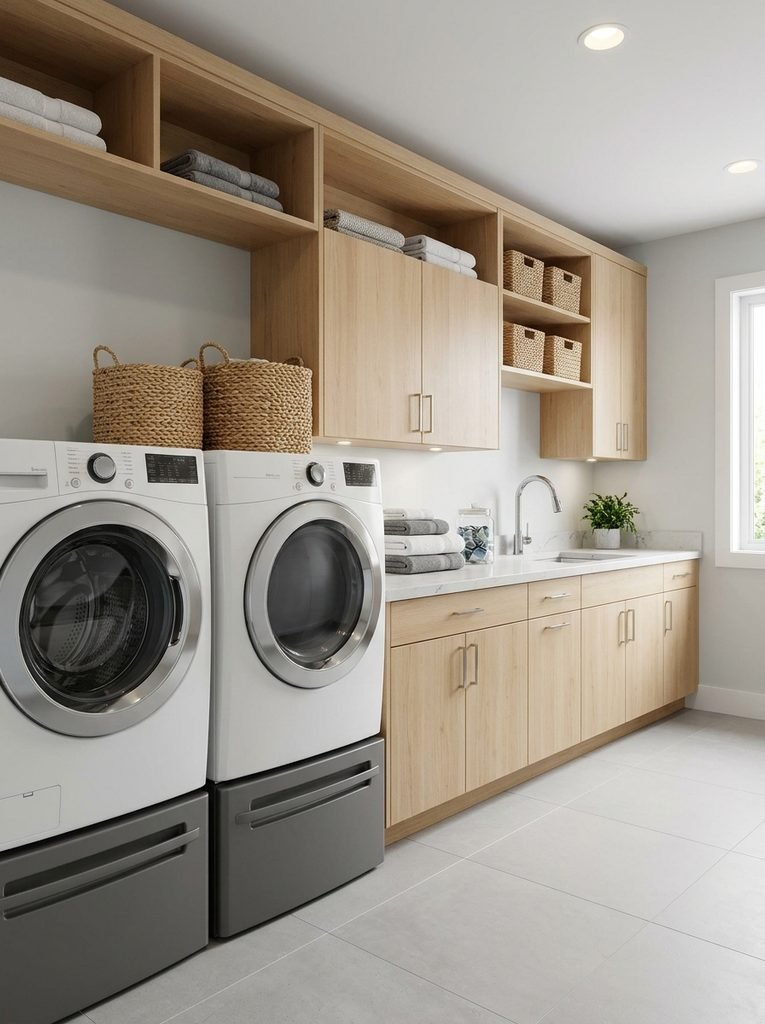
| Comparison Point | Option A: Floor Level | Option B: Raised Pedestals |
| Loading Height | Lower | More comfortable |
| Storage | Limited | Added drawer space |
| Cleaning | More bending | Easier floor access |
| Best Use | Standard setup | Frequent laundry routines |
Raising front-loading machines can reduce repeated bending during loading and unloading. The added drawers also provide hidden storage for detergent, stain removers or laundry bags. Before buying pedestals, verify that they match your exact appliance models. A stable, manufacturer-compatible base matters more than appearance alone.
Should I continue with the next 3 ideas?
Hidden Hamper Cabinets

DO
- Build hamper compartments into a tall cabinet near the washer.
- Use removable liners for easier carrying and washing.
- Label sections for lights, darks, towels or household linens.
- Choose ventilation openings if damp clothing may sit briefly.
DON’T
- Pack hampers so tightly that clothes become difficult to remove.
- Store wet garments inside closed compartments for long periods.
- Place heavy hampers where doors cannot open fully.
- Skip measuring the cabinet interior before buying liners.
A concealed hamper keeps dirty clothes out of sight while preserving valuable floor space. In my experience, divided compartments also make sorting less tedious because clothes are separated before wash day. Position the cabinet close to the machines and choose wide openings that let you lift a full liner without struggling.
Open Basket Storage

Cost: Low to moderate | Time: One afternoon | Skill Level: Beginner
Best For: Small rooms | Storage Type: Open and portable
Result: Visible organization with easy access
Open baskets bring practical storage without making the room feel closed in. Use large baskets for towels and linens, medium baskets for cleaning cloths and smaller containers for clips or garment-care supplies. Matching textures create visual consistency while keeping frequently used items easy to reach.
Floating Folding Shelf

A folding shelf can create a useful work surface without permanently occupying the room. Mount a sturdy hinged panel above the machines or along an unused wall, keeping it level and securely anchored.
When folded down, the shelf provides room for sorting and folding clothes. When raised, it leaves the walkway clear. Choose moisture-resistant wood, sealed butcher block or durable laminate, especially in rooms where humidity regularly builds up. A compact design can give a small laundry area the function of a much larger workspace.
Should I continue with the next 3 ideas?
Countertop Drying Zone

- Keep a compact drying rack directly beside the folding counter.
- Place a washable tray underneath items that may drip.
- Reserve the nearest basket for delicate garments awaiting air-drying.
- Leave enough airflow around clothing to prevent lingering dampness.
A dedicated drying zone keeps wet garments from spreading across chairs, doors and other household surfaces. Choose a rack that folds away when unused, then position it close enough to the washer that transferring delicate items takes only a few steps. This arrangement works especially well in compact rooms with limited wall space.
Pegboard Supply Wall

Quick Tip:
Arrange the most frequently used tools between waist and eye level. Keep stain brushes, measuring scoops, garment bags and small cleaning tools on individual hooks so they stay visible without covering the countertop.
A pegboard makes awkward wall space useful while keeping small laundry accessories easy to find. Use matching containers for visual order, but leave enough empty pegboard space for future additions. I’ve noticed that open storage works best when each item has one obvious location, especially during busy laundry days.
Vertical Cabinet Tower

Before: Supplies fill countertops, machine tops and random corners, leaving little room for folding or sorting.
After: A tall cabinet gathers detergent, linens, cleaning products, baskets and household extras into one organized storage zone.
A vertical cabinet takes advantage of unused height instead of valuable floor width. Place everyday products between waist and shoulder level, then reserve upper shelves for seasonal linens or backup supplies. Add adjustable shelves so the interior can adapt to different bottle heights and baskets as your storage needs change.
Should I continue with the next 3 ideas?
Stacked Machine Layout

- Measure the niche: Check ceiling height, appliance dimensions, door clearance and nearby plumbing before planning the layout.
- Use compatible equipment: Confirm that the washer and dryer can safely be stacked with an approved stacking kit.
- Plan surrounding storage: Add narrow shelves or cabinets beside the machines for detergent, towels and cleaning supplies.
- Keep access clear: Leave enough room to open appliance doors and move laundry baskets comfortably.
A stacked arrangement can free valuable floor space for storage, folding or movement. It suits narrow utility rooms particularly well, but installation should follow the appliance manufacturer’s requirements. Keep frequently used supplies within easy reach so the vertical layout saves space without making everyday laundry tasks harder.
Pull-Down Ironing Board

| Comparison Point | Option A: Freestanding Board | Option B: Pull-Down Board |
| Floor Space | Uses permanent floor area | Folds into cabinet |
| Storage | Needs separate location | Hidden in wall cabinet |
| Setup | Move and unfold | Pull down and use |
| Best For | Large rooms | Compact laundry areas |
A cabinet-mounted ironing board keeps pressing equipment available without creating another obstacle on the floor. Choose a model with a sturdy hinge and heat-resistant surface, then position it near an outlet. A nearby shelf for the iron and spray bottle creates a complete pressing station without taking over the room.
Deep Utility Sink

DO
- Choose a deep basin for soaking bulky garments and cleaning items.
- Install a tall faucet with enough clearance for large containers.
- Keep a washable mat nearby for wet items.
- Store stain-treatment supplies in a cabinet within reach.
DON’T
- Use delicate clothing products without checking fabric-care instructions.
- Leave standing water in the basin after cleaning.
- Overload the surrounding counter with bottles.
- Ignore splash protection behind the sink.
A deep utility sink adds flexibility beyond ordinary handwashing. It gives you a place to soak stained clothing, rinse muddy shoes, clean mop heads or handle oversized items before they enter the washer. For frequent household use, choose durable surfaces that tolerate water, cleaning products and repeated scrubbing.
Should I continue with the next 3 ideas?
Under-Counter Basket Drawers
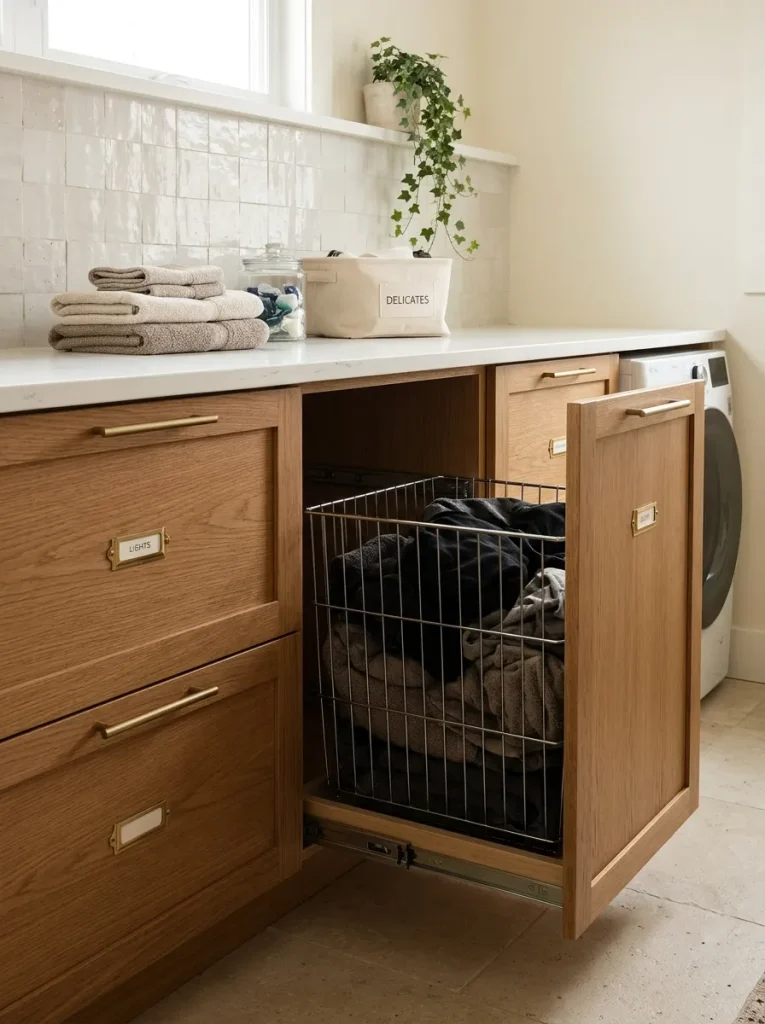
Cost: Moderate | Time: One to two days | Skill Level: Intermediate
Best For: Families and frequent laundry | Storage: Hidden pull-outs
Result: Faster sorting with less visible clutter
Pull-out basket drawers make sorting easier without leaving several hampers around the room. Assign each drawer a simple category, such as darks, lights, towels or delicates. Full baskets can slide out smoothly for carrying, while the closed cabinetry keeps the room looking tidy between loads.
Backsplash Drying Hooks
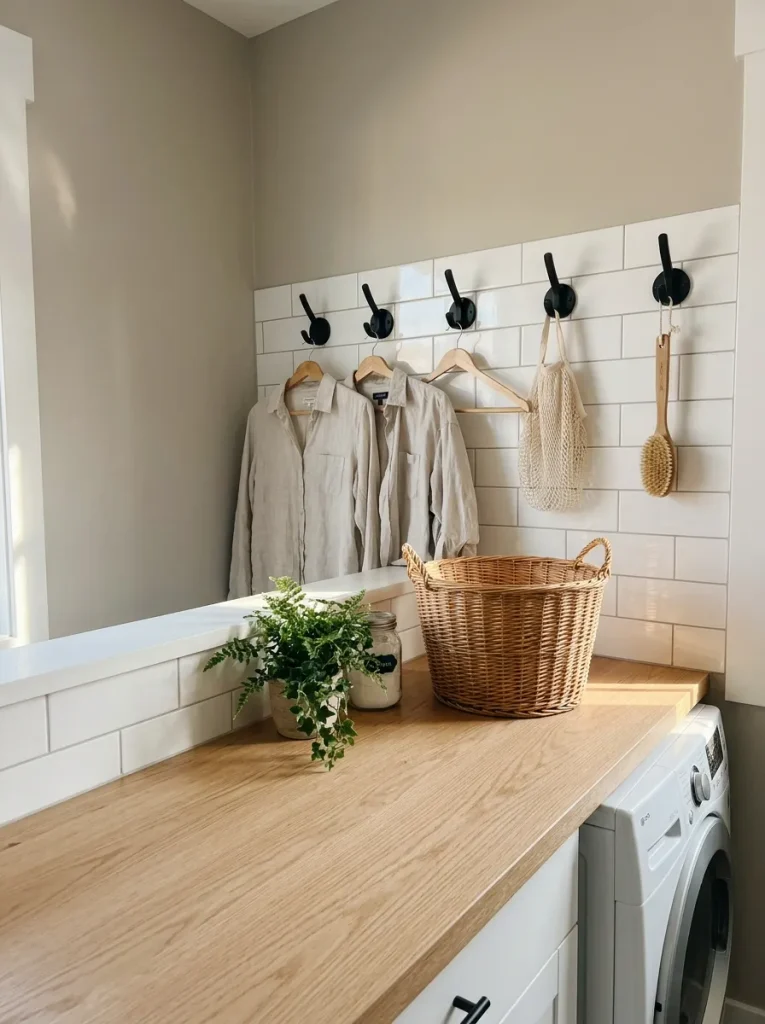
A few strategically placed hooks can turn an overlooked wall into useful hanging space. Install them above a counter or beside the machines, keeping enough clearance for doors and appliances.
Use sturdy hooks for hangers, mesh laundry bags or small drying tools. Keep the arrangement visually simple by spacing hooks evenly across the wall. A row of five or six hooks is often enough for everyday garments without making the backsplash feel crowded. Choose moisture-resistant hardware for areas exposed to steam.
Fold-Down Sorting Table
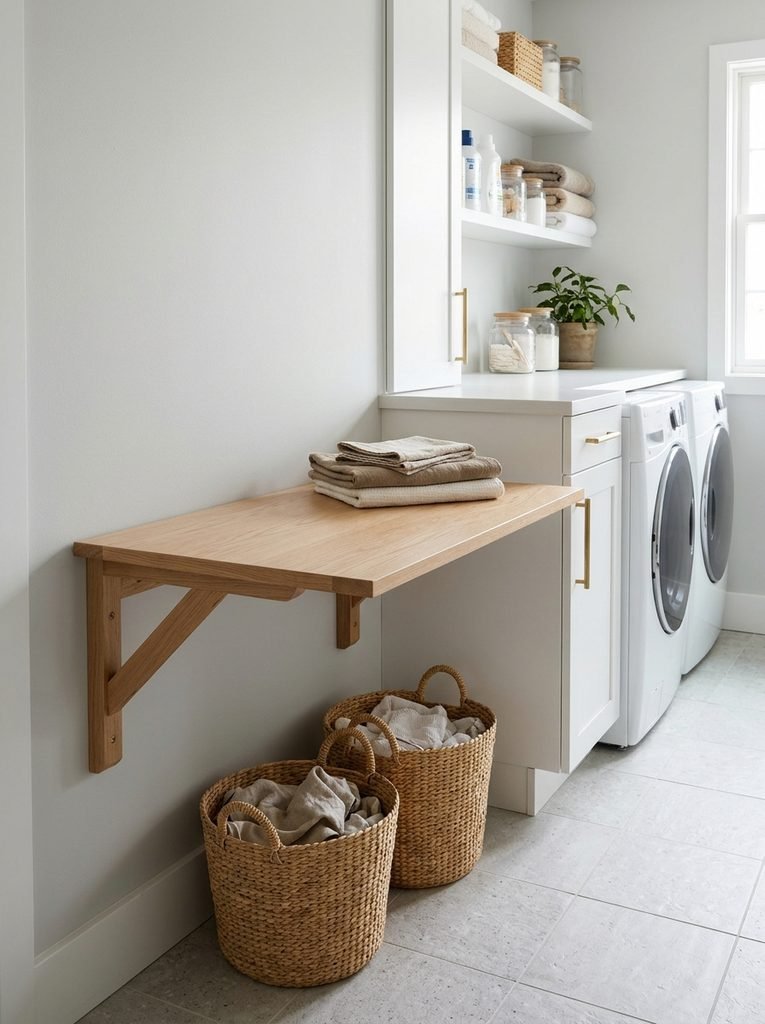
- Measure the wall: Select a section wide enough for comfortable sorting without blocking cabinets or doors.
- Choose the surface: Use sealed wood, laminate or another moisture-resistant material.
- Install sturdy hinges: Secure the support hardware directly into suitable wall framing.
- Add storage below: Position baskets or a slim cabinet underneath for sorted clothing.
- Keep the surface clear: Fold the table upward after use to preserve walking space.
A fold-down table gives compact rooms a practical workspace without requiring a permanent island or large counter. Keep its depth comfortable for folding towels and clothing, but avoid making it so deep that the open panel restricts movement. This setup is especially useful for narrow laundry areas with limited floor space.
Should I continue with the next 3 ideas?
Color-Coded Storage Bins

DO
- Assign one bin to each laundry category.
- Choose washable or wipe-clean containers.
- Add simple labels for quick identification.
- Keep heavier supplies on lower shelves.
DON’T
- Mix unrelated items inside every container.
- Use oversized bins that waste shelf space.
- Store damp clothing inside closed containers.
- Fill shelves so tightly that bins cannot slide out.
Color-coded containers make a busy utility area easier to scan at a glance. Use one shade for fabric-care supplies, another for cleaning tools and a third for spare linens. I’ve noticed that simple labels become especially helpful when several people share household chores because everyone can return items without guessing.
Slim Rolling Cart
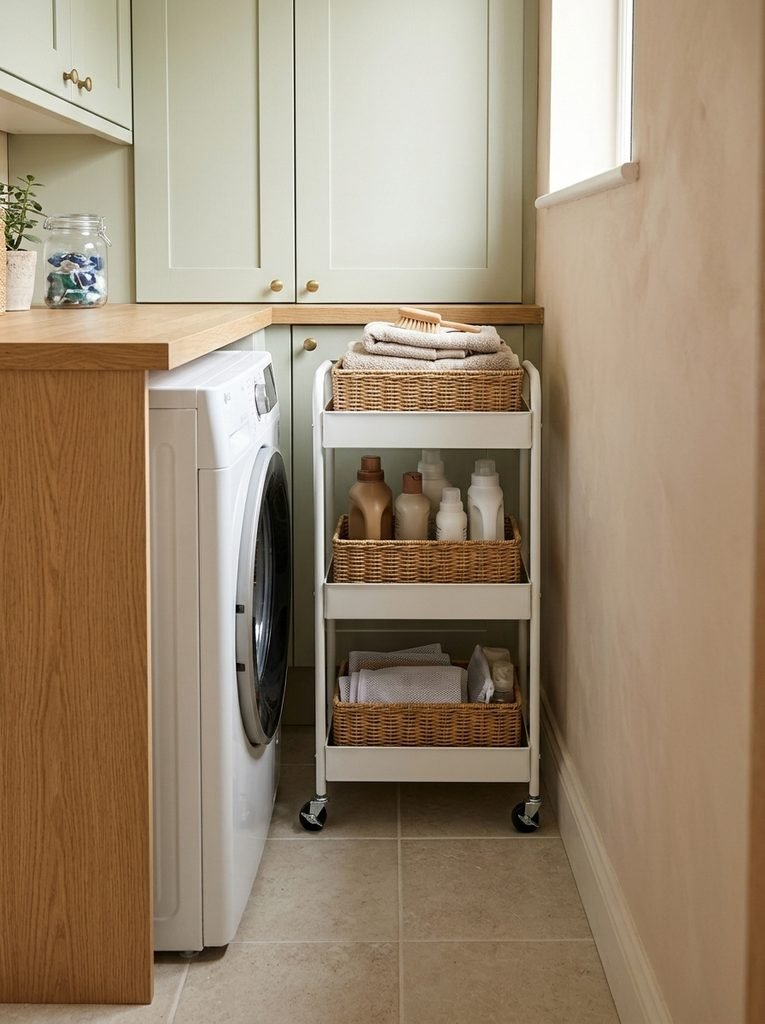
Cost: Low to moderate | Time: 15 minutes | Skill Level: Beginner
Best For: Narrow gaps | Storage: Portable vertical shelves
Result: Extra storage without permanent installation
A rolling cart can turn a narrow gap into useful storage for detergent, dryer sheets, stain brushes and laundry bags. Measure the opening before purchasing, including space needed for the cart to roll out. Choose locking wheels if the floor slopes slightly or the cart will hold heavier bottles.
Glass Cabinet Doors
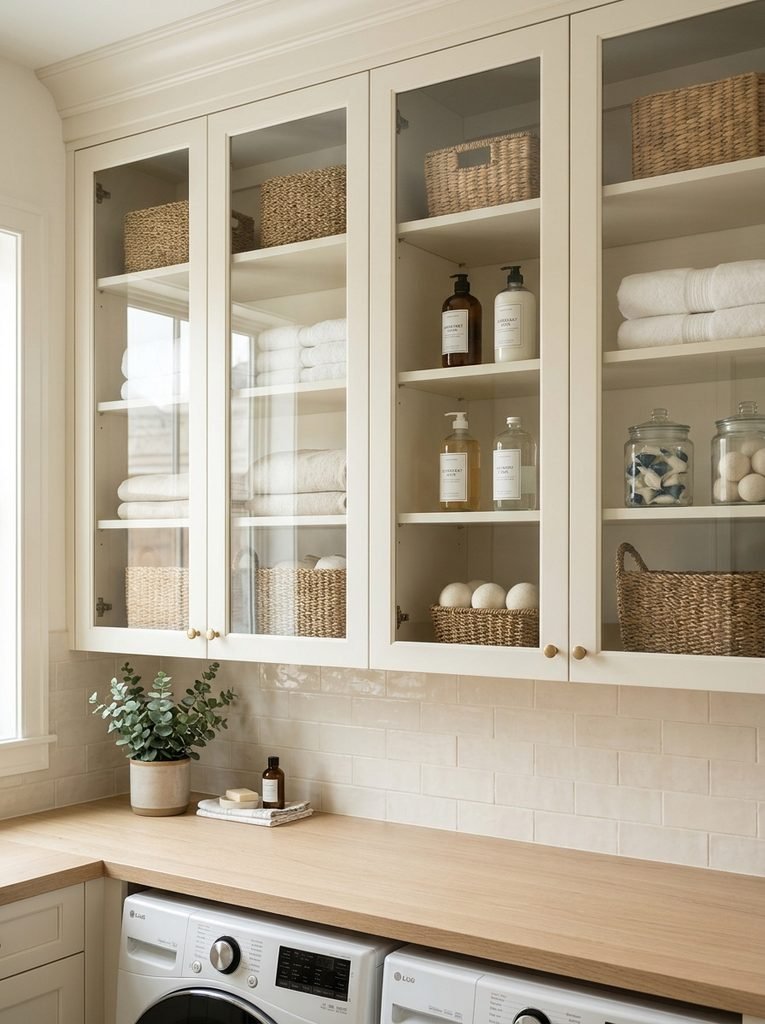
Glass-front cabinets give everyday supplies a visible home while keeping them protected from dust and clutter. Group similar products together and use matching containers where practical.
For a cleaner appearance, leave some shelf space open instead of filling every corner. Place attractive baskets and folded linens behind the glass, while less appealing packaging can move into closed cabinets. Choose tempered or cabinet-rated glass, particularly for lower doors that may receive frequent use.
Should I continue with the next 3 ideas?
Under-Sink Cleaning Station

Cost: Low to moderate | Time: One afternoon | Skill Level: Beginner
Best For: Cleaning supplies | Storage: Cabinet interior
Result: A contained, easy-to-reach station
A dedicated cabinet beneath the utility sink keeps cleaning products close without spreading bottles across the countertop. Add a removable tray for leaks, a small caddy for brushes and hooks on the cabinet door for reusable cloths. Keep products in their original labeled containers and follow each product’s storage instructions.
Machine-Top Folding Surface
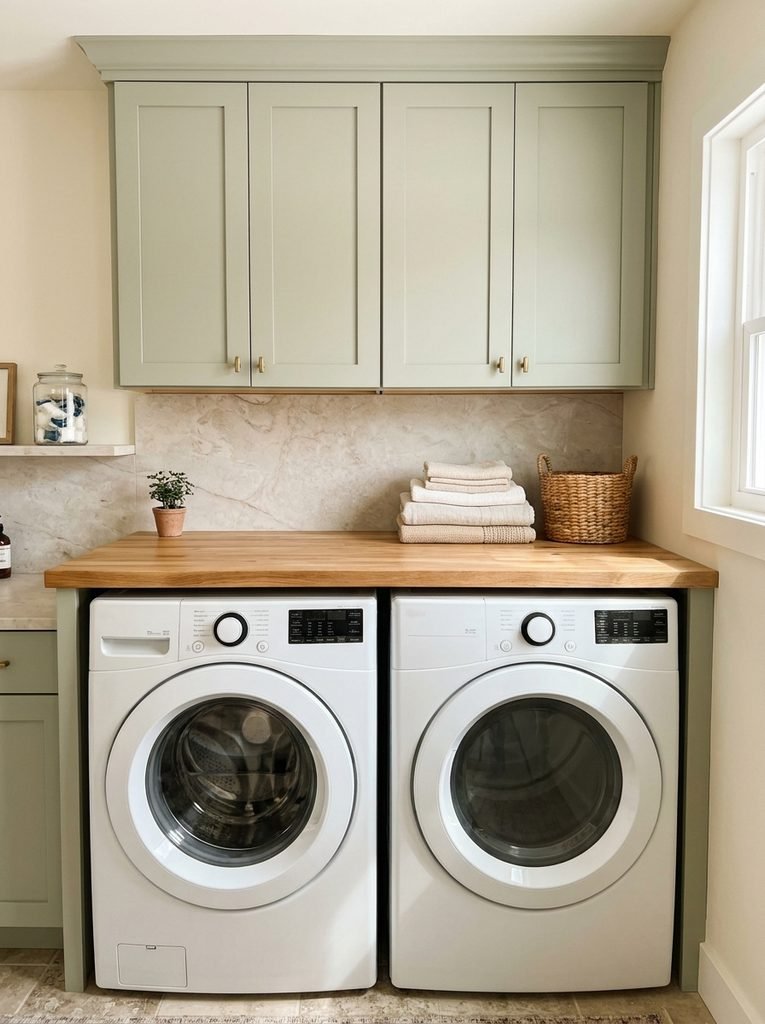
A sturdy countertop over front-loading machines creates an instant folding station while visually connecting the appliances. Measure carefully around hoses, vents, controls and service access before installation.
Keep the surface mostly open so clothes can move directly from the dryer to folding. A small basket at one end can hold items waiting to be put away. Sealed butcher block, quartz and quality laminate are practical choices, but the surface should remain protected from standing moisture.
Wall-Mounted Laundry Baskets

| Comparison Point | Option A: Floor Baskets | Option B: Wall-Mounted Baskets |
| Floor Space | Occupies walking area | Keeps floor open |
| Access | Easy to lift | Easy at assigned height |
| Organization | Flexible categories | Dedicated categories |
| Best For | Larger rooms | Narrow laundry spaces |
Wall-mounted baskets keep dirty clothing off the floor while making sorting categories immediately visible. Mount them at comfortable heights and use sturdy hardware appropriate for the combined weight of baskets and clothing. Leave enough clearance between compartments so clothes can be removed without catching on neighboring baskets.
Should I continue with the next 3 ideas?
Pet Laundry Corner

Best For: Pet owners | Cost: Low to moderate
Storage: Baskets and wall hooks | Skill Level: Beginner
Useful For: Towels, blankets, grooming supplies
A small pet station can keep muddy towels, washable blankets and grooming supplies separate from everyday clothing. Place a dedicated basket near the washer and add hooks above it for leashes or reusable cleaning cloths. Wash pet items according to their care labels, especially bedding that may carry excess hair or dirt.
Hidden Detergent Cabinet

A concealed detergent cabinet keeps bulky bottles out of sight while placing them close to the machines. Choose an adjustable interior so tall containers fit without wasting vertical space.
Store frequently used products on the easiest-to-reach shelf and backup supplies higher up. A shallow cabinet can work particularly well in a narrow room because it adds storage without creating a bulky obstruction. Keep the door opening clear of appliance doors and check that the cabinet material can handle occasional spills.
Laundry Door Organizer

- Install a slim organizer on the inside of the laundry room door.
- Reserve larger pockets for laundry bags and smaller pockets for tools.
- Group stain-care supplies together for quick access.
- Keep sharp or chemical products secured according to their labels.
A door organizer uses overlooked space for the small items that tend to disappear in drawers. It works especially well for lint rollers, mesh wash bags, clothespins, stain brushes and measuring tools. Choose a design that does not interfere with the door latch, trim or nearby shelves when fully opened.
Should I continue with the next 3 ideas?
Conclusion
A well-planned laundry space can make everyday chores feel simpler, faster and more organized. From vertical storage and hidden hampers to drying stations and folding surfaces, these Laundry Room Ideas offer practical inspiration for different room sizes and household needs.
You don’t need to renovate everything at once. Start with one area that causes the most frustration, then make a small improvement that solves it. I’ve seen how thoughtful storage and better organization can completely change the way a utility room feels and functions. Save this post on Pinterest for your next project, try your favorite idea and share it with someone who could use a more organized laundry space.