22 Homework Station Ideas for Small Spaces That Work
Finding a good homework spot in a small home can feel like a puzzle, and these homework station ideas for small spaces show how a little planning solves it. You do not need a spare room or a big desk to help your child focus. A fold down desk, a closet nook, or a rolling cart can turn a quiet corner into a real study zone that fits your home and your budget. In my experience, kids work better when their supplies have a home and their desk feels like their own, even when the space is tiny. In this guide, you will find 22 simple ideas for desks, storage, lighting, and routines that work in apartments, shared bedrooms, and busy family rooms. Each idea is easy to set up this weekend, and most cost very little. Pick one favorite, start there, and watch homework time get calmer for everyone.
1. Wall Mounted Fold Down Desk
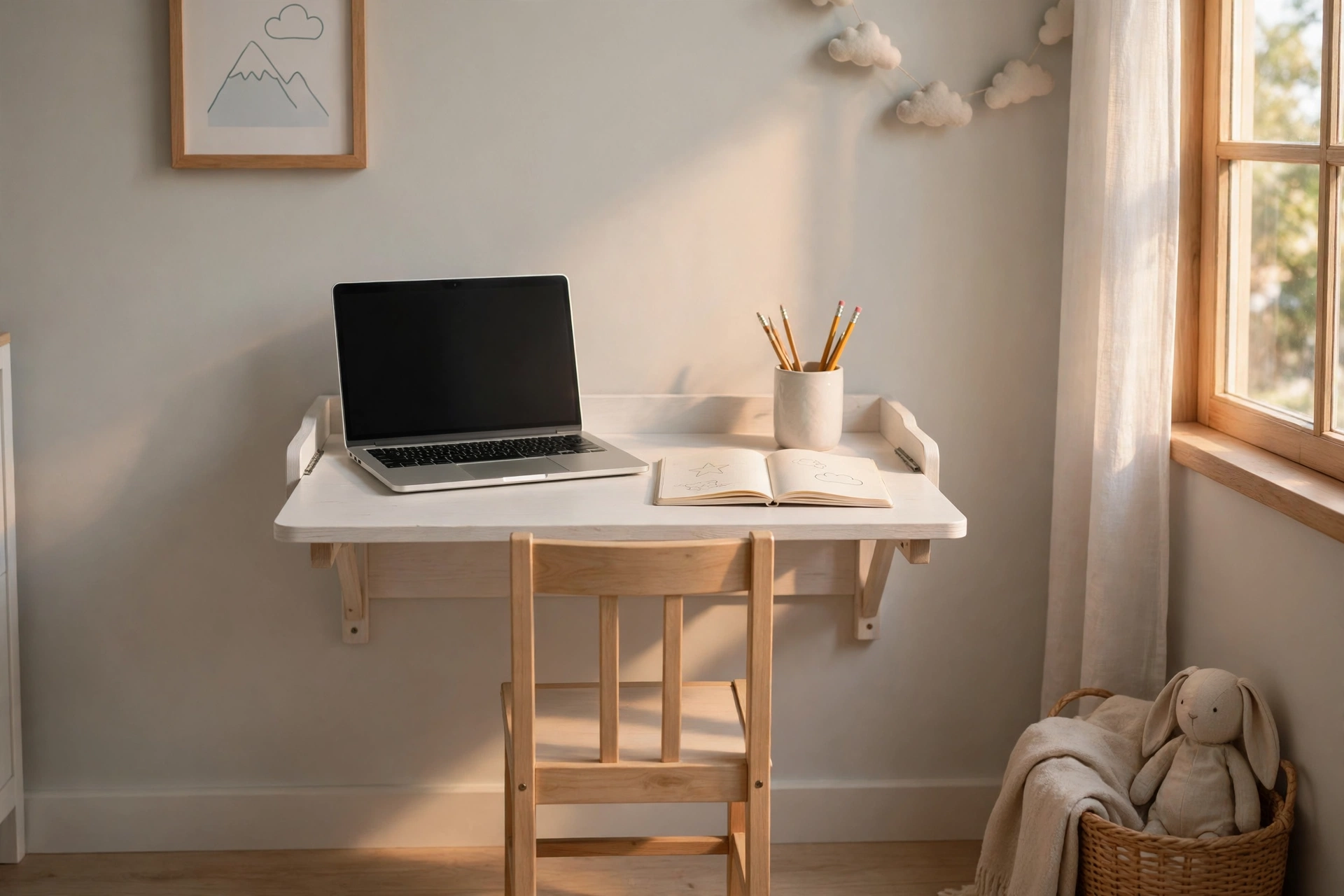
A fold down desk turns any blank wall into a study spot that disappears when homework ends. Mounted at elbow height, the hinged top holds a laptop and notebook, while a small shelf above keeps books close. Paint it the same color as the wall so it blends in.
Fold it up after school and the room returns to normal in seconds. Kids focus better when their work zone has a clear start and finish, and a desk that folds away gives them exactly that boundary. Add a clip on lamp and a wall hook for the backpack.
2. Closet Homework Nook

- Remove the closet doors and paint the inside a soft white or pale blue so the small space feels bright and open.
- Fit a narrow desktop across the closet at elbow height, and add a small shelf above it for books and supplies.
- Hang a clip on lamp or a battery light strip under the shelf so the nook stays well lit without a bulky lamp.
- Slide a rolling bin underneath for notebooks and craft supplies, keeping the desktop clear for actual work.
- Add a curtain or bead curtain to close the nook after homework, so the room looks tidy in seconds.
A closet nook gives a child a real desk without giving up any floor space in the bedroom. The built in walls block distractions from the rest of the room, and the small size feels cozy rather than cramped. In my experience, kids love having a spot that feels like their own little office.
3. Rolling Cart Station

Quick Tip:
Keep the cart stocked with everything a child needs, pencils, paper, scissors, and a sharpener, so homework never stalls on a missing supply. Roll it to the kitchen table for group work or beside the sofa for quiet reading time.
A three tier rolling cart works like a portable desk drawer that follows the child around the house. Fill the top tier with daily supplies, the middle with notebooks, and the bottom with art materials. When homework ends, roll the cart into a corner or closet and the living room is clear again.
4. Window Side Study Spot

BEFORE: The window corner held a plant stand and a pile of old magazines. Light flooded the spot all day, yet nobody used it for anything useful.
AFTER: Now a slim desk sits under the window with a chair pulled close. The child works in natural light, with a small plant and a pencil jar on the sill for company.
Natural light near a window helps kids stay alert, and the view gives tired eyes a place to rest. Keep the desk narrow so the walkway stays clear, and add a sheer curtain to soften glare on bright afternoons. I’ve noticed kids settle faster at a sunny window than at a desk facing a wall.
5. Loft Bed Study Corner

- Measure the space under the loft bed and choose a desk that fits with room for a chair to slide in.
- Add a small rug to mark the study zone, so the corner feels separate from the sleeping area above.
- Mount a clip on lamp to the bed frame or desk edge for focused light without taking up desk space.
- Hang a small shelf or pocket organizer on the bed frame for books, chargers, and supplies within reach.
The space under a loft bed is often wasted, yet it makes a natural study den that kids enjoy. The bed above creates a cozy ceiling that helps a child focus, while the rest of the room stays free for play. Add a curtain across the opening and the corner becomes a private little office.
6. Kitchen Counter Homework Zone

| Feature | Counter Stool Setup | Small Side Table |
|---|---|---|
| Work Surface | Wide counter top | Compact tabletop |
| Storage | Basket on a shelf | Drawer or shelf below |
| Supervision | Easy while cooking | Needs a quick check in |
| Best For | Younger kids | Older kids |
The kitchen counter keeps homework close to a parent who is cooking, which helps younger kids stay on task. A stool at the right height and a small tray for supplies turn the counter into a proper work spot. When dinner prep starts, the tray lifts off and the counter is clear in one move.
7. Pegboard Supply Wall

DO:
- Mount the pegboard at a child’s eye level so supplies are easy to grab and put back.
- Use hooks, cups, and small baskets to sort pencils, scissors, rulers, and tape by type.
- Leave one empty row so new supplies have a home and the board never feels overstuffed.
DON’T:
- Do not hang the board above the desk where reaching for supplies knocks things over.
- Do not overload it with decorations that hide the tools a child actually needs.
- Do not skip the wall anchors, since a loaded pegboard gets heavy fast.
A pegboard turns a plain wall into visible storage that keeps every supply in sight. Kids waste less time hunting for a pencil when everything hangs in its own spot, and cleanup becomes a matching game. Paint the board a cheerful color to match the room, and the wall becomes useful and pretty at once.
8. Under Stair Study Nook

Best For: Kids aged six and up who like a quiet, enclosed spot.
Space Needed: About four feet wide and three feet deep.
Lighting: A plug in wall light or battery strip works best.
Budget: Low, since a small desk and stool are usually enough.
The triangle under a staircase is one of the most wasted spots in a small home, yet it fits a desk and stool perfectly. Add a cushion on the stool, a small shelf on the sloped wall, and soft light, and the nook feels like a secret hideaway.
9. Wall Pegboard Storage

A pegboard turns a blank wall into storage without taking up desk space. Hooks, small baskets, and pencil cups hold pens, scissors, rulers, and notebooks within easy reach. Everything stays visible, so nothing gets lost in a drawer, and the wall becomes a working part of the study spot.
Paint the board in a soft color that matches the room, then let kids arrange the hooks themselves. A small shelf for books and a clip for the timetable keep the setup useful every day. When supplies have a home on the wall, the desk stays clear for homework.
10. Mobile Supply Cart

- Park the cart beside the desk during homework time, then roll it into a closet or corner when the work is done. Kids get a full set of supplies without a permanent station taking over the room.
- Give each tier a job: pencils and erasers on top, books and notebooks in the middle, art supplies at the bottom. Kids learn where everything lives and put things back without being asked twice.
- Choose a cart with a flat top so it doubles as extra work space for projects that need room to spread out. A small cutting mat on top protects the surface from glue and paint.
- Add a hook on the side for a small bag or headphones. The cart stays useful even on days when homework is light.
Rolling carts work well in shared rooms because the whole station moves in seconds. In my experience, kids stick with homework longer when supplies are already gathered in one place. Pick a sturdy cart with locking wheels so it stays put while they write quietly.
11. Lap Desk Study Nook

Quick Tip:
Choose a lap desk with a raised edge so pencils and books do not slide off. A cushion with a firm back keeps kids comfortable for a full homework session, and a small tray on the side holds a water bottle.
A lap desk turns any quiet corner into a study spot without buying furniture. Kids can work on the bed, the floor, or a window seat, then tuck the desk away when they finish. It suits small homes best when the desk is light enough for a child to carry alone.
12. Hallway Fold Away Desk
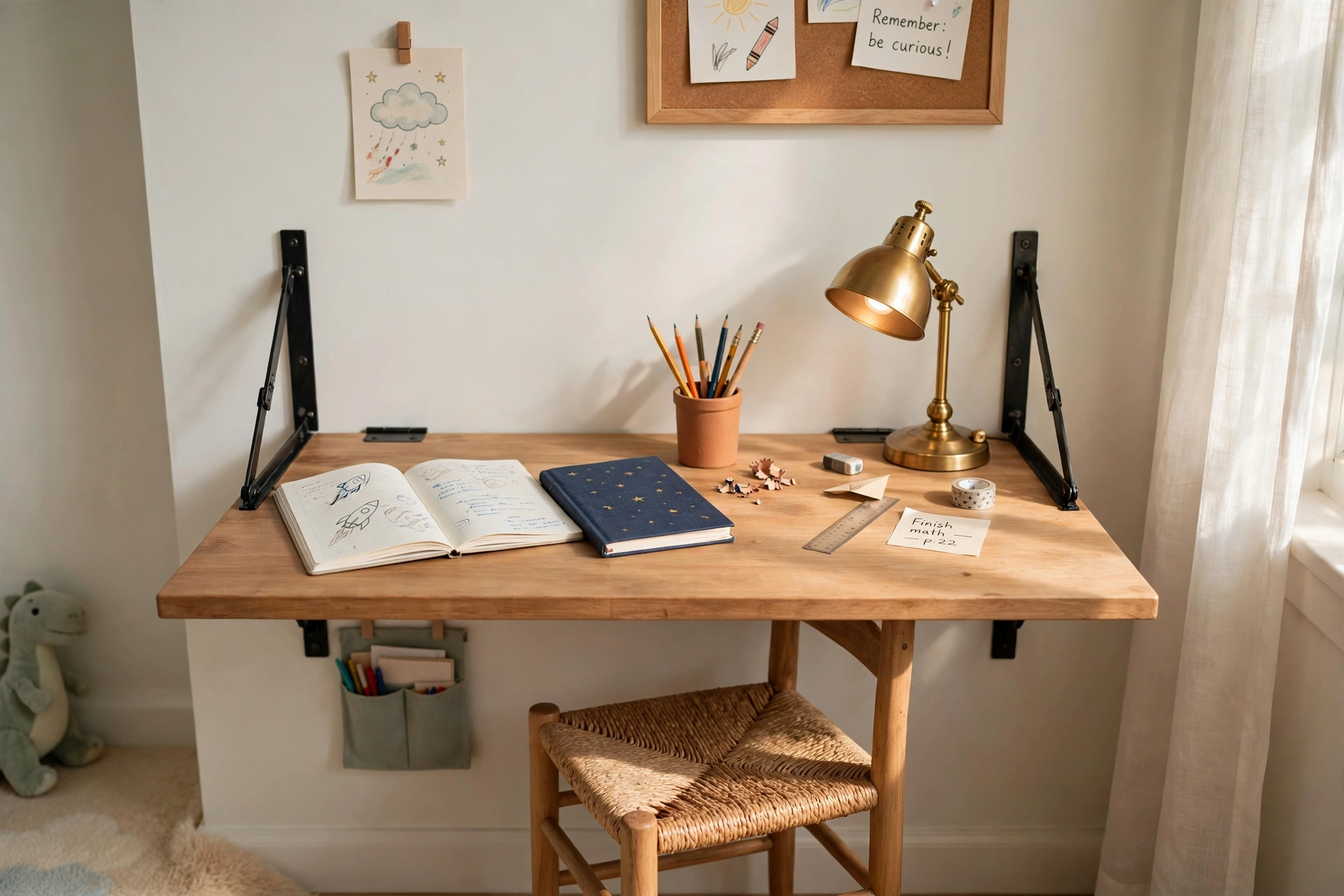
BEFORE: The hallway corner held a wobbly table that blocked the walkway and collected clutter. Homework happened on the sofa, where papers slid off cushions and pencils rolled away.
AFTER: Now a fold-down desk opens from the wall for homework and folds flat when the work ends. Notebooks, a lamp, and a pencil cup live on the desk, and the floor stays clear for walking.
Wall desks suit tiny rooms because they give kids a real writing surface without a permanent footprint. Mount it at the right height for your child, and add a small shelf above for books. I’ve noticed kids treat a desk they can fold away as their own special spot.
13. Color Coded Subject Bins

- Pick one color for each school subject and buy matching bins or folders in those shades.
- Label every bin with the subject name in big, clear letters so younger kids can read it.
- Put the bins on a low shelf beside the desk, in the same order as the school timetable.
- At the end of each day, kids return books and papers to the matching color bin.
Color coding cuts the morning scramble because kids grab the right bin without thinking. It also teaches them to sort and tidy as part of homework, not as a separate chore. Keep the system simple, with no more than five colors, so it stays easy to remember.
14. Clip-On Reading Lamp
| Feature | Clip-On Lamp | Desk Lamp |
|---|---|---|
| Space | Clips to shelf, desk stays free | Needs desk space for the base |
| Light | Aims light right at the page | Lights a wider area of the desk |
| Move | Moves to the bed or shelf easily | Stays in one spot on the desk |
| Cost | Usually lower | Often higher for sturdy models |
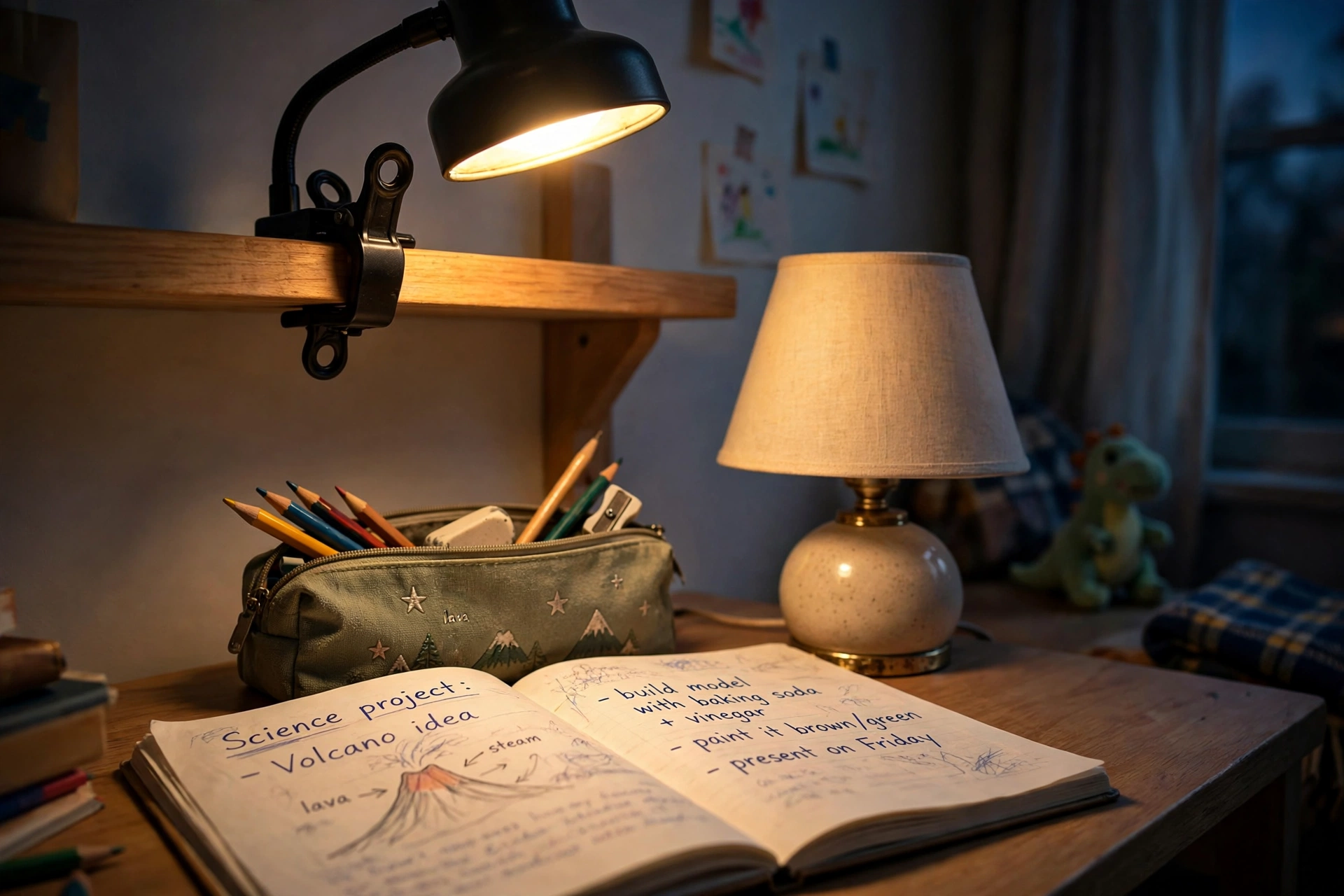
Good light matters more than most parents expect, especially on dark winter afternoons. A clip-on lamp works best on a shelf above a small desk, while a desk lamp suits a wider table. Let your child test both and pick the one that feels comfortable for reading.
15. Weekly Desk Reset Routine

DO:
- Set a ten minute reset every Sunday before the school week starts.
- Let kids choose one new item for the desk each week, like a sticker or a fresh pencil.
- Check pencil sharpness and notebook pages so Monday starts without a hunt for supplies.
DON’T:
- Do not let old papers pile up for a month before sorting them.
- Do not move the whole station around each week or kids lose track of where things live.
- Do not skip the reset during busy weeks, since that is when clutter builds fastest.
A short weekly reset keeps a small study spot working all year. Kids learn that tidying is part of homework, not a punishment, and parents spot missing supplies before they cause trouble. Keep the routine short and friendly, and the desk will stay ready every single day.
16. Rolling Homework Cart

Cost: Under fifty dollars
Storage: Three rolling trays
Best For: Shared family rooms
Move: Rolls away after homework
A rolling cart keeps every school supply in one spot that moves wherever your child works. Homework, snacks, and crafts all fit in the trays, and the whole cart slides into a closet when the day ends. Kids finish faster when pencils, paper, and books sit within arm’s reach.
17. Clip-On Shelf Desk

A clip-on shelf desk turns a bare wall into a homework spot without taking up floor space. The shelf holds a laptop, a notebook, and a pencil cup, while the chair tucks underneath when homework ends. Small rooms gain a real work surface, and the whole setup costs less than a full desk.
Mount the shelf at your child’s elbow height so writing feels natural and shoulders stay relaxed. Add a small wall lamp for evening work, and keep only daily supplies on the surface. Everything else can live in a nearby basket, so the desk stays clear and ready.
18. Hidden Closet Study Nook

- Remove the closet doors and add a small desk at the back wall, so the space feels open instead of closed in.
- Paint the inside a light color and add a strip of warm lights, since closets often sit in the darkest corner of a room.
- Mount two shelves above the desk for books, notebooks, and a pencil cup, keeping the desktop free for writing.
- Hang a small cork board on the side wall for the weekly schedule, spelling lists, and artwork.
A closet nook gives your child a quiet corner that closes away at the end of the day. Sliding the doors back on, or pulling a curtain across, hides the mess and frees the bedroom for play. I’ve noticed kids focus better in a small, defined space where everything they need sits within arm’s reach.
19. Magnetic Wall Organizer
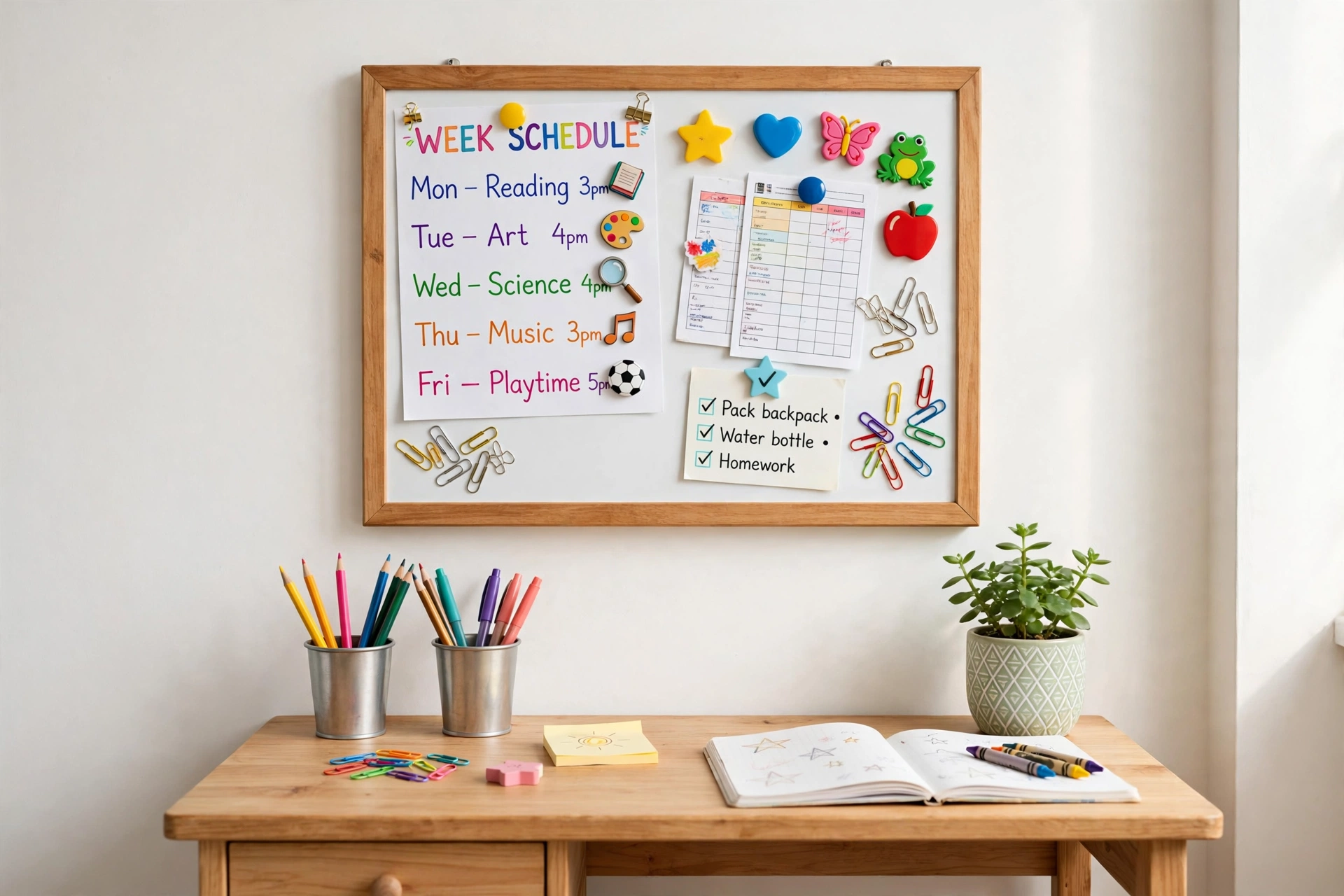
Quick Tip:
Choose a board with a strong magnetic surface and pair it with small metal cups for pencils and scissors. Label each cup with a simple picture or word so younger kids can find supplies and put them back alone.
A magnetic board turns a plain wall into storage that never eats up desk space. Schedules, spelling lists, and art hang in view, while cups hold pencils and scissors at eye level. The board keeps the desktop clear for books, and your child can see every tool without digging through a drawer.
20. Fold-Down Wall Desk

BEFORE: The bedroom had no room for a desk, so homework happened at the kitchen table with the whole family walking past. Books and pencils piled up every evening, and nothing had a home.
AFTER: Now a fold-down desk opens from the wall in seconds and closes flat when the work is done. The room stays open for play, and every supply lives in the slim shelf beside it.
A fold-down desk suits tiny rooms because it only exists while your child works. Choose a sturdy hinge and a surface deep enough for a laptop and a notebook side by side. Wall brackets underneath keep it steady, and a small stool slides under the closed panel when homework ends.
21. Homework Supply Caddy

- Pick a caddy with at least five compartments, so pencils, markers, scissors, glue, and rulers each get their own slot.
- Label every section with a word or picture, then let your child sort the supplies into place.
- Keep the caddy on the desk during homework, then carry it to a shelf when the work is done.
A supply caddy ends the daily hunt for a missing pencil or a lost eraser. Everything sits in one handle-carry box that moves from desk to table to floor. Refill it together on Sunday night, and Monday homework starts calm instead of chaotic. Small habits like this keep the whole week smoother.
22. Adjustable Kids Desk Chair

| Feature | Fixed Chair | Adjustable Chair |
|---|---|---|
| Height | One size only | Grows with your child |
| Posture | Feet may dangle | Feet rest flat on the floor |
| Lifespan | Outgrown in a year or two | Lasts through several grades |
| Cost | Lower upfront price | Higher price, better long-term value |
A chair that adjusts saves you from buying a new seat every school year. Set the height so your child’s feet rest flat and elbows bend at a right angle. Check the fit each September, since a small change in height makes a big difference to comfort and focus.
Now you have 22 homework station ideas for small spaces to help your child focus, stay organized, and enjoy homework time a little more. Pick one idea that fits your home and your child’s age, set it up together this weekend, and see how a small change makes the school week smoother. Save this post on Pinterest so you can return to it when you are ready for the next project, and share it with a parent who is setting up a study spot in a small home too. Small changes like these can turn homework from a daily struggle into a calm routine, and your home could be next.