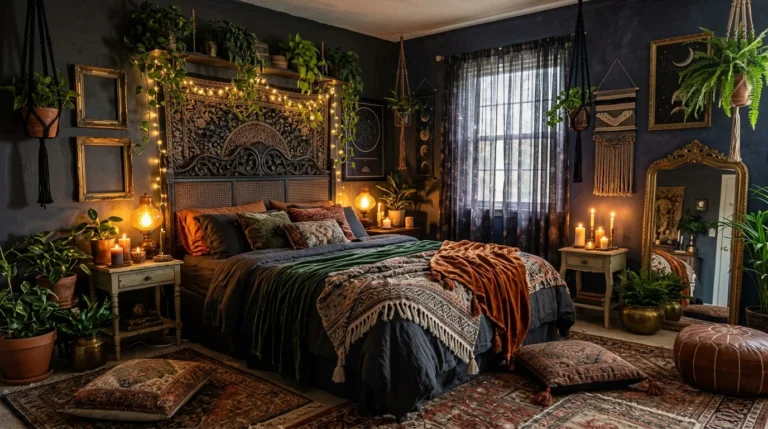

26 Dorm Room Decor Ideas for a Fresh, Personal Look
Small dorm rooms can feel plain, cramped and difficult to personalize but the right decor can completely change that. Dorm room decor ideas can help you create a cozy organized space that feels like your own without taking up valuable floor space.
This guide brings together 26 practical and stylish ideas for transforming a basic dorm into a warm retreat. From layered bedding and soft lighting to smart storage, wall art, mirrors, plants and functional study spaces, each idea is designed with student life in mind. You don’t need a huge budget or lots of furniture to make an impact. In my experience, small changes such as adding coordinated colors, textured fabrics or better organization can make a room feel noticeably more finished. Keep reading to find easy inspiration you can actually use throughout the semester.
Cozy Layered Bedding

A comfortable bed can make a small dorm feel instantly more inviting. Start with simple neutral sheets, then add one quilt or comforter in a soft color such as sage, dusty blue or warm beige. Finish with two or three pillows in different textures for dimension.
I’ve noticed that layered bedding also makes the room feel more finished without requiring much furniture. Keep the colors coordinated rather than identical and choose washable fabrics that can handle busy college life. A folded throw at the foot of the bed adds warmth while giving you an easy accent color to repeat elsewhere.
Layered Wall Gallery

- Choose five to seven prints that share two or three colors.
- Mix photographs, illustrations, typography and small graphic prints.
- Arrange the pieces on the floor first to test the spacing.
- Use removable adhesive strips or approved dorm-friendly hanging methods.
- Leave enough wall space around the gallery so it does not feel crowded.
A wall gallery gives blank dorm walls personality without taking up valuable floor space. For a cohesive look, repeat one accent color throughout several pieces. Mixing personal photos with inexpensive printable art makes the display feel collected rather than overly matched, while removable hanging options help protect the walls.
Warm String Lighting
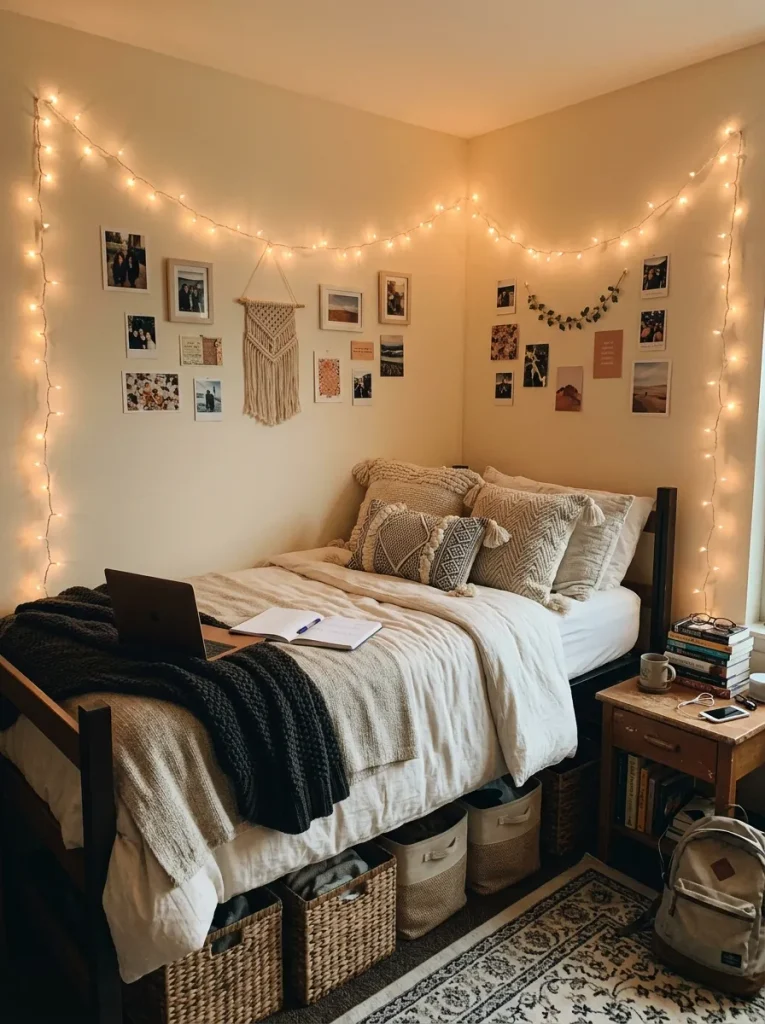
Quick Tip:
Choose warm white LED string lights rather than cool white bulbs for a softer atmosphere. Secure them neatly along the bed frame, wall edge or approved hanging area and avoid covering vents, sprinklers,or other safety equipment.
The right lighting can make a dorm feel calmer after a long day of classes. Use string lights as an accent rather than the only light source, then pair them with a desk lamp for studying. I’ve seen this combination work especially well in rooms with harsh overhead lighting because it creates separate zones for relaxing and working.
Under-Bed Storage
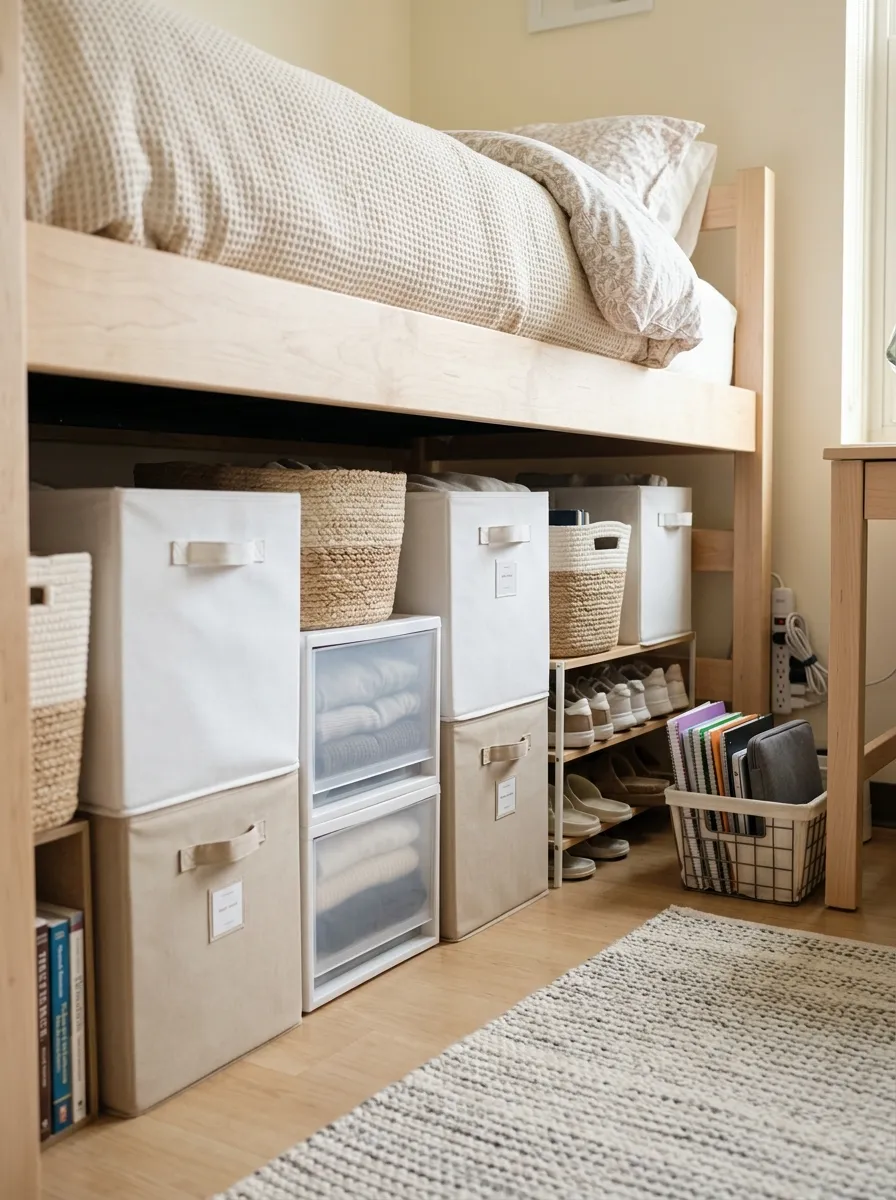
Before: Floor space disappears quickly when bags, shoes and extra bedding collect around the room. Open piles also make cleaning harder and create visual clutter.
After: Slide labeled storage bins beneath the bed and group similar items together. Keep everyday belongings toward the front and seasonal items farther back.
Smart storage matters in a small dorm because every unused gap becomes valuable. Choose shallow containers that slide out easily, then label each one so you can find things without unpacking everything. Keep one bin for linens, another for clothing and another for rarely used supplies.
Desk Organization
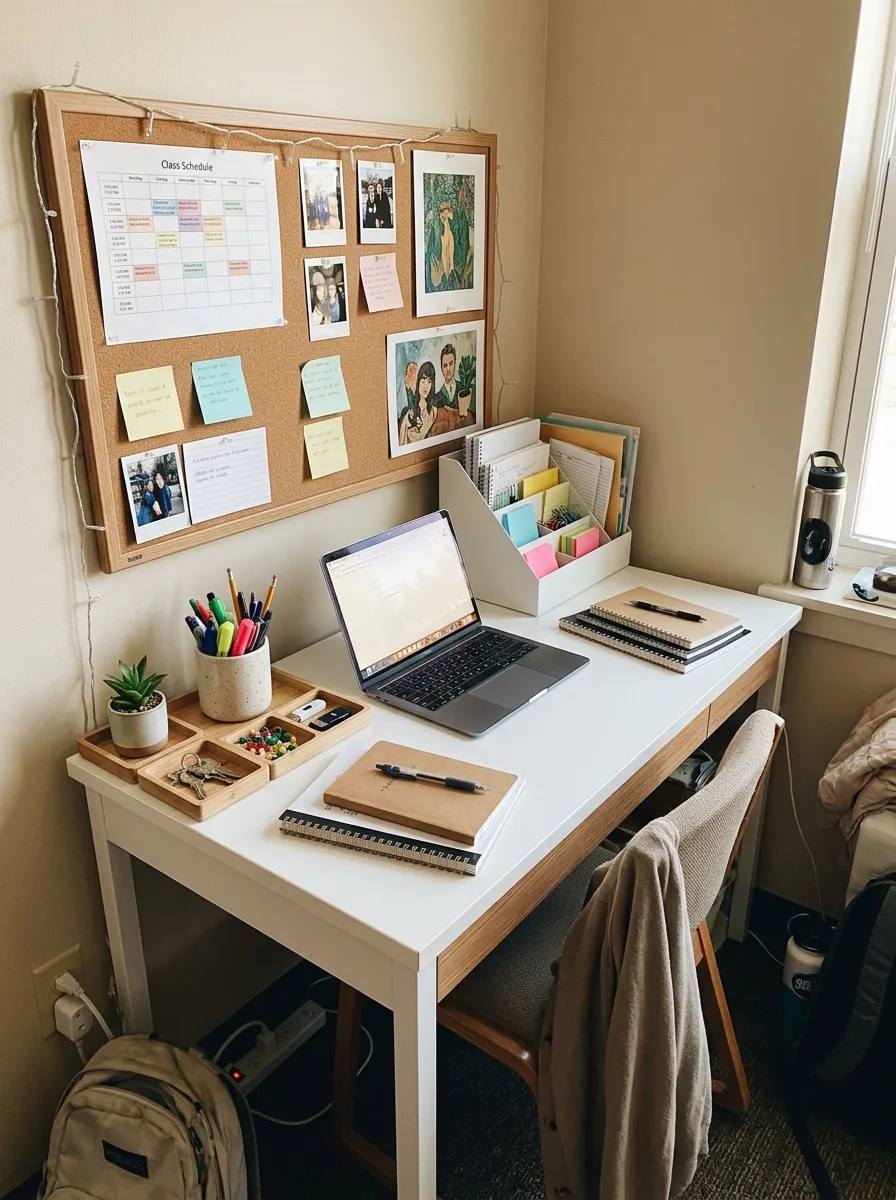
- Clear everything from the desktop except the items you use daily.
- Place a small organizer beside the laptop for pens, chargers and sticky notes.
- Add a tray for loose essentials such as keys, earbuds or ID cards.
- Keep one small decorative item, such as a plant or framed photo.
- Store larger supplies in a drawer or nearby container.
A tidy desk makes study sessions easier to start because the workspace is ready before you sit down. Keep the surface mostly open, especially if your desk doubles as a dining or creative area. A few useful organizers can provide structure without making the setup feel crowded.
Accent Throw Pillows

| Feature | Option A: Matching Pillows | Option B: Mixed Textures |
| Style | Uniform and simple | Layered and personalized |
| Texture | Mostly consistent | Knit, velvet, cotton or boucle |
| Color | One main shade | Two to three coordinated shades |
| Best For | Minimal rooms | Cozy or eclectic rooms |
A few carefully chosen pillows can change the look of plain bedding without replacing the larger pieces. Mix one patterned pillow with solid colors and different textures for depth. Keep the palette connected to your wall art or throw blanket so the room feels intentional rather than visually busy.
Mirror Wall Accent
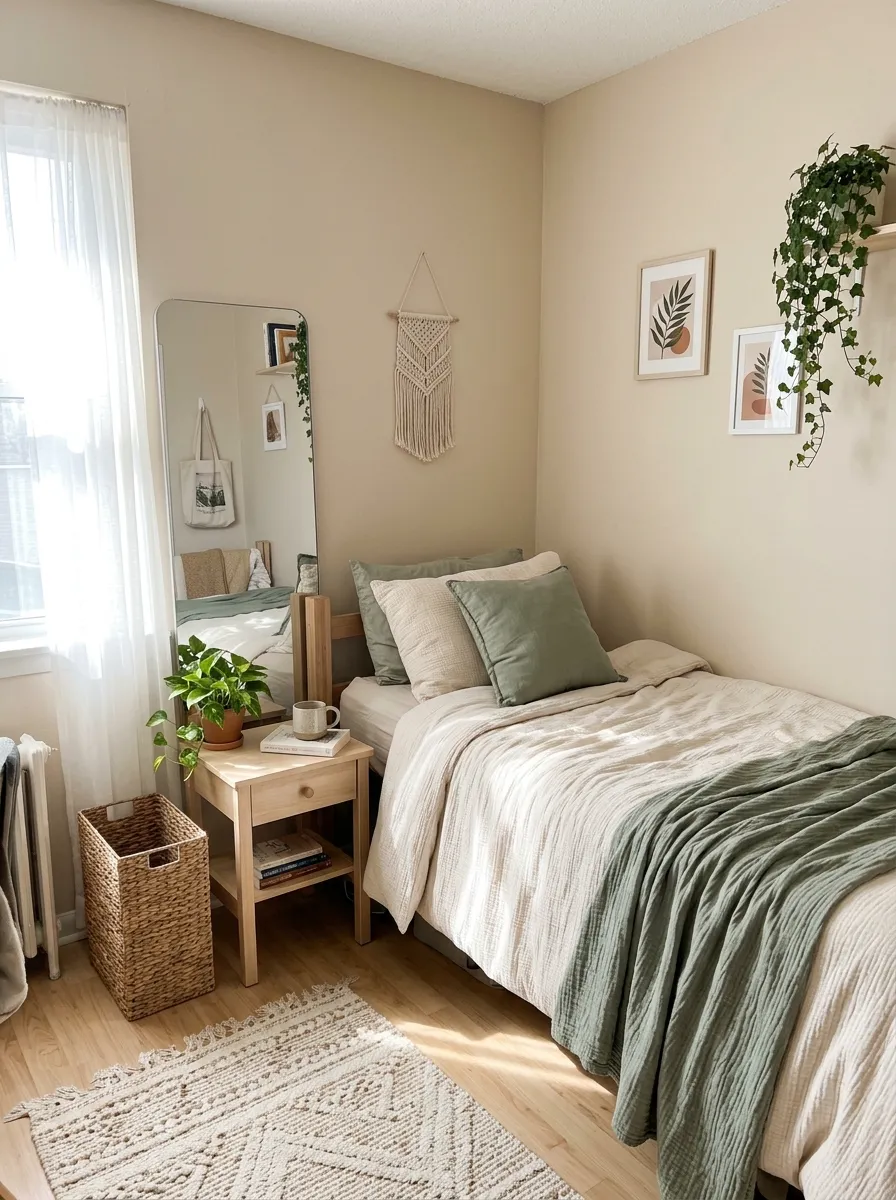
DO
- Position the mirror where it can reflect natural window light.
- Choose a slim design that uses minimal floor space.
- Keep the surrounding area visually uncluttered.
- Coordinate the frame or finish with nearby furniture.
DON’T
- Block the mirror with bags, clothing or storage boxes.
- Place it where direct sunlight creates distracting glare.
- Use several oversized mirrors in one small room.
- Lean a heavy mirror somewhere unstable.
A well-placed mirror can make compact quarters feel brighter and more spacious. I’ve noticed that positioning it opposite or near a window gives the strongest effect without adding extra lighting. A full-length option also combines decoration with everyday function, making it especially useful beside a wardrobe or dressing area.
Photo Clip Display
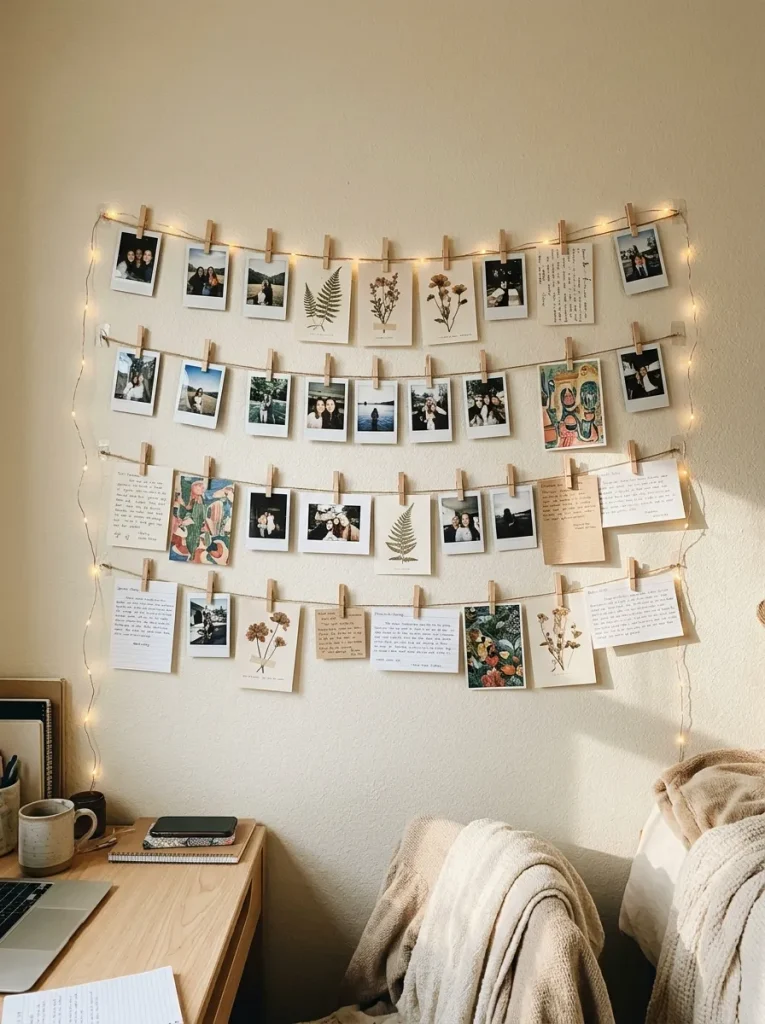
Cost: Low | Time: 30 minutes | Skill Level: Beginner
Best For: Personal photos and keepsakes | Space: Small walls or desk areas
A photo display brings personality into a dorm without requiring expensive artwork. Print favorite snapshots in a consistent size, then attach them to twine or a simple wire grid. Leave a little space between each photo so the arrangement stays easy to update throughout the semester.
Soft Area Rug
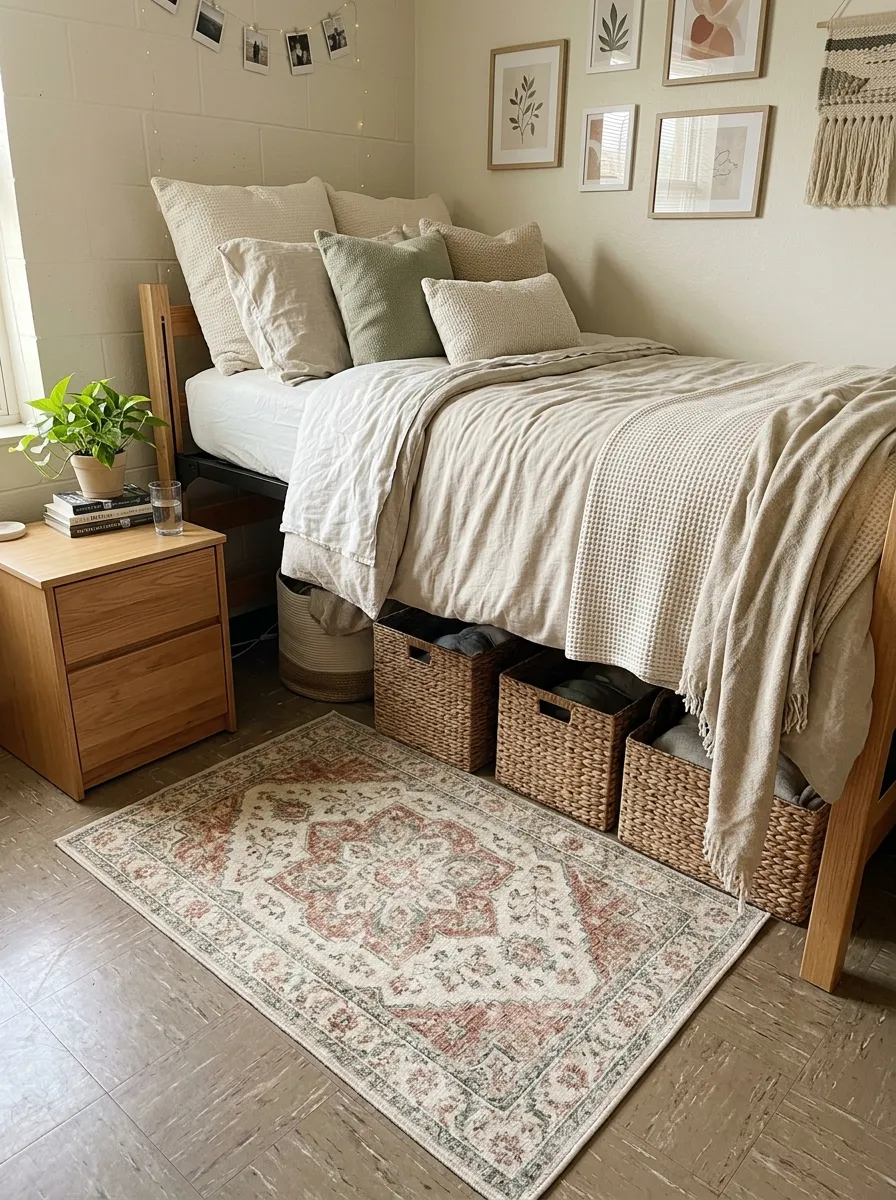
A soft rug can make a dorm floor feel warmer while visually defining the sleeping area. Choose a low-pile design that is easy to vacuum and small enough to fit without interfering with doors or furniture. Neutral patterns hide everyday marks better than solid pale fabrics.
Peel-and-Stick Accents

Quick Tip:
Check your housing rules before applying any adhesive wall covering. Choose removable products designed for temporary use and test a small hidden area first to reduce the risk of residue or paint damage.
A small accent area can bring pattern and color into an otherwise plain dorm. Instead of covering an entire room, apply removable wallpaper behind the desk or bed for a focused backdrop. In my experience, subtle botanical, geometric or linen-inspired patterns are easier to coordinate with changing bedding and accessories.
Coordinated Color Palette

BEFORE:
The room has unrelated colors scattered across bedding, posters, storage bins and accessories. The space feels visually busy even though it contains only a few belongings.
AFTER:
Choose three main shades, such as cream, sage and warm brown, then repeat them throughout the room. Keep larger pieces neutral and use the strongest color for smaller accents.
A consistent palette makes separate dorm essentials feel connected. Start with the bedding as your foundation, then pull one or two colors from it for artwork, pillows, storage and lighting details. This approach keeps decorating simple because new pieces can be judged against an established color plan.
Bedside Caddy
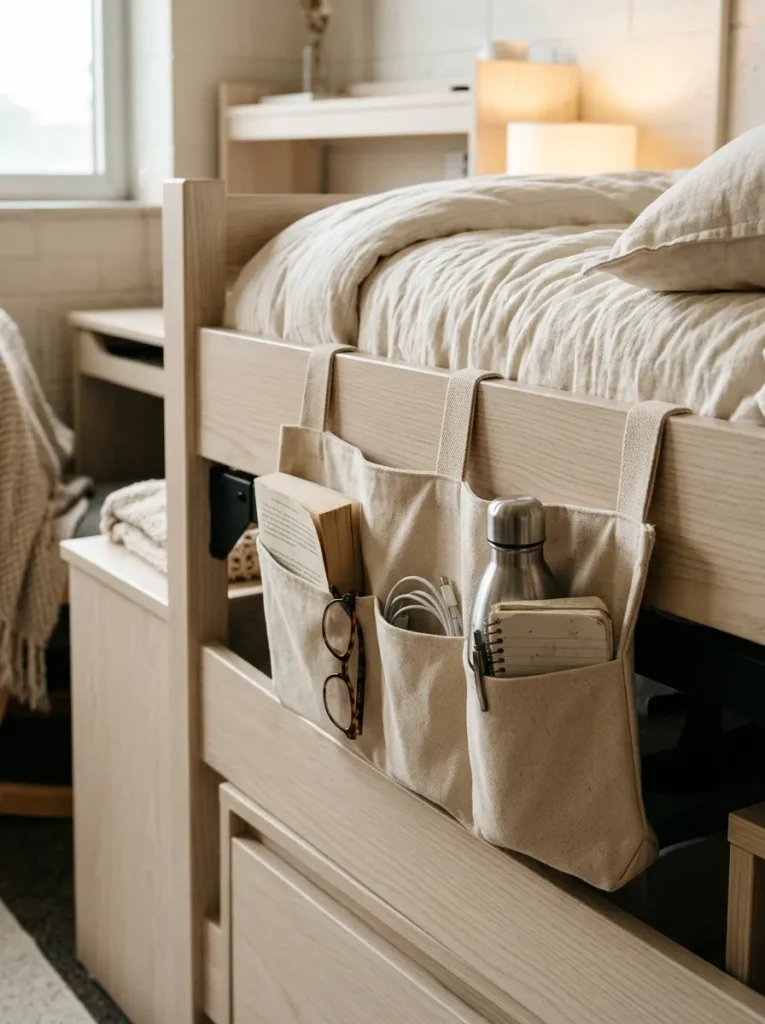
DO
- Choose a fabric caddy with several compartments.
- Keep nighttime essentials in the upper pockets.
- Secure it firmly between the mattress and bed frame.
- Match its color to your bedding or nearby textiles.
DON’T
- Overfill the pockets with heavy objects.
- Store drinks where spills could reach electronics.
- Let charging cables become tangled around the bed.
- Choose a bulky organizer that interferes with sleeping space.
A bedside caddy keeps small essentials within reach without requiring a nightstand. It works especially well in dorms where floor space is limited or furniture options are fixed. Keep only the things you actually use at night inside it, such as your phone, glasses, lip balm, book or charging cable.
Removable Wallpaper Panel

Cost: Moderate | Time: 1 to 2 hours | Skill Level: Beginner
Best For: Feature walls | Style: Botanical, geometric or abstract
Result: Strong visual focal point | Removal: Designed for temporary use
A single wallpaper panel can create a focal point without covering the entire room. Choose a pattern that repeats colors already present in your bedding or artwork. Before applying anything, check your housing rules and the product instructions to make sure the surface and removal method are appropriate.
Color-Coordinated Storage

- DO: Pick two or three storage colors and repeat them throughout the room.
- DO: Label bins according to what they actually contain.
- DO: Place frequently used items at easy-to-reach heights.
- DON’T: Mix too many unrelated patterns or bright colors.
- DON’T: Fill every shelf completely.
- DON’T: Hide daily essentials in difficult-to-access containers.
Coordinated storage makes practical necessities part of the decor instead of visual clutter. I’ve noticed that matching bins can make even open shelving look calmer, especially when dorm furniture has a basic or mismatched finish. Reserve the prettiest containers for visible shelves and use plain bins for items tucked underneath furniture.
Reading Nook
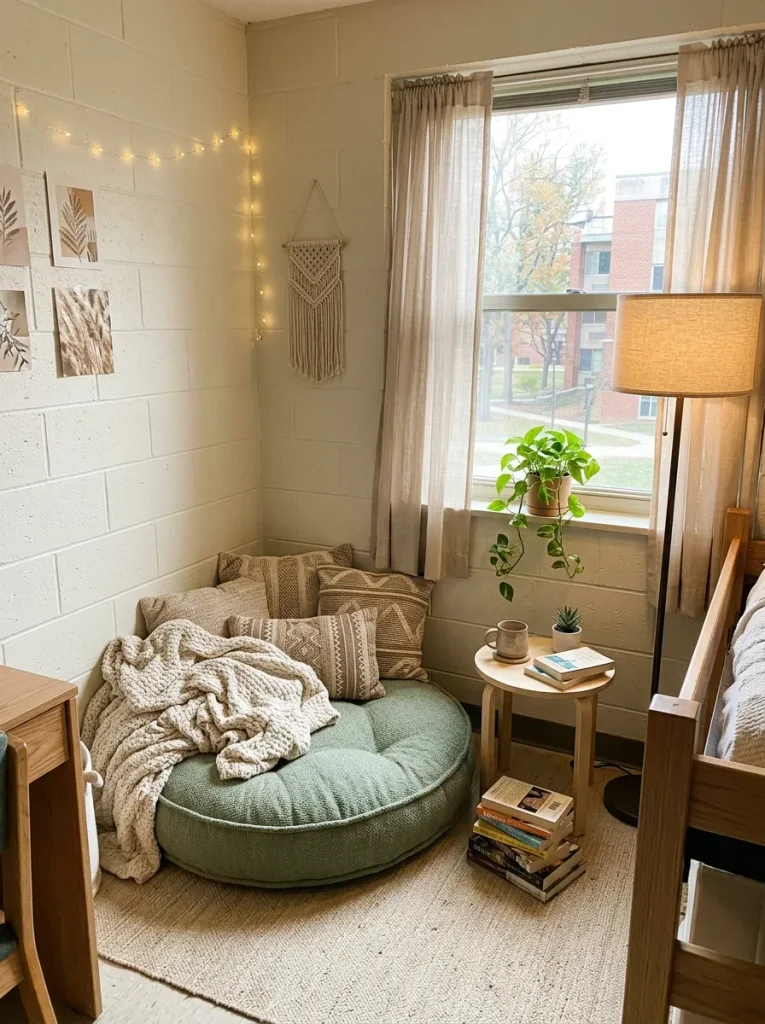
Cost: Low to Moderate | Time: 30 minutes | Skill Level: Beginner
Best For: Relaxing or reading | Space: Unused corner
Key Pieces: Floor cushion, throw, small table, lamp
A forgotten corner can become a useful retreat with only a few pieces. Place a comfortable cushion near natural light, add a washable throw and keep a small table nearby for books or drinks. This setup gives the room another purpose without taking away valuable desk or bed space.
Layered Window Treatments
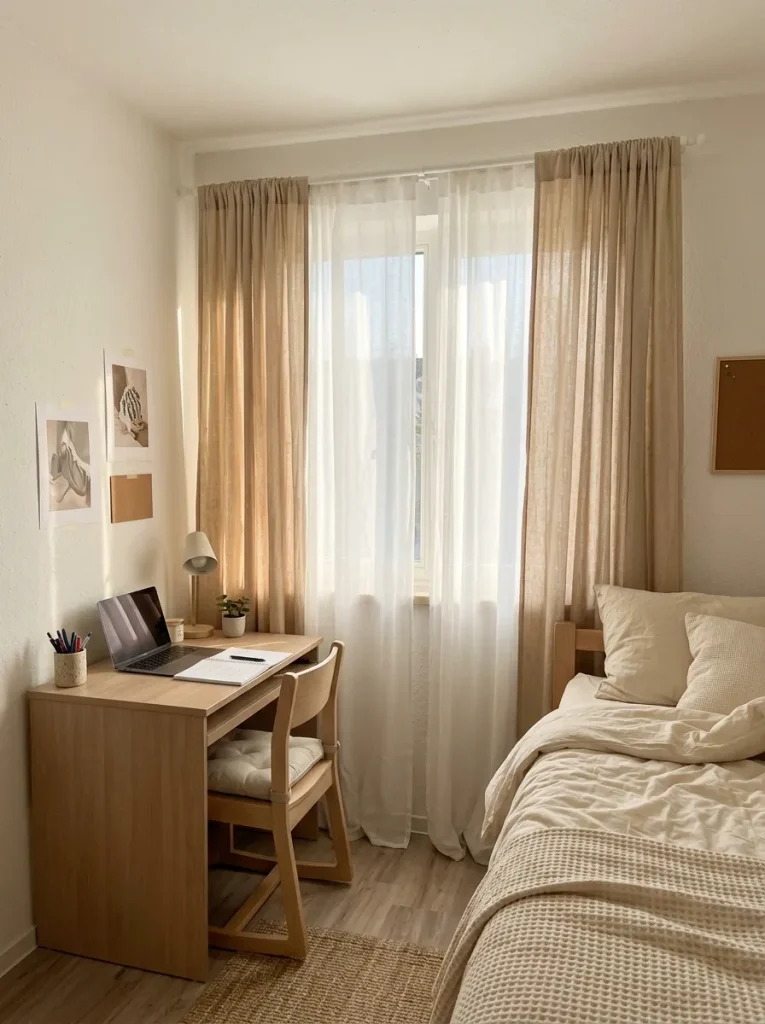
Window treatments can soften a dorm instantly while giving the room a more finished appearance. Choose lightweight curtains in white, cream or another pale neutral to keep the space bright. Before installing anything, check residence-hall rules and use approved tension rods or existing hardware where permitted.
For a simple layered look, pair sheer curtains with a slightly heavier outer panel. The sheer fabric filters daylight while the outer layer adds privacy and color. Keep the length practical for the room and avoid fabric touching heaters or blocking vents, especially in older dorm buildings.
Decorative Tapestry
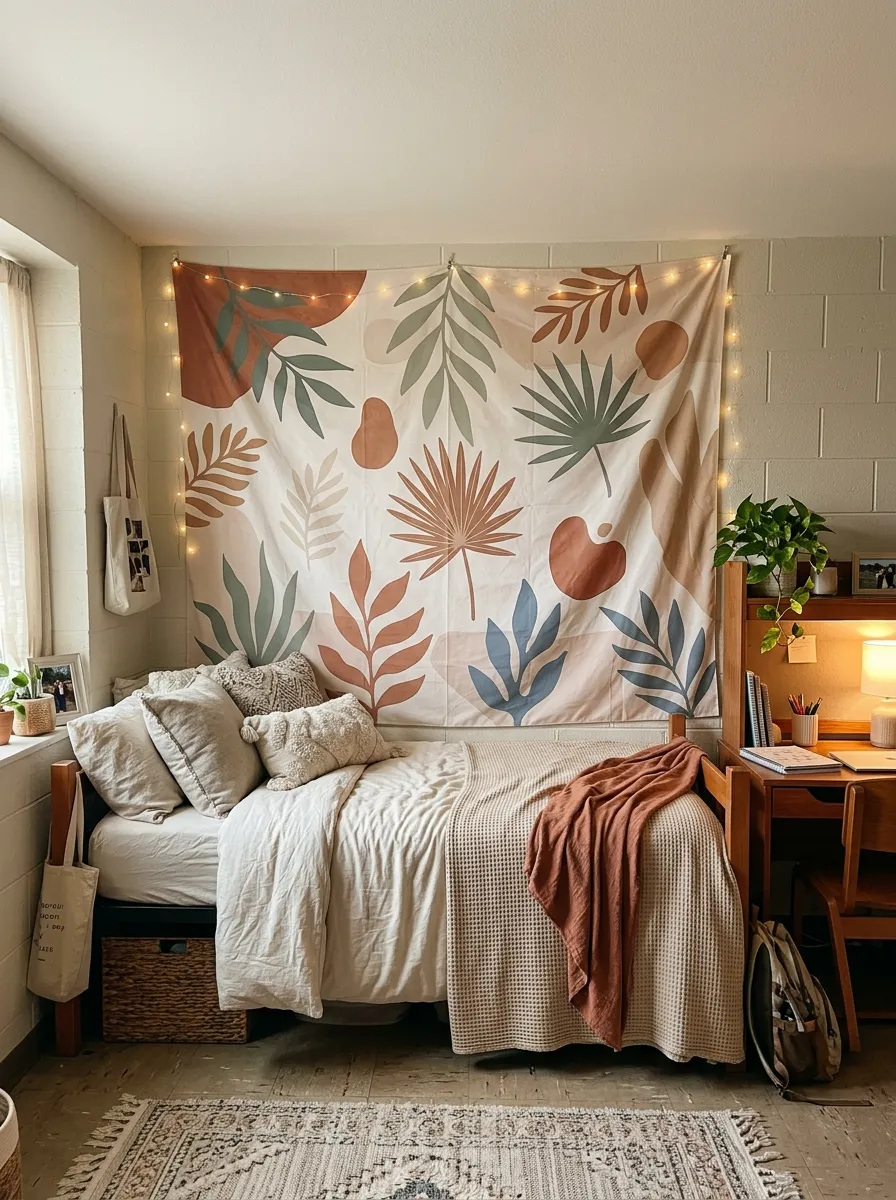
- Choose a tapestry that echoes colors already present in the room.
- Measure the wall before buying so the design does not overwhelm the bed.
- Use an approved removable hanging method.
- Keep the lower edge clear of desks, heaters and floor clutter.
- Pick a washable or easy-care fabric when possible.
A tapestry can cover a large blank wall without adding bulky furniture or permanent changes. Look for a design with enough negative space to keep the room from feeling crowded. A large botanical, geometric or abstract pattern can also serve as the main visual anchor for smaller decorative pieces.
Floating Desk Shelf
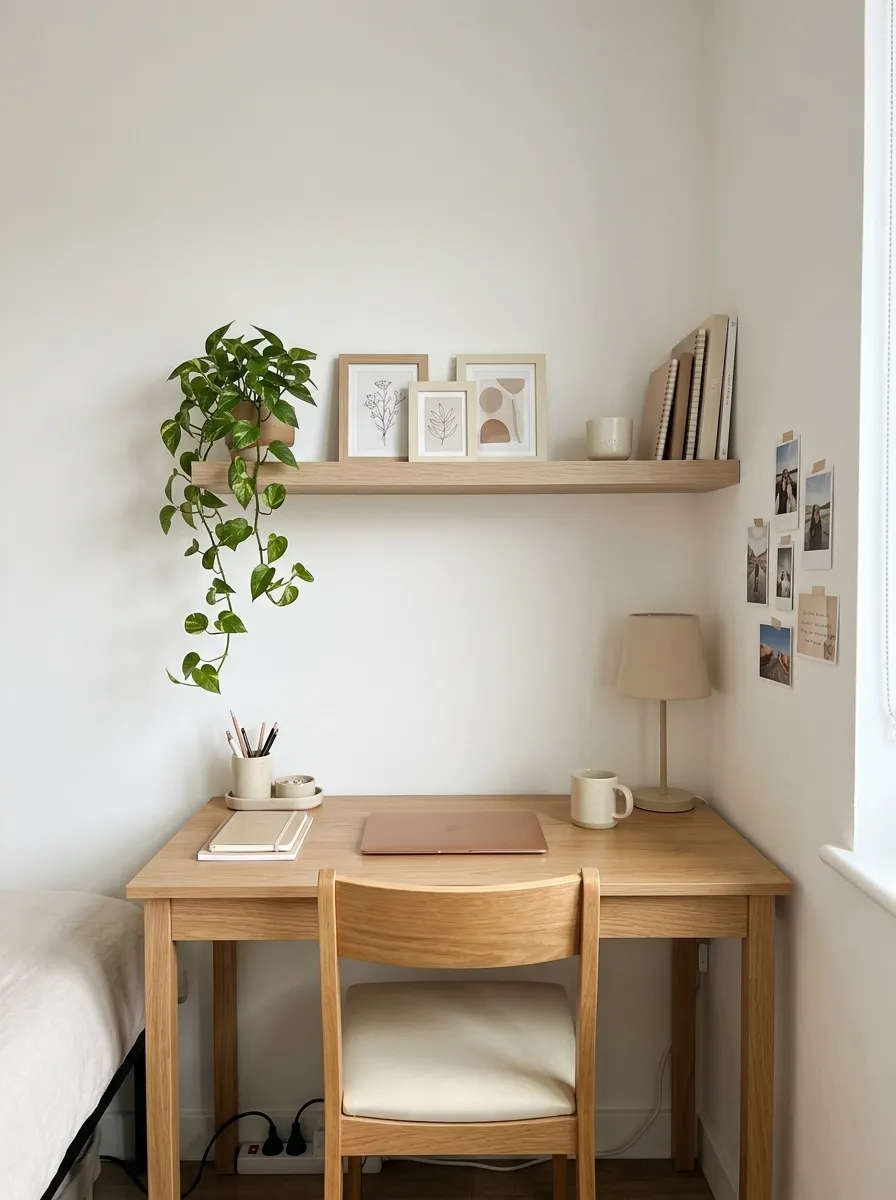
Quick Tip:
Use vertical wall space for items you reach for often, but keep the shelf shallow so it does not make the desk area feel cramped. Before mounting anything, confirm that your residence allows wall hardware and choose an approved removable alternative if needed.
A shelf above the desk can free valuable workspace while giving you room for a few personal details. Keep practical supplies in small containers and reserve the most visible area for one or two decorative pieces. Leaving some empty space helps the shelf feel organized instead of overloaded.
Cozy Floor Pouf

- DO: Pick a lightweight pouf that can move between study and relaxation areas.
- DO: Choose a washable or durable fabric for everyday college use.
- DO: Use the pouf as flexible extra seating for visitors.
- DON’T: Choose an oversized piece that blocks walking paths.
- DON’T: Let blankets and bags permanently collect around it.
- DON’T: Place it directly against a heater or radiator.
A floor pouf adds seating without the footprint of a bulky chair. It can serve as a study break seat, a place to put on shoes or a casual spot for friends. I’ve seen small dorm rooms work better when flexible furniture serves more than one purpose.
Personalized Door Decor
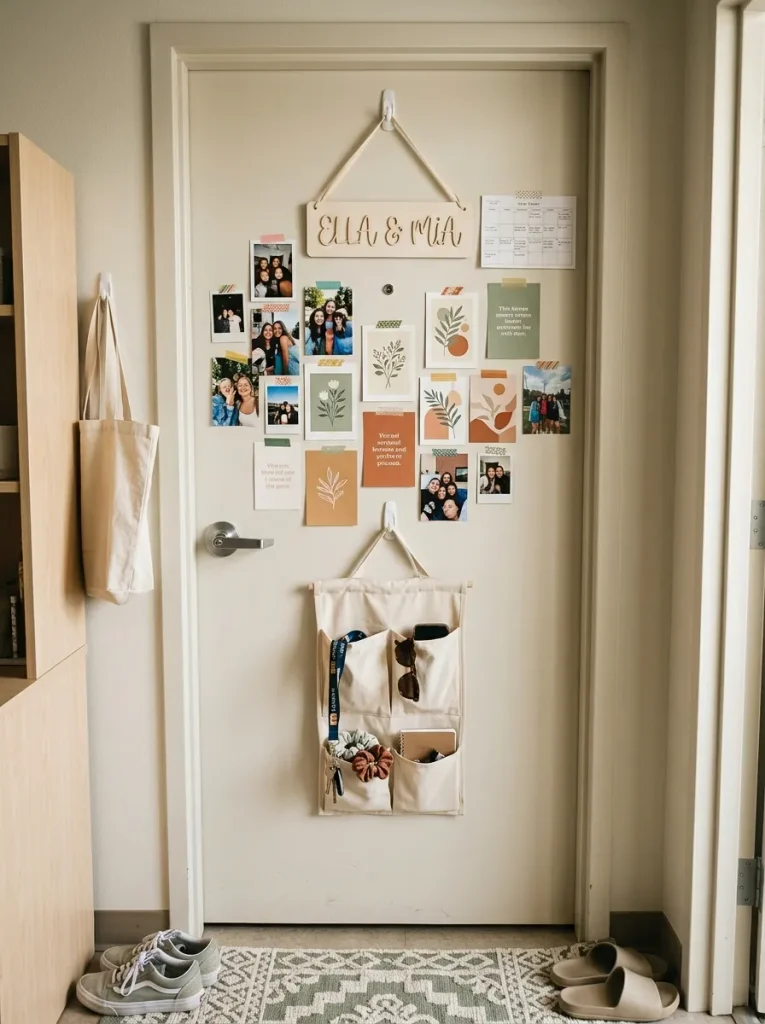
| Feature | Simple Version | Personalized Version |
| Base | Plain door | Neutral fabric or removable sign |
| Details | One name or initial | Photos, colors and small graphics |
| Style | Minimal | Playful and expressive |
| Updates | Rarely changed | Easy to refresh seasonally |
The inside of a dorm door is often overlooked, yet it offers a useful spot for personality. Create a compact display using a removable sign, small photo arrangement or lightweight organizer. Keep decorations secure and avoid covering required notices, locks, handles or other building equipment.
Pegboard Study Wall

DO
- Arrange hooks and shelves around your most-used supplies.
- Keep heavy items on lower sections for stability.
- Add one or two decorative pieces between practical items.
- Leave open pegboard areas so the display can breathe.
DON’T
- Overload the board with every small possession.
- Place sharp or fragile objects above your seating area.
- Let cables hang loosely across the desk.
- Cover the entire board with decorations.
A pegboard turns an empty wall into flexible storage for studying and organizing. Move hooks whenever your routine changes instead of committing to one arrangement. Keep everyday supplies within easy reach and use the upper sections for lighter decorative items, photos or small shelves.
Cozy Blanket Ladder
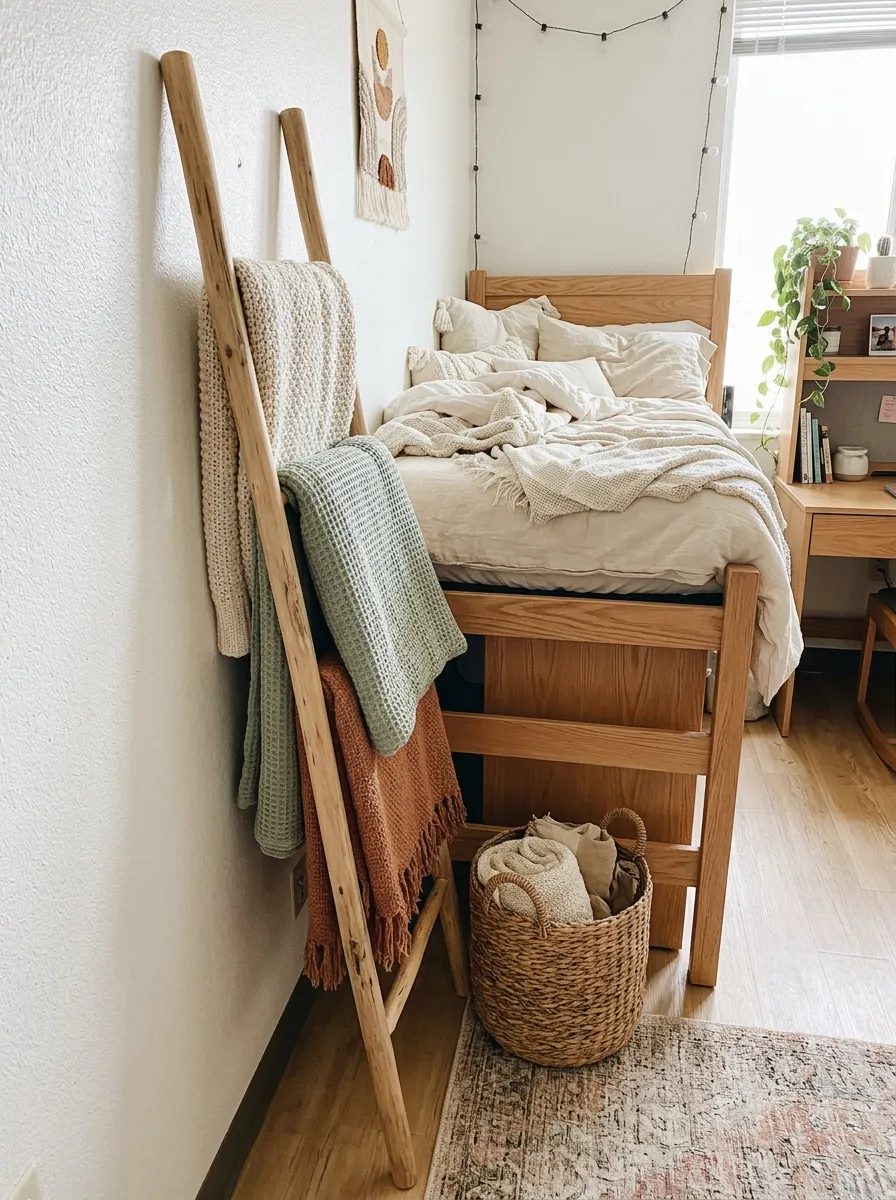
Cost: Low to Moderate | Time: 15 minutes | Skill Level: Beginner
Best For: Blankets and scarves | Space: Narrow corners
Style: Rustic, modern or boho | Key Benefit: Vertical organization
A narrow blanket ladder gives bulky textiles a designated home while adding height to an otherwise plain corner. Keep two or three blankets folded neatly across the rungs rather than filling every space. In a small dorm, choose a slim design that does not interfere with doors or walking paths.
Mini Plant Corner
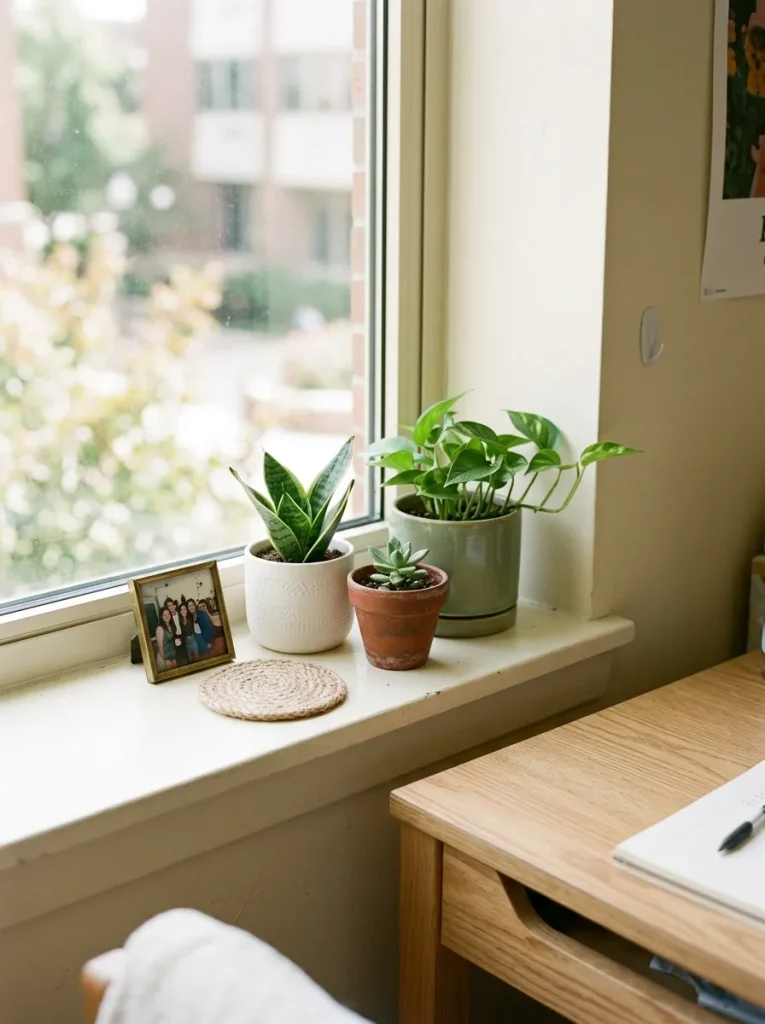
A few plants can bring natural color to a dorm without consuming much space. Select varieties suited to the available light and your ability to maintain them or use realistic faux plants if your schedule makes watering difficult. Grouping several small pots creates a stronger visual effect than scattering them around the room.
Keep plants on a windowsill, desk corner or small shelf where they receive appropriate light. Use saucers beneath real plants to protect surfaces from moisture. A tiny cluster of greenery can soften hard furniture lines and add a fresh accent to your overall dorm room decor ideas.
Headboard Pillow Stack

- Start with two standard pillows against the wall or bed frame.
- Add two larger decorative pillows in a complementary neutral shade.
- Place one smaller lumbar pillow in front as the accent.
- Keep patterns limited to one statement design for a cleaner look.
A layered pillow arrangement creates the feel of a finished bed without adding complicated decor. Use different shapes and textures rather than buying many pillows in the same size. For easier maintenance, choose removable covers that can be washed and swapped when you want a fresh color scheme.
Mirror and Art Pairing

| Feature | Mirror First | Art First |
| Main Purpose | Adds light and depth | Adds color and personality |
| Best Placement | Near a window | Above a desk or bed |
| Visual Effect | Airier and brighter | More expressive |
| Ideal Style | Minimal and modern | Eclectic or artistic |
Pairing a mirror with artwork creates balance on a blank wall without filling every inch. Place the mirror where it can reflect daylight, then position smaller prints nearby to create a deliberate arrangement. Keep frames within a related color family so the combination feels connected rather than random.
Coordinated Bedding

Quick Tip:
Choose one dominant bedding color, one supporting shade and one small accent color. Repeat the accent in a pillow, wall print or throw so the room feels connected without requiring every item to match.
Coordinated bedding creates a strong visual foundation for the rest of the room. Start with neutral sheets if you want flexibility, then introduce color through the comforter and smaller layers. This approach also makes future decorating easier because you can change inexpensive accents without replacing your main bedding.
CONCLUSION
Creating a cozy dorm doesn’t require expensive furniture or a complete makeover. The right colors, textures, lighting, storage solutions and personal touches can make even a small room feel comfortable and inviting. These dorm room decor ideas are designed to help you balance style with everyday student needs while making the most of limited space.
Start with one simple change, then build from there as your budget and schedule allow. I’ve seen how small updates can completely shift the way a space feels. Save this post on Pinterest for later, try your favorite ideas and share it with a friend who is decorating their dorm. Your perfect cozy space can start with just one small detail.